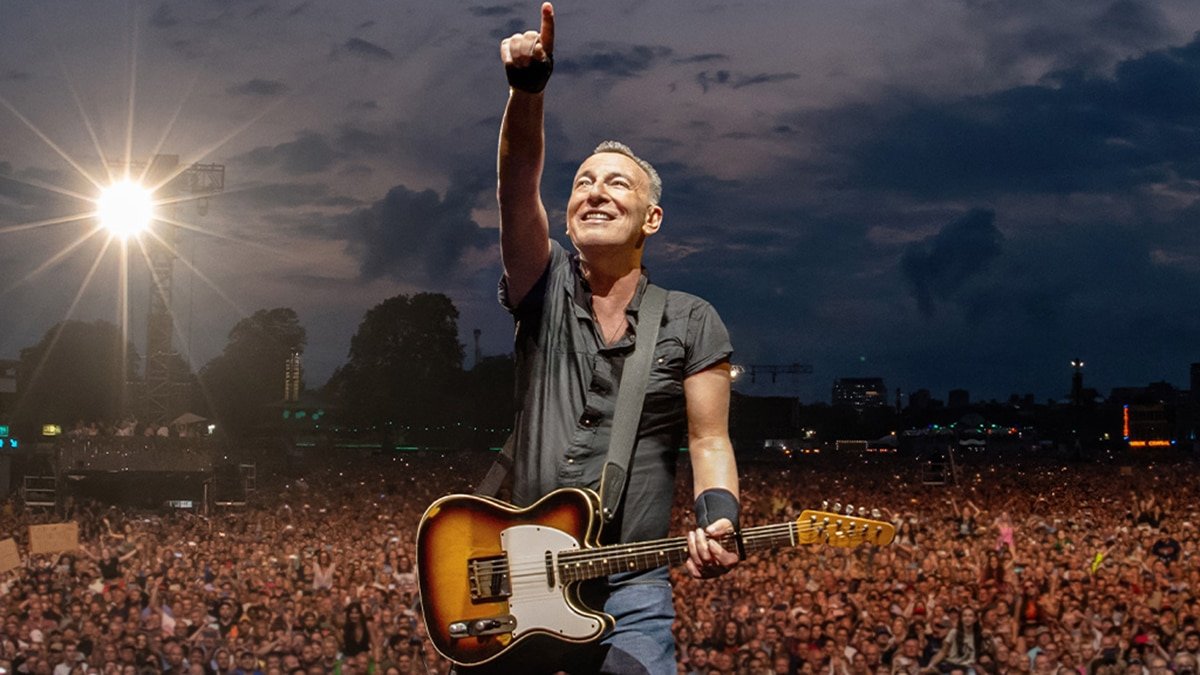
There are certain names that don’t simply belong to music — they belong to memory. Bruce Springsteen is one of them. His presence feels less like fame and more like weather, something that has moved through decades quietly shaping the emotional landscape of countless lives.
It began in the seventies, when the world was louder and rougher, and a young voice from New Jersey carried stories that sounded like real streets, real hands, real hunger. His songs didn’t sparkle. They breathed. They arrived like headlights on a long road, steady and human.
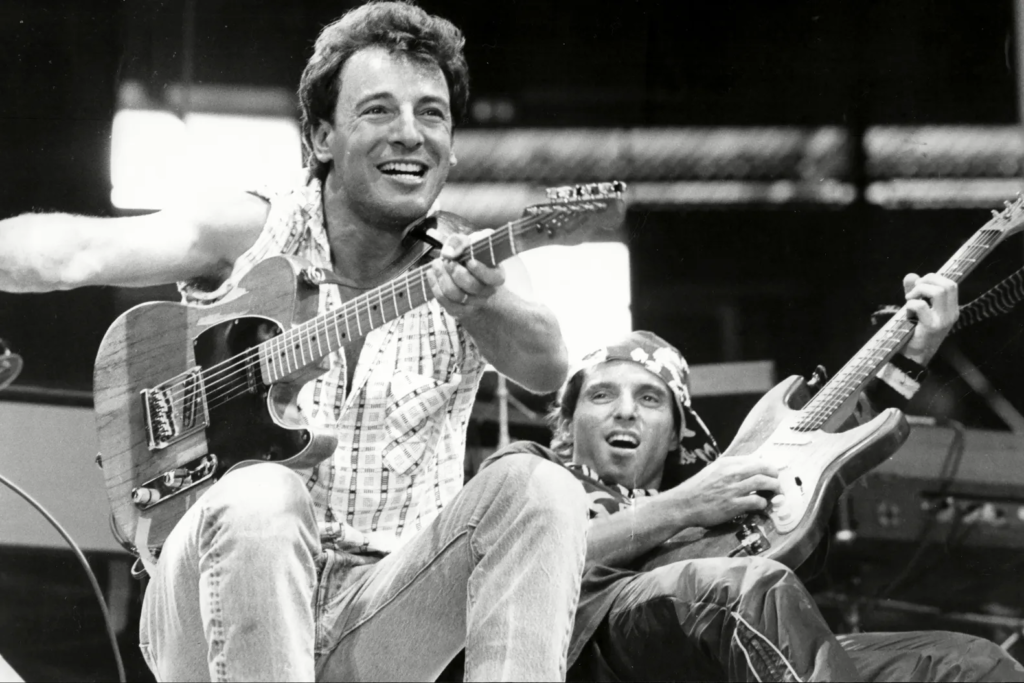
People called him “The Boss,” but it never felt like a title of power. It felt like a kind of closeness — the way a community names someone who never stopped showing up. He sang for the working heart, for the ones who kept going even when nobody was watching.
There is something sacred in the way he holds a guitar. Not as an accessory, but as a companion. When he steps onstage, it is never just noise — it is posture, breath, the quiet strength of a man who has carried other people’s stories for so long they’ve become part of his own.
He was raised on the smooth ache of Sinatra, the electric pulse of Elvis, the kind of music that taught him how to stand inside a song. And you can still hear that early wonder — the way he respects melody like it’s something alive.

Yet his heart never stayed in one genre, one room, one tradition. Country, soul, rock, hip-hop — he listens the way a wide sky listens. With space. With humility. With the understanding that every sound comes from somewhere real.
He has inspired generations not by chasing trends, but by staying rooted. Artists come after him like travelers following an old highway, writing in that same tradition of honesty — songs that don’t escape life, but enter it more deeply.
There is a certain look in the crowd when his music begins. Not excitement, exactly — something softer. Recognition. As if people are hearing parts of themselves they forgot they left inside those chords years ago.
Springsteen has always been more than an icon. He is a witness. His voice holds the dust of factories, the glow of diner windows at midnight, the ache of dreams that don’t quite die even when they break.
And still, even after all these years, there is nothing untouchable about him. He feels present. A man who never stopped believing that songs can be a form of work — honest work — done in service of something larger than applause.
Long after the last note fades, what remains is not legend, but warmth. The sense that somewhere out there, the highway lights are still on. And Bruce Springsteen, in his quiet, enduring way, is still singing for the ones trying to find their way home.