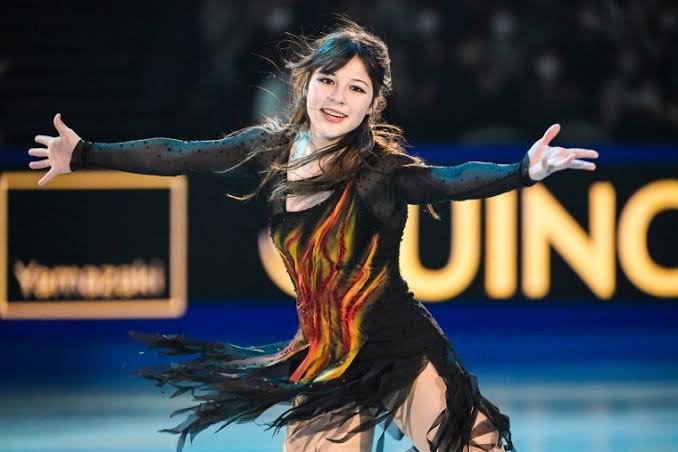
The lights in the Milano Ice Skating Arena were softer that night, as if the building itself had exhaled. The banners still hung. The ice still gleamed. But the urgency was gone. Only a quiet anticipation lingered — the feeling of returning to a place where something important had already happened, and was now becoming memory.
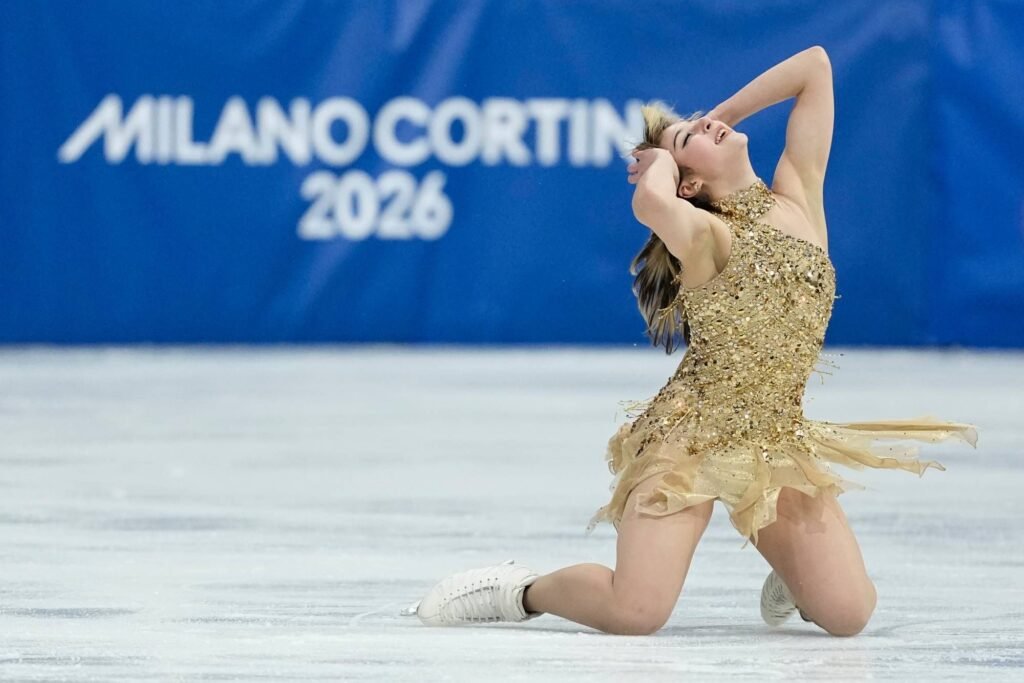
Two days earlier, the world had watched her rise at the Milano Cortina 2026. Now, Alysa Liu stepped onto the same surface without the weight that had followed her for years. No clock. No judges. No consequences. Just ice, light, and the steady rhythm of her breath.
For a moment, she stood still.
The crowd quieted in a different way than during competition — not tense, but attentive, as if everyone understood this was no longer about winning. This was about seeing who she was when the pressure disappeared.
The opening notes of “Stateside” drifted through the arena, the soft pulse of PinkPantheress layered with the brightness of Zara Larsson. The sound didn’t command the space; it floated through it. And when she began to move, it felt less like choreography and more like a private conversation set to music.
Her skating was lighter now.
The edges carved the ice with ease, without urgency. There was a looseness in her shoulders, a quiet swing in her arms, a smile that appeared and disappeared as if she’d forgotten the audience was there at all. The sharp precision of competition had softened into something warmer, almost playful.
Each jump rose without strain and landed without drama. No fist pumps. No sharp glances at the boards. Only a small nod to herself, the kind that comes from knowing the hard part is already behind you.
The arena began to change with her.
People leaned forward, then relaxed back into their seats. Applause came earlier than usual, laughter slipping out between elements, as if the audience had been invited into the moment rather than asked to judge it. It didn’t feel like a performance. It felt like a celebration that had forgotten it was public.
There was confidence in her movement, but it wasn’t loud.
It lived in the pauses — the extra beat held before a step sequence, the slow glide across center ice, the way she let her head tilt toward the lights as if taking in the space one more time. This was the posture of someone who had already answered every question that mattered.
Near the end, she circled the rink with long, unhurried strokes, the music fading into something softer. The cheers grew, but she didn’t rush to meet them. She simply skated through the sound, steady and present, as though she were storing the feeling for later.
When the final note dissolved, she came to a quiet stop.
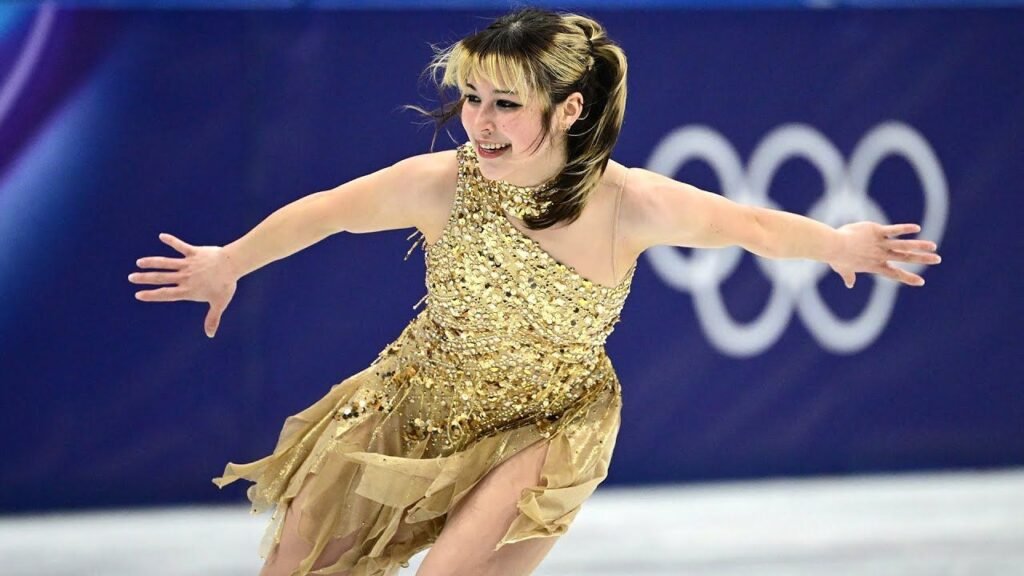
No dramatic pose. Just a small breath, a hand over her heart, and a smile that looked less like triumph and more like relief — the expression of someone who had carried something heavy for a long time and finally set it down.
The applause filled the arena, but the moment itself remained still.
And long after the lights dimmed and the ice was cleared, what stayed wasn’t the jumps or the music or even the celebration — only the image of a champion gliding freely at last, moving not toward a goal, but gently, confidently, into her own beginning.