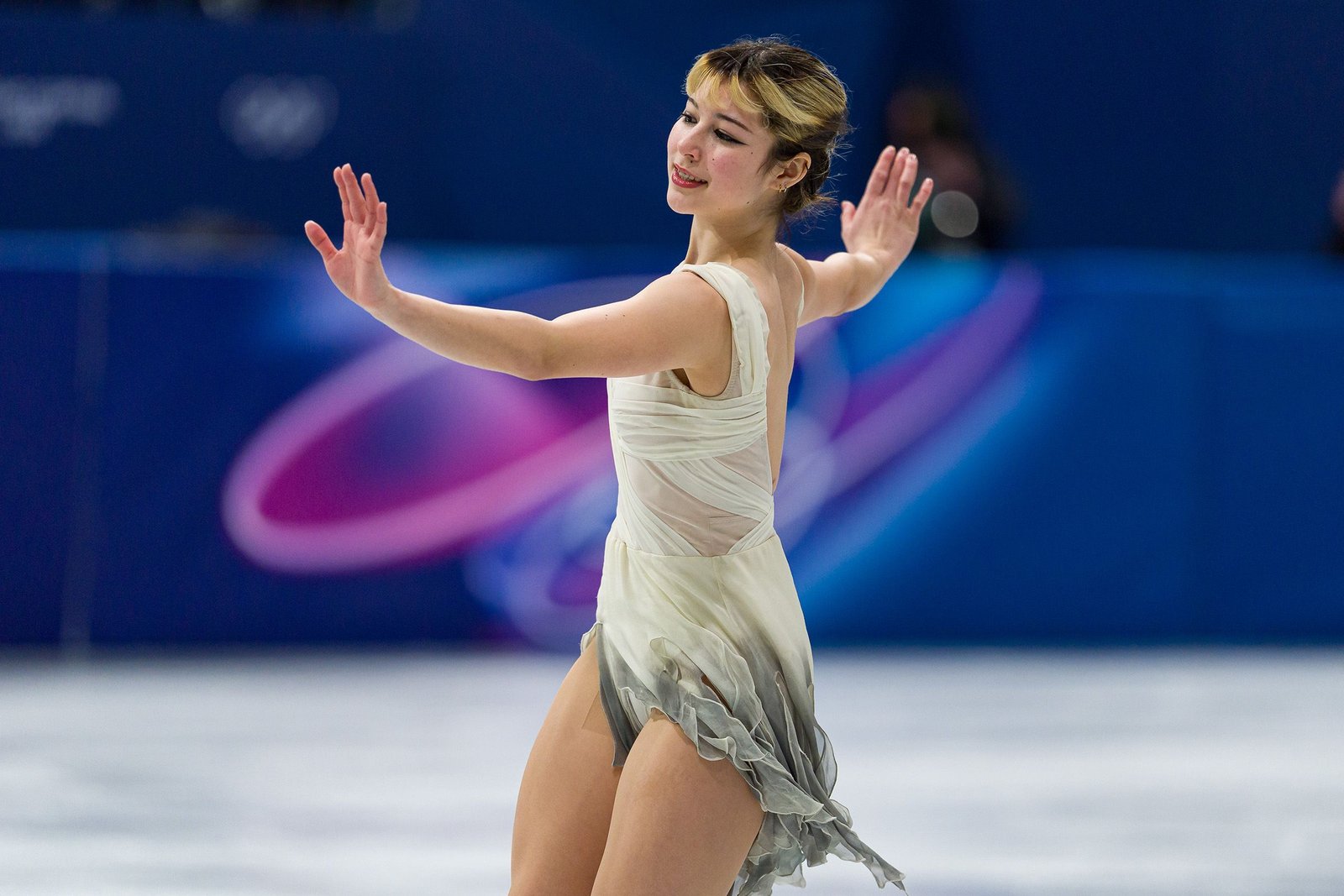
The lights were already too bright for memory, the kind that flatten shadows and turn breath into something visible. Yet when Alysa Liu stepped onto the ice inside the Milano Ice Skating Arena, the vast space seemed to soften around her, as if the building itself understood this was no longer a competition, but a return to something quieter and more personal.
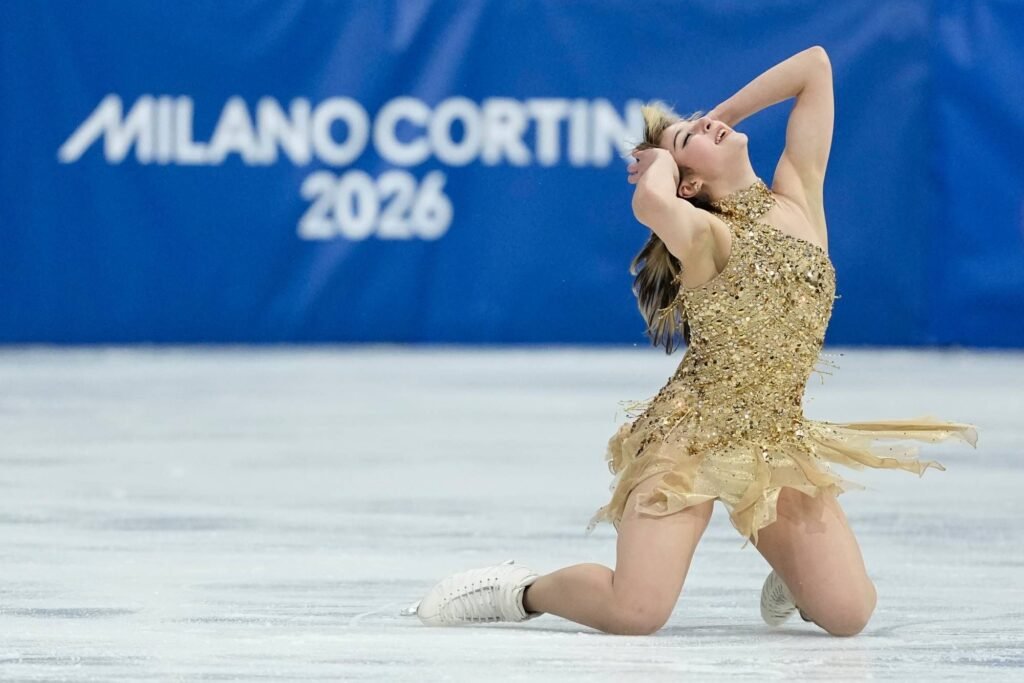
The crowd was loud, but the sound felt distant, like waves heard from behind glass. What lingered instead was the stillness before her first movement — shoulders loose, chin lifted slightly, a small exhale that carried two days of history out into the cold air.
Forty-eight hours earlier, the ice had held pressure, expectation, the weight of a story others had already written for her. Tonight, her posture was different. Not defiant. Not triumphant. Simply unburdened.
When the music began — a pulsing blend from PinkPantheress and Zara Larsson — she did not attack the choreography. She listened to it. Her first steps were light, almost playful, blades whispering instead of cutting, as if she were reacquainting herself with the surface that had once held both her greatest joy and her quiet departure.
Her arms traced the air with an ease that felt improvised, fireworks drawn in slow motion. The movements were not about difficulty or precision. They were about space — the freedom to linger an extra beat, to turn her head toward the audience, to smile without checking the clock.
There was a moment midway through when she glided the full length of the rink, no jump, no spin, only speed and stillness together. The arena fell softer then. People leaned forward. It was the sound of thousands realizing they were not watching a performance, but a feeling moving across ice.
The story of her career had been told in extremes — prodigy, pressure, absence, return. But none of that lived in her body now. What showed instead was lightness in her knees, looseness in her hands, the small, unguarded expressions that appear only when no one is trying to prove anything anymore.
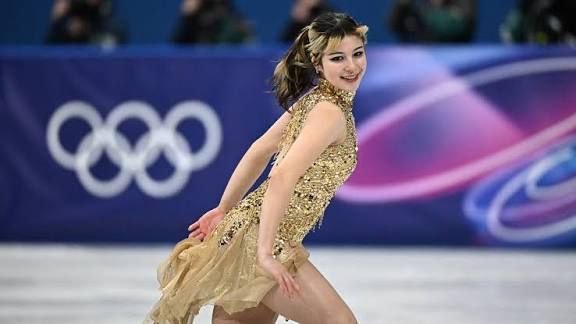
Near the end, she paused after a final turn, standing in the center as the music faded. Not posing. Not searching for applause. Just breathing, shoulders rising and falling, eyes moving slowly across the crowd as if taking inventory of the moment before it slipped into the past.
The ovation came late and grew gradually, less like a roar and more like weather building. People stood, not because they had witnessed difficulty or victory, but because something honest had passed between performer and audience — something wordless, fragile, and unmistakably human.
Long after the lights dimmed and the ice was cleared, what remained was not the medal she had already won. It was the memory of a young woman moving without weight, without urgency, without fear — skating not toward a result, but toward herself, and finding that she was finally free.