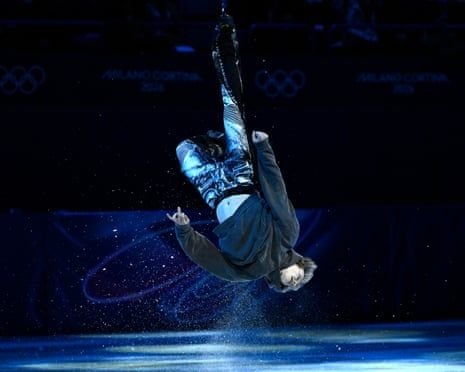
The lights were softer than Olympic glare, warmer, almost forgiving. In the hush before the music began, the ice at Art on Ice looked less like a stage and more like a memory waiting to happen. The crowd settled into a quiet expectancy, the kind that lives between breaths.
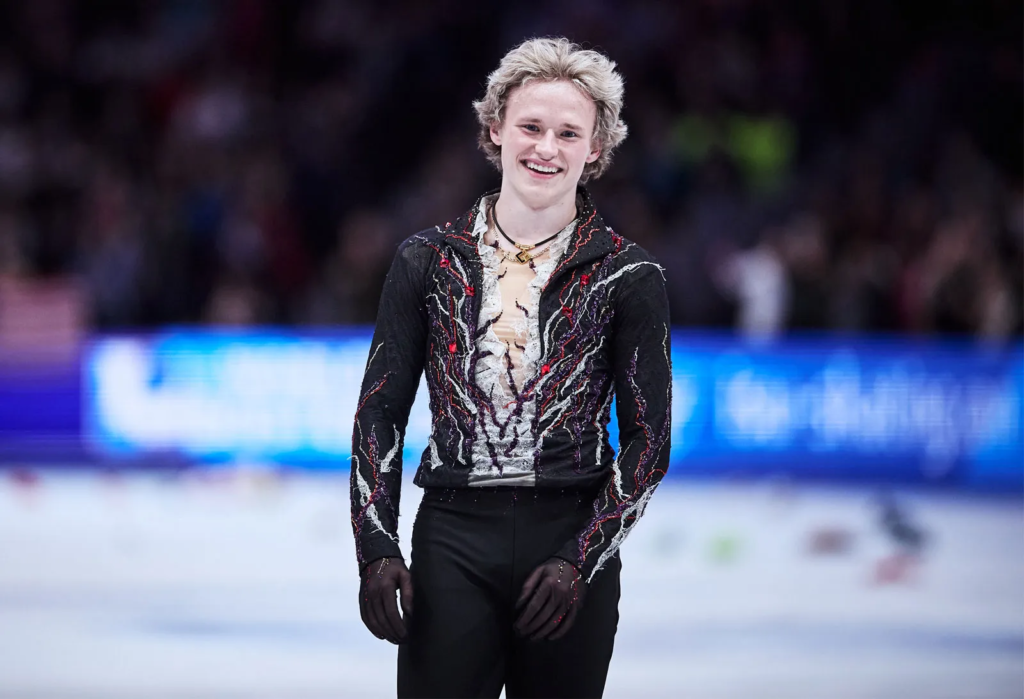
Then he stepped out.
Ilia Malinin did not carry the tension of competition with him. No judges. No scoreboard. No national flags trembling in the distance. Only a still face, a steady gaze, and the small exhale of someone who had finally put the weight down.
The first notes came from the shadows, live and human, the voice of James Bay rising like a slow sunrise across the arena. A moment later, the warmth deepened as Jess Glynne joined the sound, their music wrapping the space in something intimate, almost fragile.
Malinin pushed off gently.
The glide was unhurried, almost conversational. Each edge whispered instead of carved. He wasn’t performing for scores anymore. He was listening—to the rhythm, to the air, to the quiet space inside himself that had been drowned out for weeks.
Then, suddenly, the silence broke open.
The backflip came like a breath held too long and finally released. Gasps scattered through the arena, followed by applause that rose before the landing even finished. Phones lifted instinctively, but for a heartbeat, many simply stared, afraid to blink.
The quadruple axel arrived without announcement. No buildup. No drama. Just a gathering of speed, a tightening of the body, and then flight—high, clean, suspended in that impossible space where time seems to hesitate. When his blade touched down, the sound was small. The reaction was not.
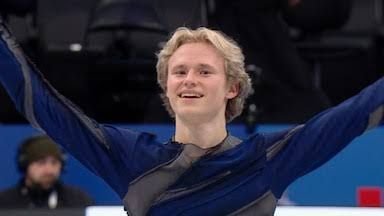
Yet the most unforgettable moments were the quiet ones.
The slight tilt of his head between passes. The way his shoulders softened after each landing, as if letting something go. The half-smile that appeared once, quickly, when the music swelled and the crowd leaned toward him without realizing it.
This was not the sharp electricity of the Winter Olympics. It was something gentler. A return. A conversation between an athlete and the thing he loved before the world started watching.
By the final notes, the arena was no longer loud—it was full. Applause rolled through the space like distant thunder, sustained, grateful, almost protective. He slowed, traced one last quiet curve, and came to stillness at center ice, chest rising and falling in the light.
For a moment, he didn’t move.
No victory pose. No raised arms. Just a small nod, eyes lowered, as if acknowledging not the crowd, but the journey that had brought him back to this simple truth: movement, music, breath.
Long after the clips raced across screens and the numbers climbed, what remained was not the jumps or the cheers.
It was the image of a skater alone in warm light, no medals in sight—
and the feeling that, for one quiet night, the ice belonged to him again.