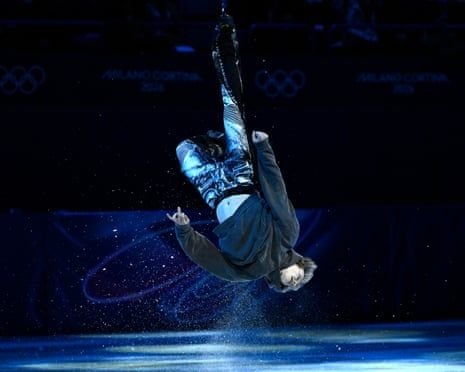
The arena in Milan did not erupt when he finished.
It exhaled.
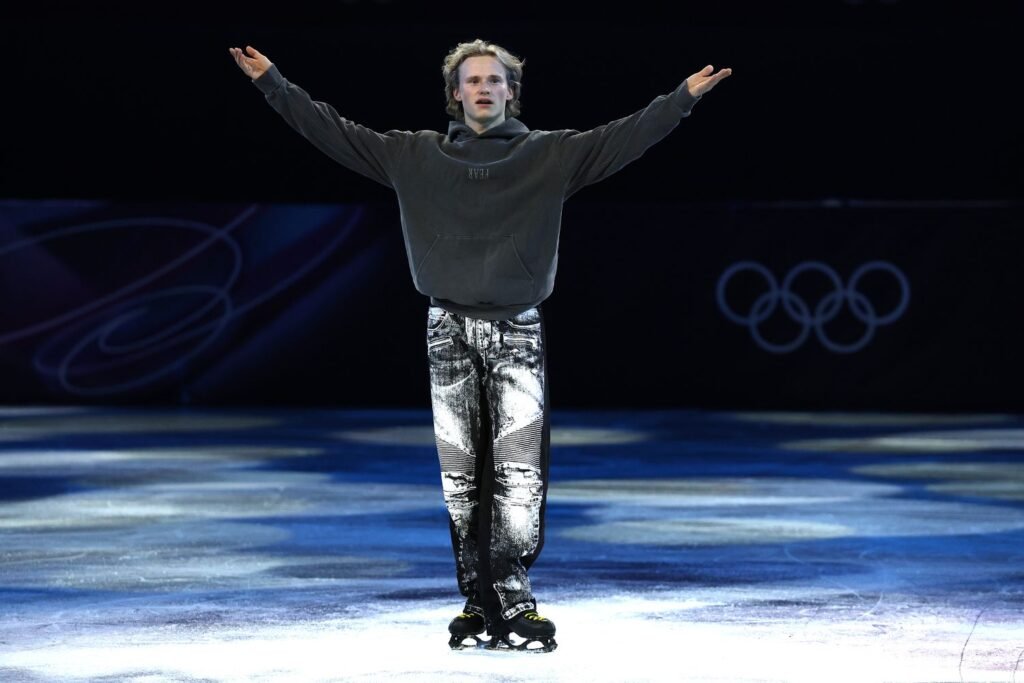
For a moment, the ice looked too large for one skater. The lights hung high above the rink, pale and distant, reflecting in the shallow grooves left by blades that had once rewritten the limits of the sport. In the quiet after the music faded, Ilia Malinin stood still at center ice, chest rising, breath clouding faintly in the cold air.
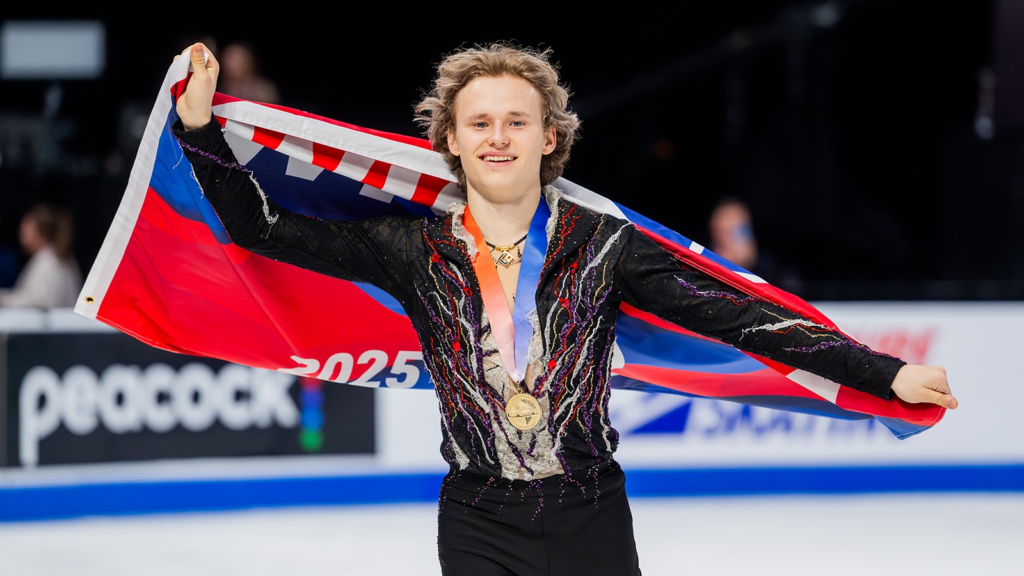
Somewhere in the stands, his father had already turned away.
Roman Skorniakov would later remember that instant not as a result or a score, but as a feeling in his chest — a sudden tightening, the kind that comes when a parent realizes their child has reached a moment no one can soften. He watched only the beginning of the fall. The rest he felt without seeing.
Ilia pushed himself upright slowly, the way skaters learn to do after years of falls no one remembers. But this one carried a different weight. The Olympic stage has a silence unlike any other — a silence that seems to listen.
Back in the corridor beneath the arena, the world narrowed to fluorescent light and the soft scrape of blades on rubber flooring. Roman waited there, hands clasped together as if holding something fragile. When Ilia stepped through the doorway, still breathing hard, his father didn’t speak.
He simply pulled him into an embrace.
Later, his mother would say something that surprised people. Tatiana Malinin admitted that when Ilia first begged to skate, she and Roman hesitated. Not because they doubted his talent — they had seen it too clearly — but because they understood the cost that brilliance often demands.
They had lived that life themselves.
From the beginning, Ilia chased the ice with a seriousness that belonged to someone older than his years. Programs sketched in notebooks. Jumps practiced long after other children had gone home. A quiet determination that made it impossible for his parents to say no, even when they knew what the road ahead might take from him.
Youth, sometimes.
Peace of mind, often.
Tatiana’s message later drifted across social media like a soft echo from far away. It was simple, almost too gentle for the noise surrounding the Games. She wrote that they were prouder of who their son was becoming than of any medal he might wear around his neck.
The words lingered longer than the results.
Because Olympic nights pass quickly. Scoreboards dim, crowds scatter, and the ice is resurfaced until the marks disappear. But the small moments — a father turning away, a quiet hug in a hallway, a mother choosing pride over gold — remain suspended somewhere in memory.
And long after the arena lights in Milan faded, one truth stayed behind on that cold sheet of ice:
The dream had never been about a single night.