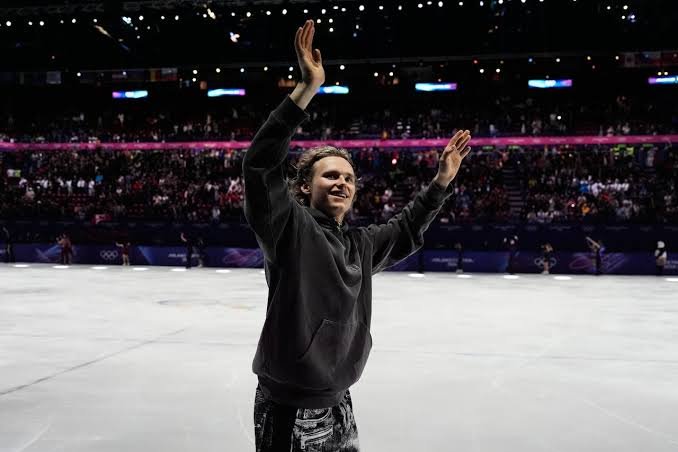
Times Square is not a place that knows how to be quiet.
It hums, flashes, roars. Screens blaze like artificial suns. Taxis hiss through the streets. Tourists talk over one another in a dozen languages. The city breathes loudly there, as if silence itself has been outlawed.
And yet, for a moment, something impossible happened.
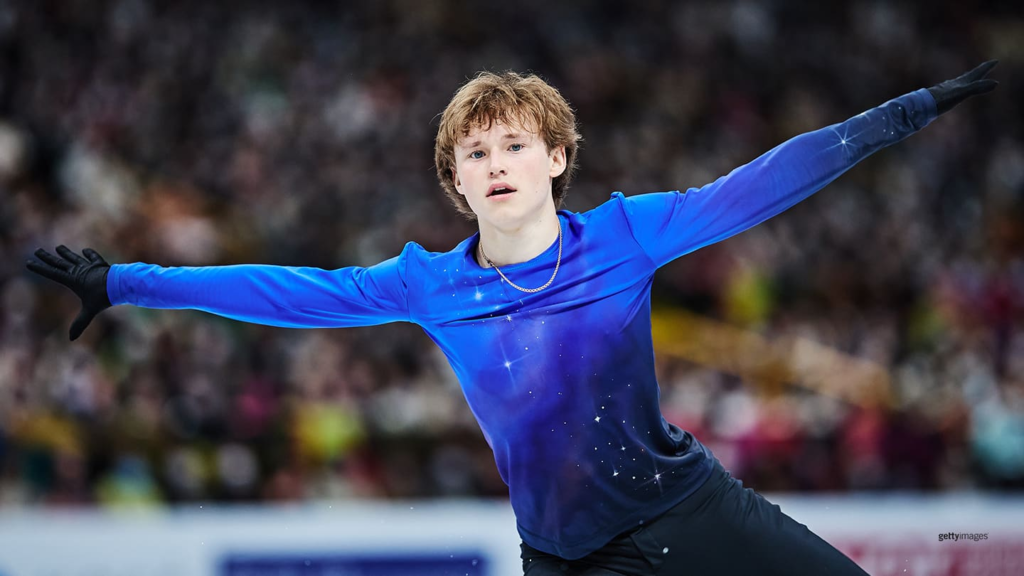
A sheet of ice gleamed beneath the towering billboards, reflecting the restless light of the city. People gathered in loose circles around it—curious, distracted, holding phones half-raised, unsure what they were about to witness. In the center stood a young skater, only twenty-one, shoulders loose, eyes steady, the blade of one skate tracing a quiet arc across the surface.
He didn’t announce anything.
He simply pushed forward.
The first strokes were soft and controlled, the sound of steel whispering over ice. His body leaned into the motion with the kind of calm that doesn’t ask for attention. To most people in the crowd, he looked almost ordinary—another athlete stepping into the lights of a temporary rink in the middle of the most chaotic corner of the world.
Then he jumped.
It happened so quickly that some people didn’t even register the takeoff. One moment he was gliding, the next he was suspended above the ice, spinning through the air with a violence that felt strangely graceful. The city lights caught the edges of his movement like flashes of glass.
When he landed, it was clean.
So clean it felt unreal.
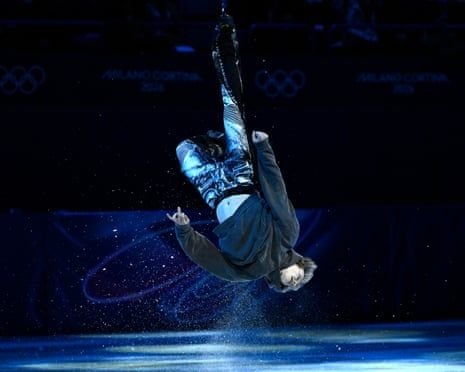
For a heartbeat, no one reacted. The quad axel—one of the most difficult things a human body can attempt on ice—had come and gone like a breath. The blade touched down, steady, and the sound echoed faintly against the skyscrapers.
But he didn’t stop.
His momentum carried him forward, and then something stranger unfolded. His body lifted again, twisting into a motion that didn’t quite resemble skating anymore. It looked almost like flight—a full somersault, his signature “raspberry twist,” the kind of movement that makes the mind hesitate before accepting what the eyes have seen.
When his skates found the ice again, the city seemed to freeze with him.
Phones hung motionless in the air. Conversations stopped mid-sentence. Even the restless glow of the billboards felt less important somehow, as if the entire square had stepped back for a second to watch a single human body defy gravity in the cold night air.
Only then did the sound return.
A wave of breath, laughter, disbelief—people looking at each other the way strangers do when they’ve shared something rare. Some shook their heads slowly, replaying the jump in their minds. Others stared at the young skater still gliding across the ice, trying to reconcile the quiet person in front of them with what they had just witnessed.
Later, the video would travel everywhere.
Across timelines and screens and continents.
People would watch it alone in their rooms, the city lights flickering through their phones, and many would write the same strange thought beneath it—that for a moment, watching him spin through the air, they forgot he was human.
But the memory that lingers isn’t really the jump.
It’s the silence before the applause. The way a place as loud as Times Square suddenly held its breath. The way a young skater, barely older than the crowd around him, landed softly on the ice and looked almost surprised that the world had stopped to watch.
And for that brief, fragile moment, it felt like the city itself had learned how to listen.