
The announcement did not arrive with noise. It appeared quietly, almost like a line written in the margins of the season, as the lights inside Prague’s arena were still being tested and the ice had not yet felt the weight of competition. Screens flickered, names settled into place, and somewhere between the glow of the monitors and the hush of the empty seats, the shortlist for the ISU Figure Skating Awards began to feel less like a list and more like a memory already forming.
Outside, the air carried the late-March cold that always seems to belong to the end of a skating season. Technicians moved slowly across the rink, their footsteps echoing in long, hollow rhythms, as if the building itself was holding its breath. The World Championships had not started yet, but the feeling of arrival was everywhere — in the quiet conversations, in the soft scraping of blades during warm-ups, in the sense that something from the past year was about to be remembered before it disappeared.
More than ninety-three thousand votes had shaped the names now resting on that screen, but in the arena the number meant nothing. What mattered was the strange intimacy of it — fans from different countries, different time zones, all choosing the moments that stayed with them after the music stopped. Costumes, of all things, had become the thread tying those memories together, the colors and textures that people carried long after the scores faded.
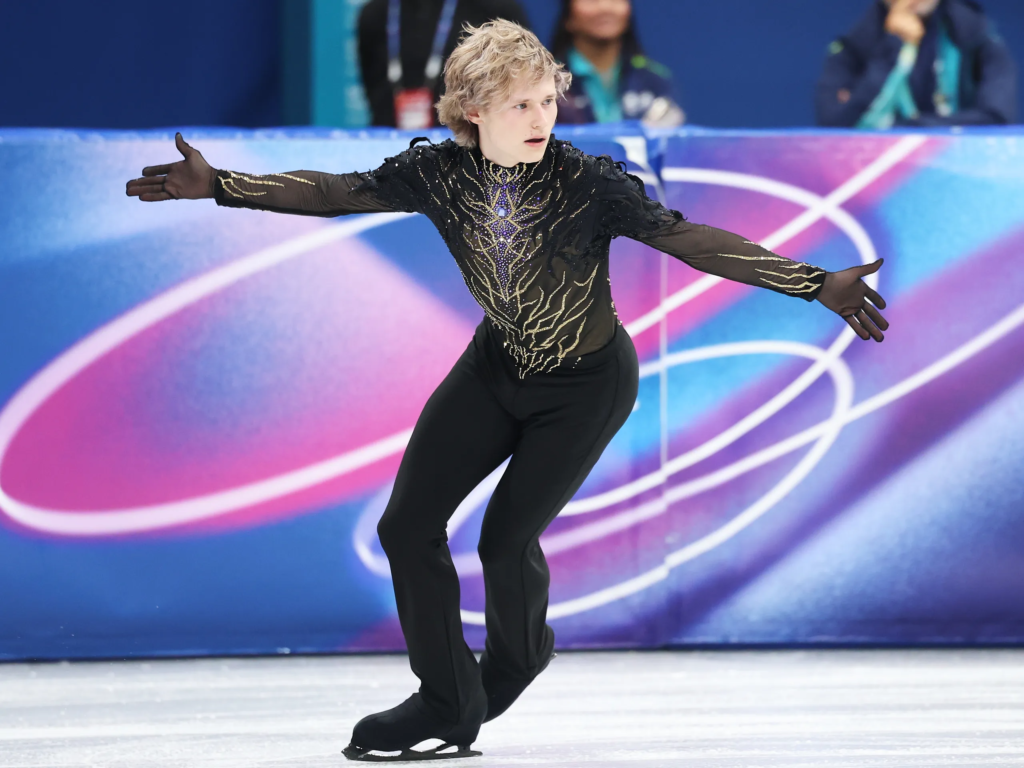
When Ilia Malinin’s name appeared among the nominees, the reaction in the room was almost invisible. No applause, no sudden movement — just a few heads lifting, a few eyes narrowing as if trying to see the programs again without the ice. His seasons had been remembered for jumps that seemed to ignore gravity, for the impossible rotation of the quadruple Axel, for the pressure that followed him from arena to arena. Yet here he was, not for the jump, but for the way he stood before it.
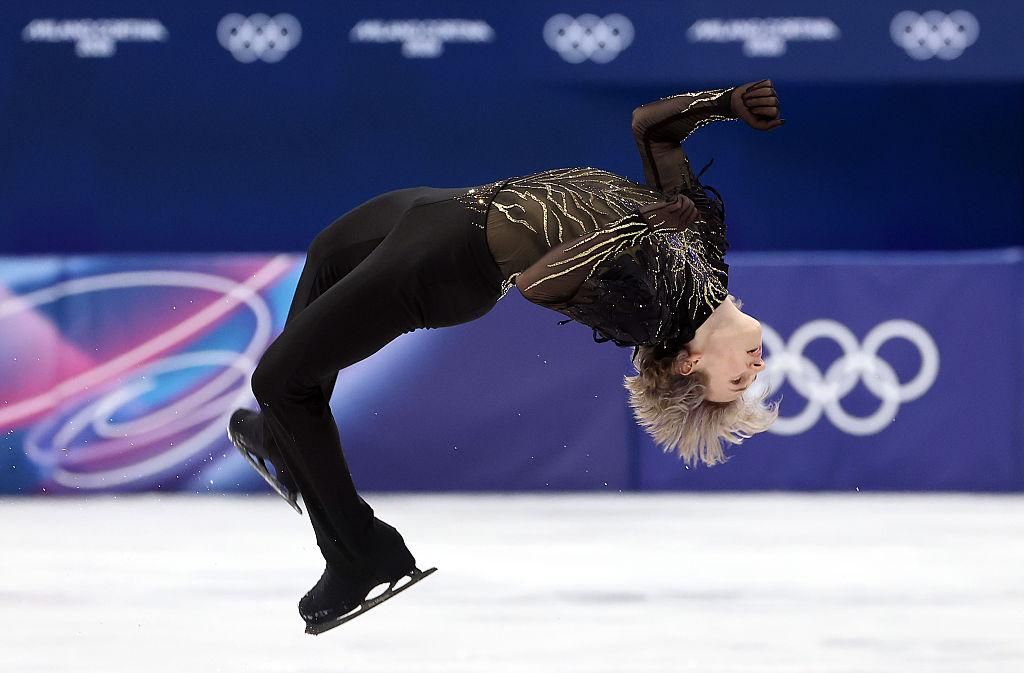
There is something different about watching a skater before the music starts. The costume is already there, catching the light, holding the shape of the story before the first note explains it. With Malinin, the fabric always seemed to move with the same tension as his skating — sharp lines, dark colors, a kind of quiet intensity that made the program feel serious before he even pushed off the boards. It was not decoration. It was part of the moment when the arena falls silent.
The post-Olympic season had left a different kind of weight in the air. After the brilliance and the disappointment of that winter, every performance felt like it carried something unfinished. In those months, people watched him more closely than before — not only the jumps, but the way he entered the rink, the way his shoulders settled when he took his starting pose, the way the costume caught the light as if it were holding the same pressure he was.
Around the arena in Prague, posters for the championships hung beside banners for the awards, the past season and the present week sharing the same walls. Skaters passed by them without stopping, but you could see the glance, the brief pause of recognition. The awards were about what had already happened, yet they lived in the same space as what was about to begin, and that made the air feel strangely full, as if every moment of the year was standing together at once.
Somewhere in the stands, a few early spectators had found their seats long before the session started. They spoke quietly, pointing toward the ice, toward the screens, toward nothing in particular. For them, the costumes were not about design or judging or categories. They were the image they remembered when they thought of a program — the color that stayed in their mind, the silhouette they could recognize from across the rink, the feeling that came back without warning months later.
The idea that a costume could carry that much meaning would have sounded strange once, back when the sport was measured only in rotations and landings. But now the line between performance and memory had grown thinner. A sleeve moving in the light, a pattern catching the reflection of the ice, the way a skater’s posture changed the moment the music began — these were the details people held onto when the season ended.
By the time the arena filled and the real competition finally started, the announcement had already slipped into the background, like a conversation that happened before the story truly began. Yet the feeling stayed. Every time a skater stepped onto the ice, the costume arrived first, carrying the weight of the year, the votes, the memories, the quiet recognition of everything that had led to this moment.
And long after the medals would be given and the lights in Prague turned off, what many would remember would not be the scores or the standings, but the image of a skater standing still at center ice, the fabric of the costume barely moving, the arena silent for one last second — the moment when the season seemed to pause, and everything that had happened was already becoming something you could only look back on.