
There was a time when the idea of a quad axel lived somewhere between myth and madness. Coaches whispered about it like a forbidden language, skaters flirted with it in quiet sessions, and fans treated it as the final frontier of human capability on ice. Then came Ilia Malinin—and suddenly, the impossible wasn’t just attempted… it was landed.
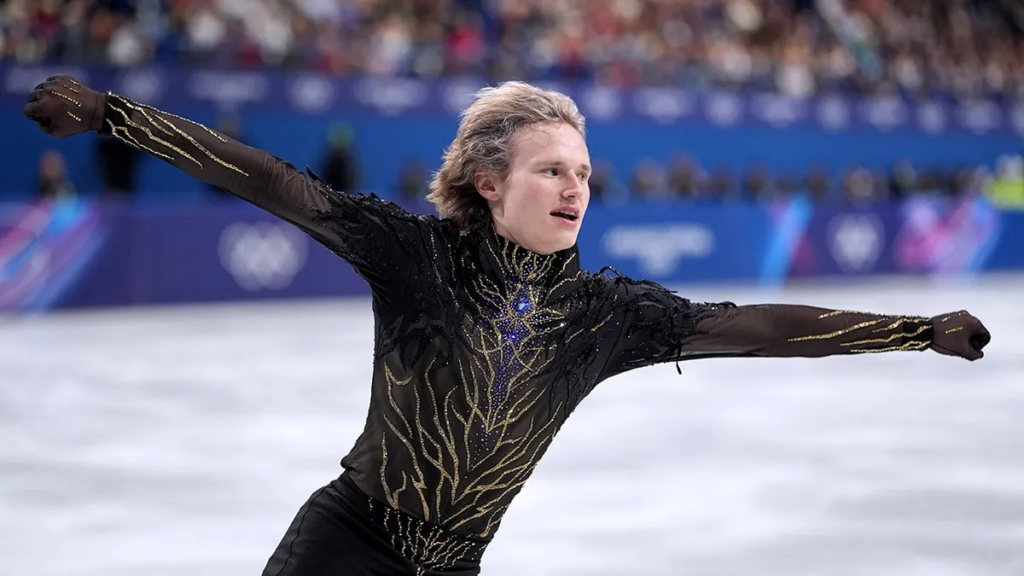
But what the world misunderstood in that moment was this: the quad axel was never meant to be the revolution. It was only the opening sentence.
When Malinin rotated through the air with that extra half-turn—four and a half revolutions compressed into less than a second—the crowd erupted for the physics of it. And rightly so. It was a triumph of mechanics, of timing, of sheer audacity. Yet, buried beneath the applause was a quieter truth the sport wasn’t ready to confront.
Because figure skating has never belonged solely to numbers.
For decades, the sport has danced between two forces: athletic progression and artistic expression. Every generation leans a little harder into one, forcing the other to adapt. Jumps got higher, spins got faster, transitions got sharper. But somewhere along the way, the soul of skating—the pauses, the breath between movements, the emotion that lingers after the music fades—began to compete for space with the technical scoreboard.
The quad axel didn’t create that tension. It exposed it.
What Malinin achieved was not just a new jump; it was a question thrown directly at the judges, the fans, and the future of the sport: How far can we push the body before we begin to lose the feeling?
And yet, if you watch him closely—not just the jump, but everything around it—you start to see something different. The setup, the control, the quiet focus before takeoff. The landing isn’t just survival; it’s intention. There’s a story trying to emerge, even within the most technical moment ever attempted on ice.
That’s where the real shift begins.
Because the next generation of skaters won’t grow up fearing the quad axel. They’ll grow up expecting it. What once defined greatness will become a baseline, a requirement, a line item on a program sheet. And when that happens—and it will—the sport will be forced to look elsewhere to decide who truly stands above the rest.
Not just who can jump higher… but who can make it mean something.
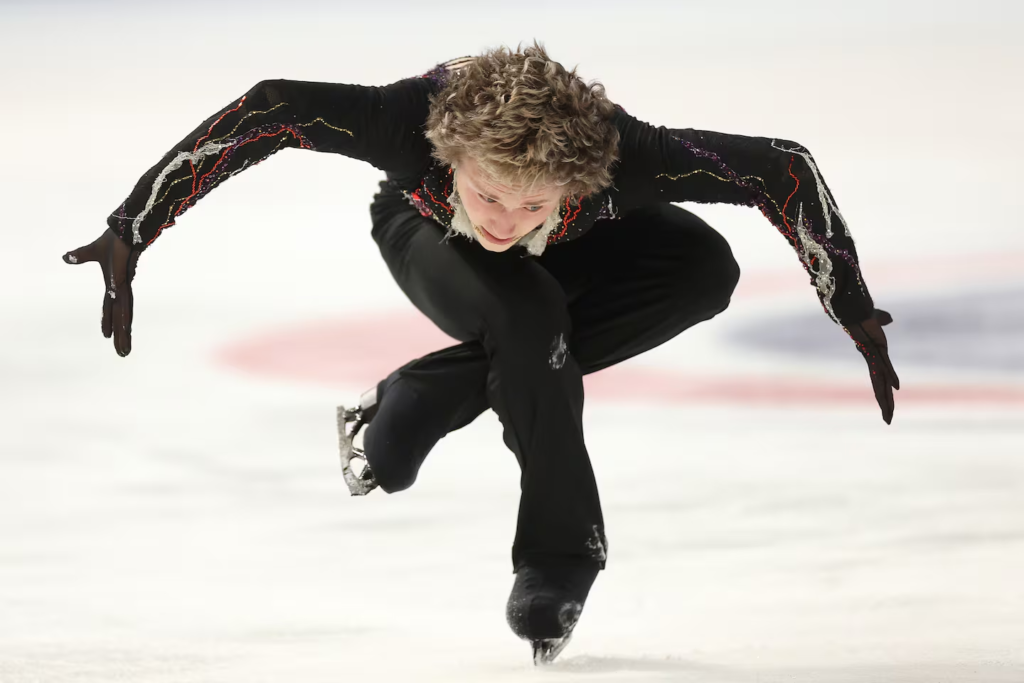
This is the paradox Malinin has unknowingly introduced. By conquering the hardest jump, he may have accelerated the return of artistry. When everyone can do the impossible, the impossible stops being enough. What remains is interpretation, connection, vulnerability—the very elements that can’t be measured by rotation counts or base value.
In that sense, the quad axel is less of an ending and more of a reset.
It clears the stage.
It strips away the illusion that difficulty alone can carry a performance to immortality. Because audiences don’t remember rotations—they remember how a moment made them feel. A glance toward the judges. A breath that breaks at the right lyric. A silence that speaks louder than any landing ever could.
Even Malinin, in his quiet evolution, seems to understand this. Beyond the “Quad God” headlines, there are glimpses of something deeper forming—a skater no longer chasing the impossible, but learning how to live inside it.
And that is where the revolution truly begins.
Not in the air, but in the space after the landing.
The quad axel opened the door. What comes next will decide whether figure skating becomes a sport that merely pushes limits—or one that remembers why those limits were worth pushing in the first place.