There are performances that impress you. And then there are performances that quietly enter your chest and stay there long after the ice has melted beneath the skates. When Ilia Malinin steps onto the rink to Lovely by Billie Eilish and Khalid, it doesn’t feel like the start of a routine—it feels like the beginning of something deeply personal, almost private, unfolding in front of thousands.
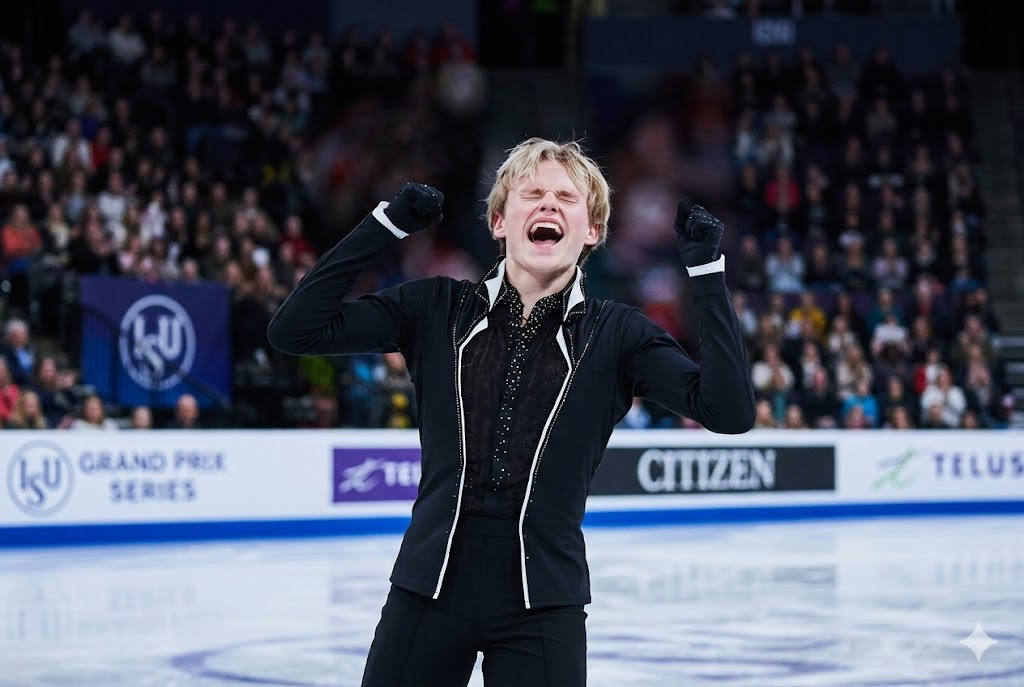
The first note doesn’t rush. It lingers. And so does he.
Malinin doesn’t attack the ice the way he does in his high-octane, quad-heavy programs. Instead, he listens. His movements are softer, more deliberate, as if each edge is tracing a memory rather than chasing a score. The arena grows quieter—not because the audience is told to be silent, but because they feel they should be.
And that’s the first thing you notice: control not just over his body, but over the entire atmosphere.
Choreographed by Malinin himself, the program carries a signature that cannot be replicated. It isn’t built to impress judges with technical difficulty alone—it’s built to say something. Every extension of his arm feels like a reaching. Every glide feels like letting go. You don’t watch this program. You experience it.
There’s a certain bravery in that.
For an athlete known worldwide as the “Quad God,” redefining expectations is no easy task. Fans come anticipating gravity-defying jumps, impossible rotations, and history-making moments. And yet here, Malinin chooses stillness over spectacle, emotion over explosion. He strips everything back—and somehow, that makes the performance feel even bigger.
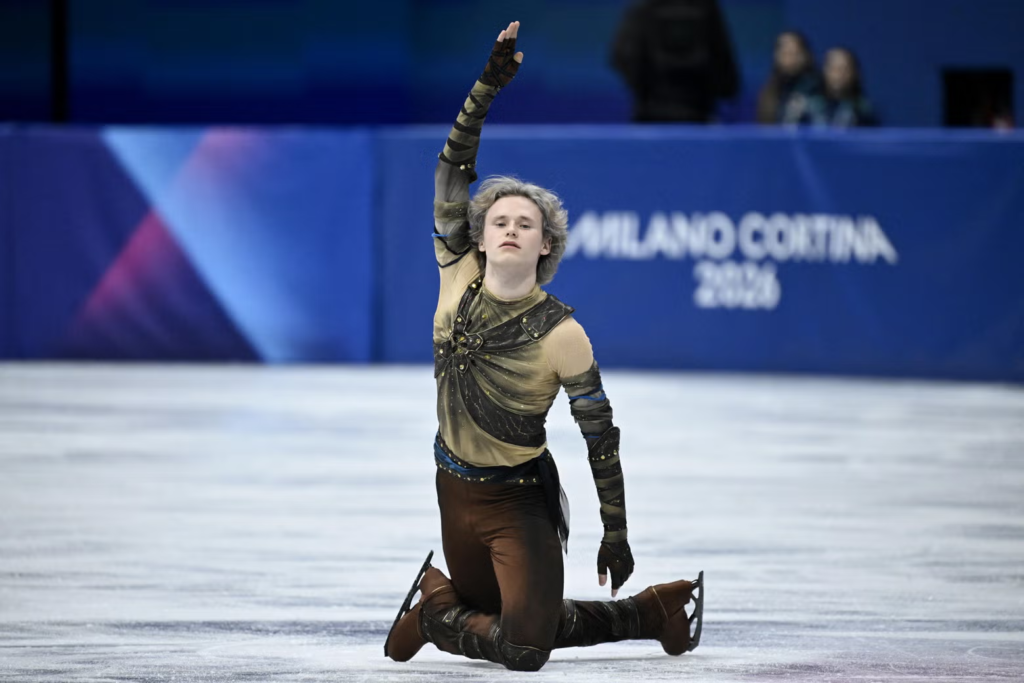
Because vulnerability, when done right, is louder than any applause.
As the melody of Lovely builds, so does the tension in his skating. There’s a quiet ache embedded in the choreography, a push and pull between restraint and release. His edges carve deep into the ice, almost as if he’s grounding himself in something real while the music floats above him. It’s not just movement—it’s dialogue.
Between artist and music. Between athlete and self.
And then come the moments that take your breath without warning.
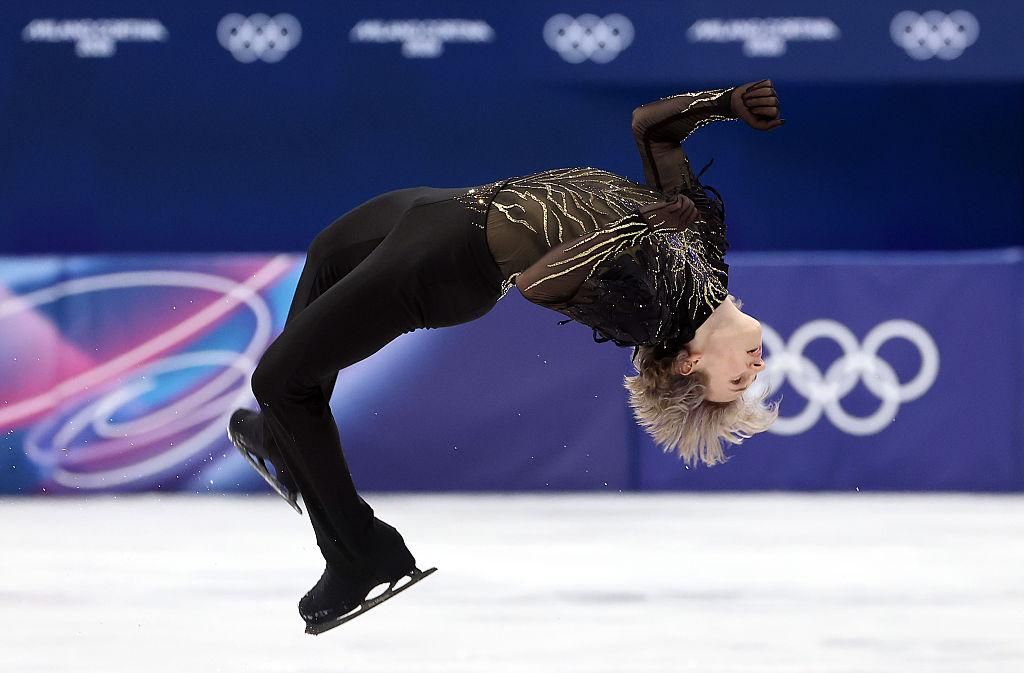
A perfectly timed jump that doesn’t feel like a technical element, but like an emotional climax. A spin that tightens, faster and faster, before opening into something almost fragile. The transitions are seamless, but more importantly, they feel honest. Nothing about this routine feels forced.
That’s why it resonates.
Fans across the world have already turned this performance into something more than just a competition piece. Clips have spread across platforms, gathering millions of views—not because of flashy tricks, but because people recognize something rare in it. Authenticity.
And authenticity is something audiences can feel instantly.
There’s a reason why this program stands apart in Malinin’s growing legacy. It shows a different side of him—not just as an athlete chasing records, but as an artist willing to slow down and be seen. In a sport that often celebrates perfection, he leans into imperfection, into feeling, into storytelling.
And that choice changes everything.
By the time the final note fades, there’s no immediate eruption of noise. There’s a pause. A breath held collectively by everyone watching. As if the audience needs a second to come back—to remember they’re not inside the performance anymore.
Then comes the applause.
But even that feels secondary.
Because what Malinin creates in this routine isn’t just a moment of applause—it’s a moment of connection. The kind that lingers in your chest long after the lights dim. The kind that makes you replay it, not to analyze it, but to feel it again.
And maybe that’s the true brilliance of it.
Not the jumps. Not the choreography. Not even the music.
But the way it makes you feel like, for just a few minutes, you understood something you couldn’t quite explain.