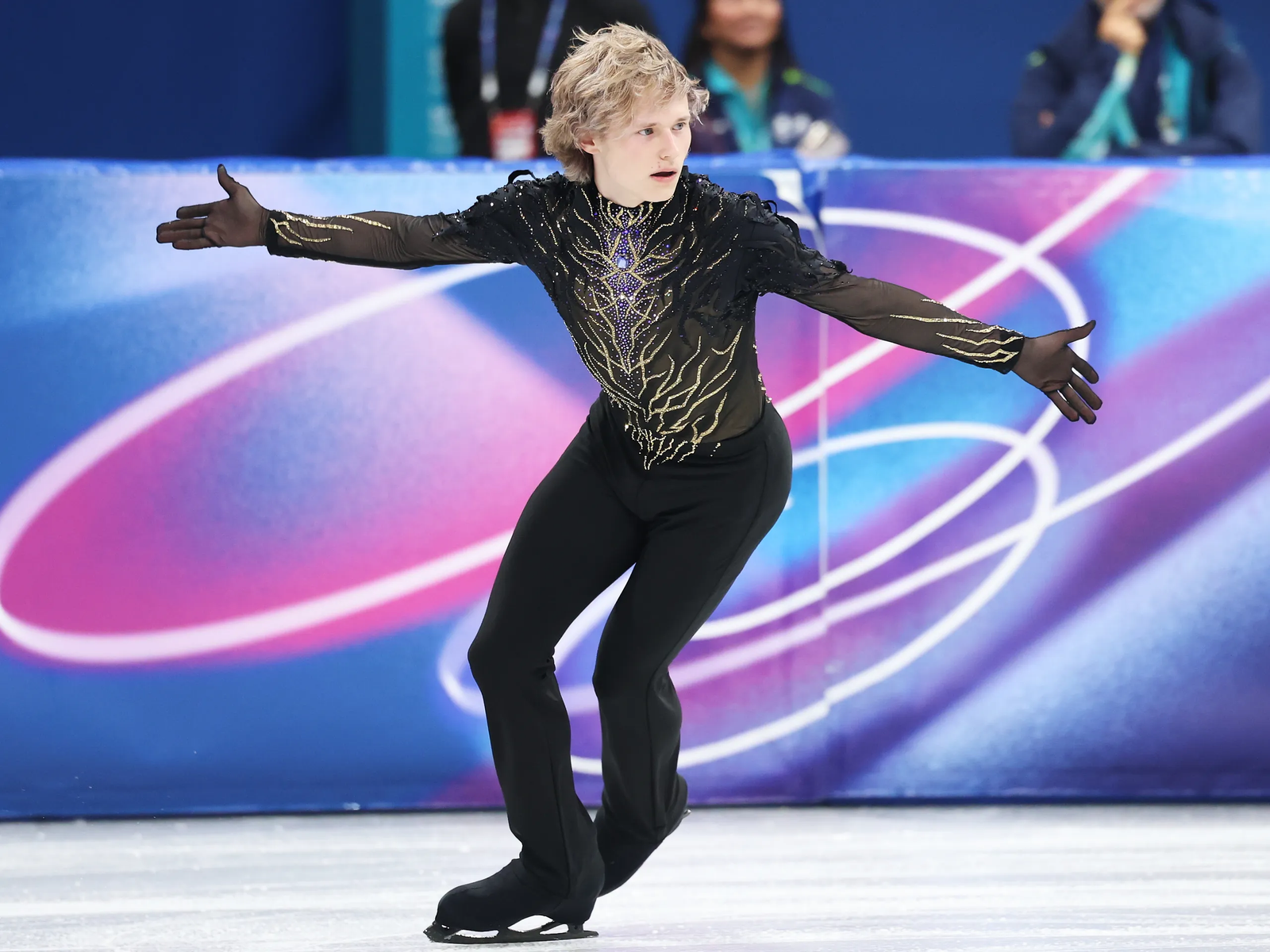
There are victories that feel loud, explosive, impossible to ignore. And then there are victories that arrive with a strange kind of calm—so controlled, so deliberate, that they almost feel inevitable. When Ilia Malinin stepped onto the ice in Prague, it wasn’t a question of whether he would win.
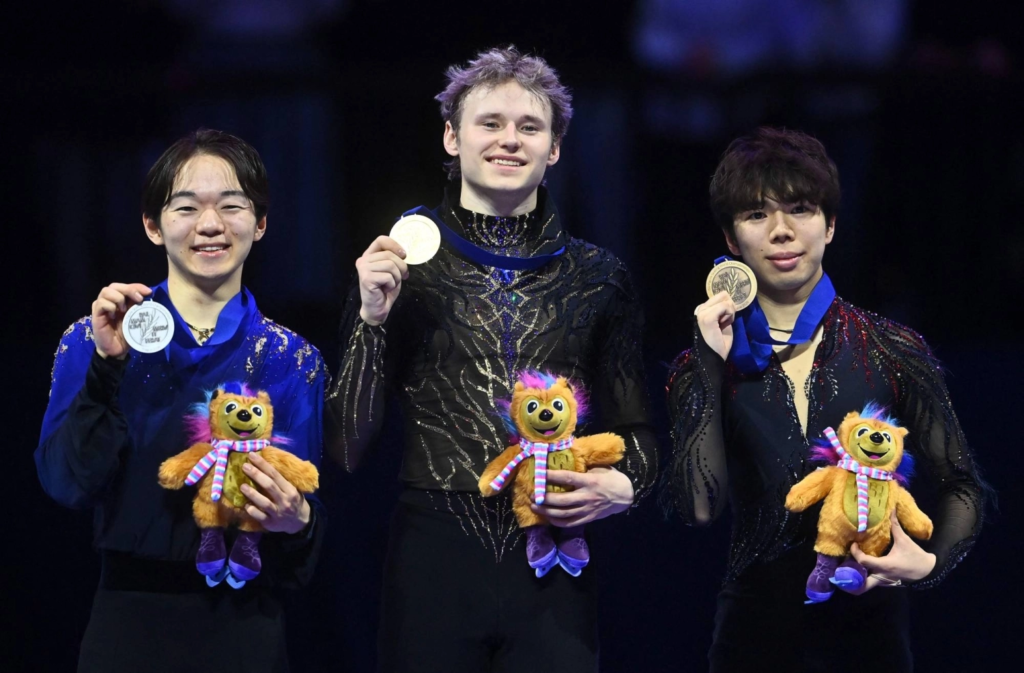
It was a question of how.
Because something about this performance didn’t chase greatness.
It assumed it.
For years, Malinin has been defined by difficulty. The “Quadg0d.” The skater who bent physics, who chased the unimaginable, who turned the quad axel from myth into muscle memory. His programs were often described in numbers—four, five, seven quads—each one a statement, each one a challenge thrown at the limits of the sport.
But in Prague, something shifted.
He didn’t need everything.
And that, somehow, made everything more powerful.
This wasn’t the Malinin who overwhelmed the ice with sheer technical force. This was a version of him that understood restraint. Five quads. No quad axel. No need to prove what had already been proven. He entered the long program with a lead, but more importantly—with clarity.
He wasn’t performing to impress.
He was performing to control.
And that distinction is where the transformation lives.
Because dominance in figure skating isn’t just about what you can do—it’s about what you choose not to do. And in that choice, Malinin revealed something deeper than technical mastery. He revealed awareness. The kind that only comes after pushing yourself to the edge and realizing you no longer need to stand there to be believed.
Every jump landed—clean, measured, almost quiet in its execution.
Except one.
A small imperfection. A missed element. A minor penalty that, in another context, might have shifted the narrative. But here, it didn’t matter. Because this performance was never about perfection. It was about command. And command doesn’t crumble over small fractures—it absorbs them.
That’s what made this moment so different.
The world expected fireworks.
Malinin gave them precision.
And strangely, it felt bigger.
Because while others in the field struggled to even attempt three quads, Malinin had already lived beyond that conversation. Months earlier, he had become the first to land seven quads—every type—in a single program. A feat so distant from the rest of the field that comparison almost felt unfair.
So in Prague, he didn’t compete against them.
He competed against expectation.
And then, quietly, he redefined it.
There’s something almost poetic in the way the skating world described it afterward—“a return to normal.” But it’s not really normal, is it? Because what Malinin has done is shift the baseline so dramatically that his extraordinary now looks effortless.
And that’s the illusion of greatness.
When the impossible becomes routine, and the routine becomes dominant.
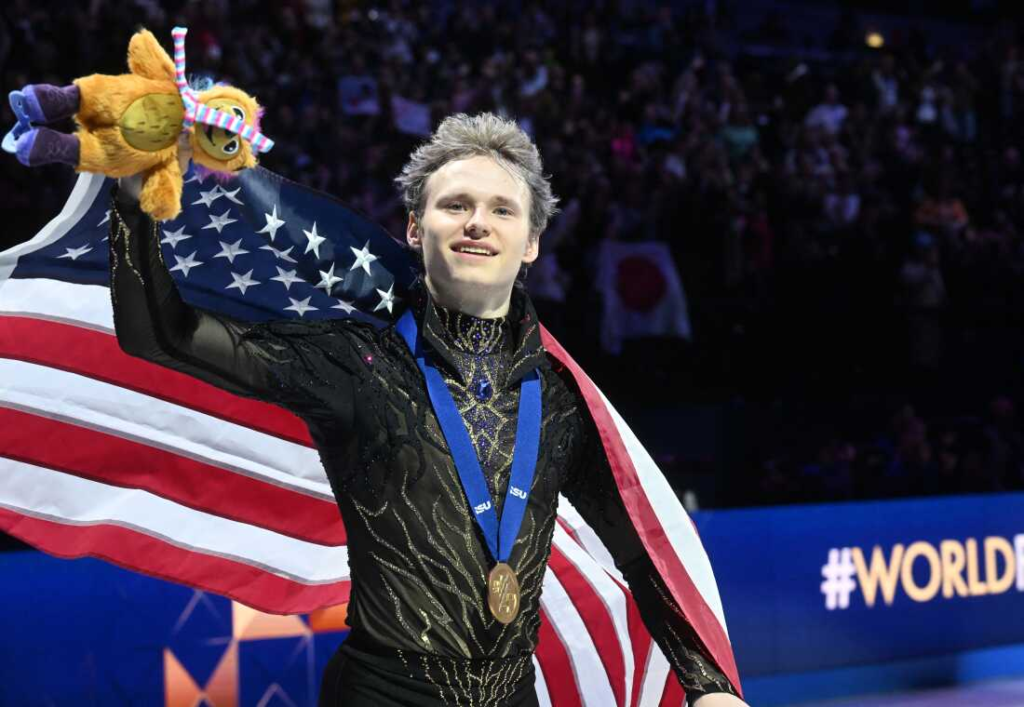
This third consecutive world title doesn’t feel like a continuation.
It feels like a declaration.
Not that he is the best—because that conversation has already been settled—but that he understands the game at a level few ever reach. He knows when to push, when to hold back, when to silence doubt without ever acknowledging it.
That’s not just skill.
That’s evolution.
And maybe that’s why this performance lingers longer than his most explosive ones. Because it didn’t rely on spectacle. It relied on certainty. The kind that doesn’t need validation, doesn’t need excess, doesn’t need noise.
Just ice.
Just movement.
Just control.
The Quadg0d didn’t return in Prague.
He refined himself.
And in doing so, he reminded the world of something quietly profound—
That true dominance isn’t about doing more.
It’s about knowing exactly how much is enough.