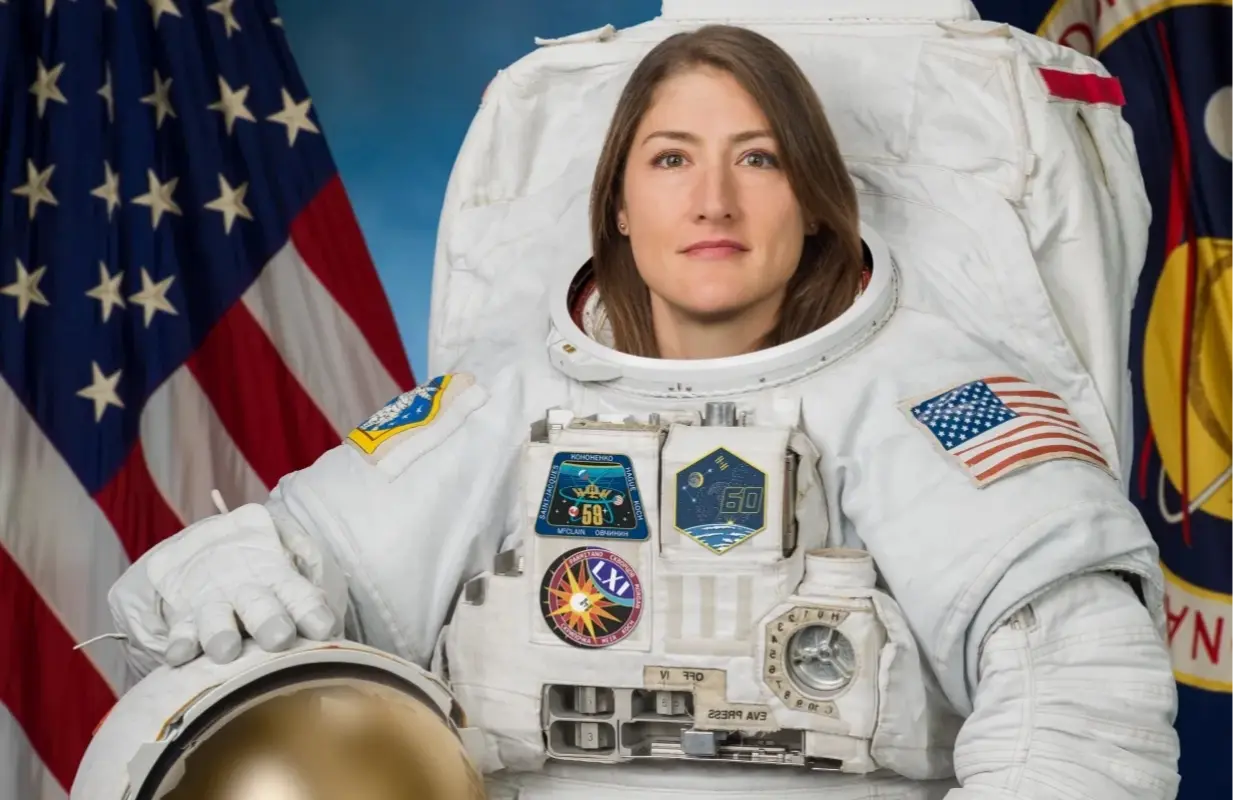
When Christina Koch takes her place aboard the Artemis II, history won’t announce itself with noise. There will be no sudden shift in gravity, no visible line marking the moment everything changes. And yet, something will. Quietly. Permanently.
Because for the first time, a woman will travel around the Moon.
Not as a symbolic passenger. Not as an afterthought to progress. But as a mission specialist—essential, prepared, and deeply embedded in the architecture of the journey itself. Her role isn’t to represent. It’s to perform. To test life support systems, to validate navigation pathways, to ensure communication holds steady in the vast silence beyond Earth.
And that distinction matters.
Because history often celebrates “firsts” as moments of visibility. But this one is different. This one is built on capability. On years of precision, discipline, and a career that has already stretched the limits of what was once thought possible.
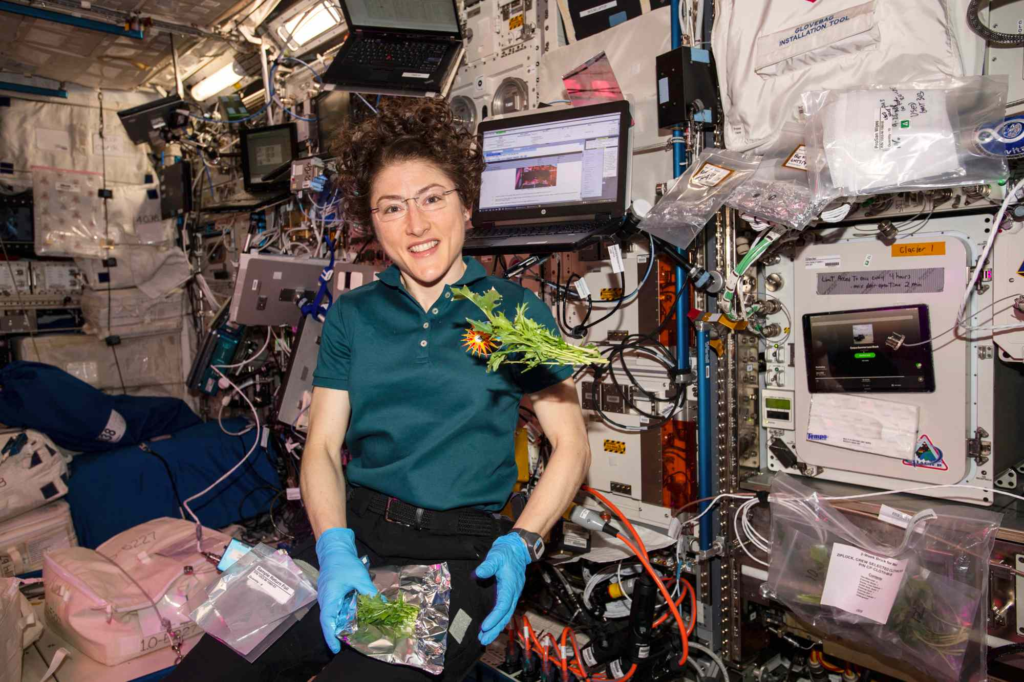
Before Artemis II, Christina Koch had already redefined endurance.
Her record-breaking mission—spending more time in space on a single flight than any woman before her—wasn’t just about duration. It was about resilience. About proving that the human body, regardless of gender, could withstand the prolonged isolation, the physical strain, the psychological demands of orbiting far above the world we know.
And she didn’t stop there.
She stepped outside the spacecraft—literally—becoming part of the first all-female spacewalk. A moment that was celebrated globally, yes, but more importantly, executed with precision and normalcy. Not as a spectacle, but as a standard.
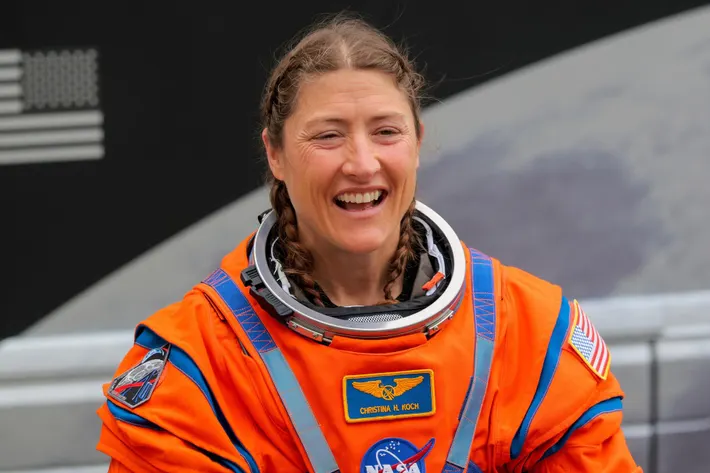
That’s been the quiet theme of her career.
Turning what was once extraordinary into something expected.
And now, she carries that same energy into deep space.
The Orion spacecraft isn’t just a vessel—it’s a test. A proving ground for systems that will define the future of lunar exploration and, eventually, missions even farther away. Every switch, every reading, every adjustment made during Artemis II feeds into something larger than a single flight.
And Koch will be at the center of that.
Monitoring. Interpreting. Responding.
Because space doesn’t reward symbolism.
It demands competence.
But beyond the technical responsibilities, there’s something deeper unfolding here. Something that can’t be measured in data or mission success metrics. Something that exists in the quiet realization of what this moment represents—not just for the crew, but for everyone watching.
Because for decades, the image of who gets to go to the Moon was limited. Defined. Narrow.
And now, it isn’t.
This isn’t just about inclusion as a concept. It’s about expansion as a reality. About reshaping the narrative of exploration so that it reflects more than a single version of humanity. About ensuring that when we look outward—toward the Moon, toward Mars, toward whatever comes next—we carry with us a broader, more honest representation of who we are.
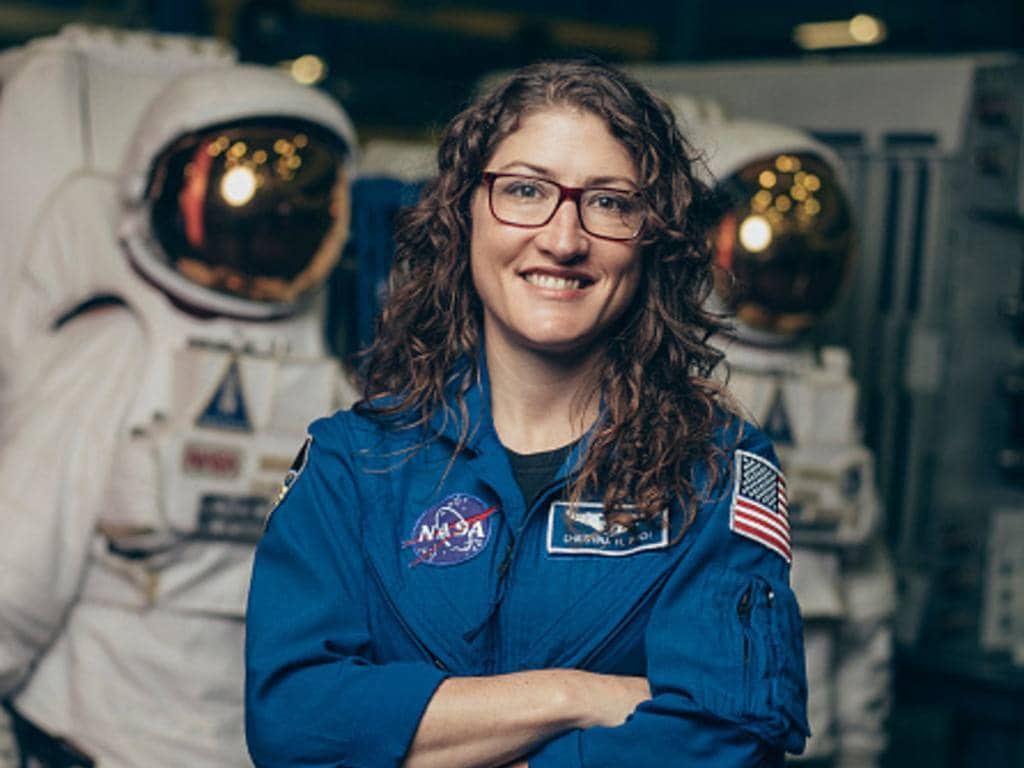
Koch’s presence on Artemis II is a reflection of that shift.
Not forced. Not performative.
Earned.
And perhaps that’s why it feels so powerful.
Because young people watching this mission won’t just see a historic milestone. They’ll see possibility recalibrated. They’ll see someone who looks like them, thinks like them, dreams like them—moving through a space that once felt unreachable.
And that changes things.
Not instantly. Not dramatically.
But undeniably.
Because representation doesn’t just inspire—it redefines what feels realistic.
And once something feels realistic, it becomes attainable.
That’s the ripple effect of this moment.
Years from now, there will be astronauts who trace their ambitions back to Artemis II. To the moment they watched Christina Koch orbit the Moon and realized that space wasn’t reserved—it was open.
Open to them.
Open to anyone willing to commit, to train, to endure, to believe.
And that might be the most significant outcome of all.
Not the distance traveled. Not the systems tested. Not even the history made in isolation.
But the doors quietly opened in the minds of those still standing on Earth, looking up, wondering if they belong out there.
Because thanks to moments like this—
They already do.