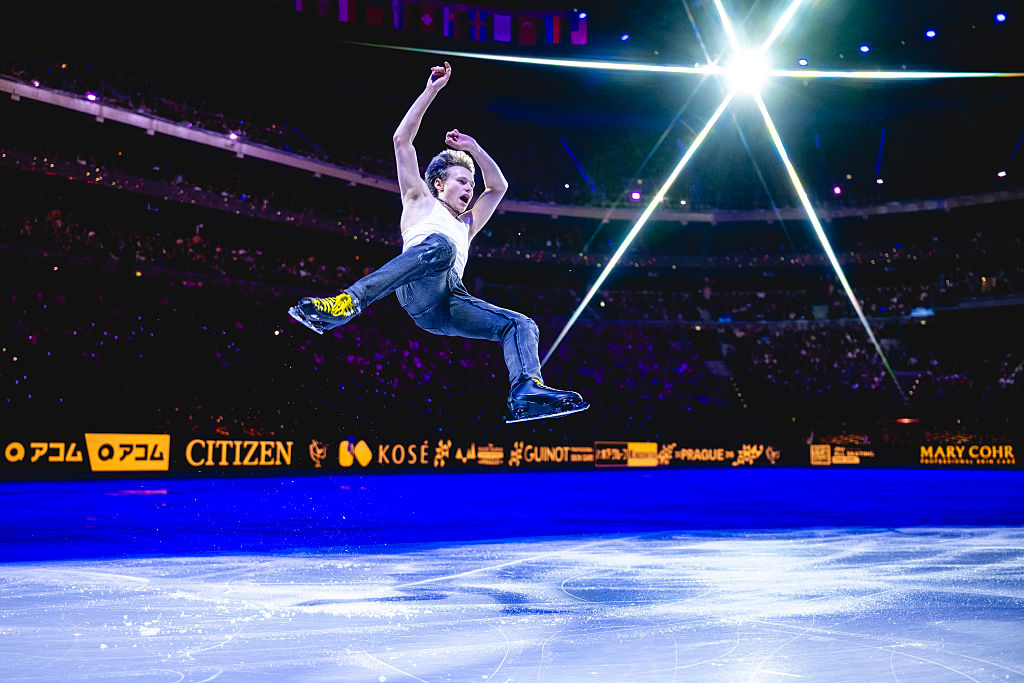
There’s a quiet contradiction at the center of Ilia Malinin — one that doesn’t announce itself, but lingers in every edge, every landing, every breath between elements. Three world titles in, a résumé already brushing against history, and yet nothing about the way he skates feels settled. It feels urgent. Almost unfinished.
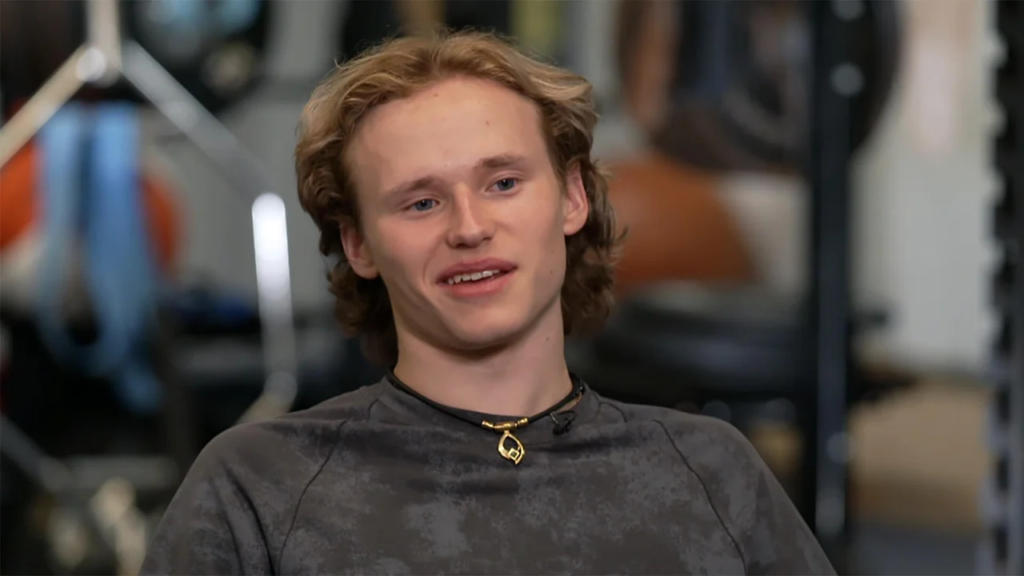
Most champions, once they arrive, begin to protect what they’ve built. Their skating softens into preservation — cleaner, safer, refined. But Malinin moves in the opposite direction. He doesn’t skate like someone defending a throne. He skates like someone still chasing one that hasn’t been named yet.
That’s what makes him unsettling to watch — in the best way. Because even when he lands what others consider impossible, there’s no visible exhale. No moment where he lets the performance sit. It’s as if the jump, no matter how historic, is just a checkpoint he was expected to pass.
The label “Quad God” follows him everywhere now, attached to a legacy built on technical audacity. But if you watch closely, the identity doesn’t seem to satisfy him. If anything, it feels like something he’s trying to outgrow. Not by abandoning it — but by stretching it until it becomes something unrecognizable.
There’s a difference between proving you can do something… and proving that what you do can evolve.
And that’s where Malinin’s current chapter becomes far more interesting than his rise. Because the rise was about shock — the quad axel, the impossible difficulty, the rewriting of limits. But this phase? This is about meaning. About whether the most technically dominant skater of his generation can also become the most complete.
It shows in the subtle places first.
The way his programs now breathe differently. The way transitions aren’t just bridges between elements, but statements of control. The way his posture, once secondary to the jumps, has begun to carry intention. These aren’t loud changes. They don’t trend instantly. But they accumulate — and over time, they reshape perception.
There’s also something else — something harder to quantify.
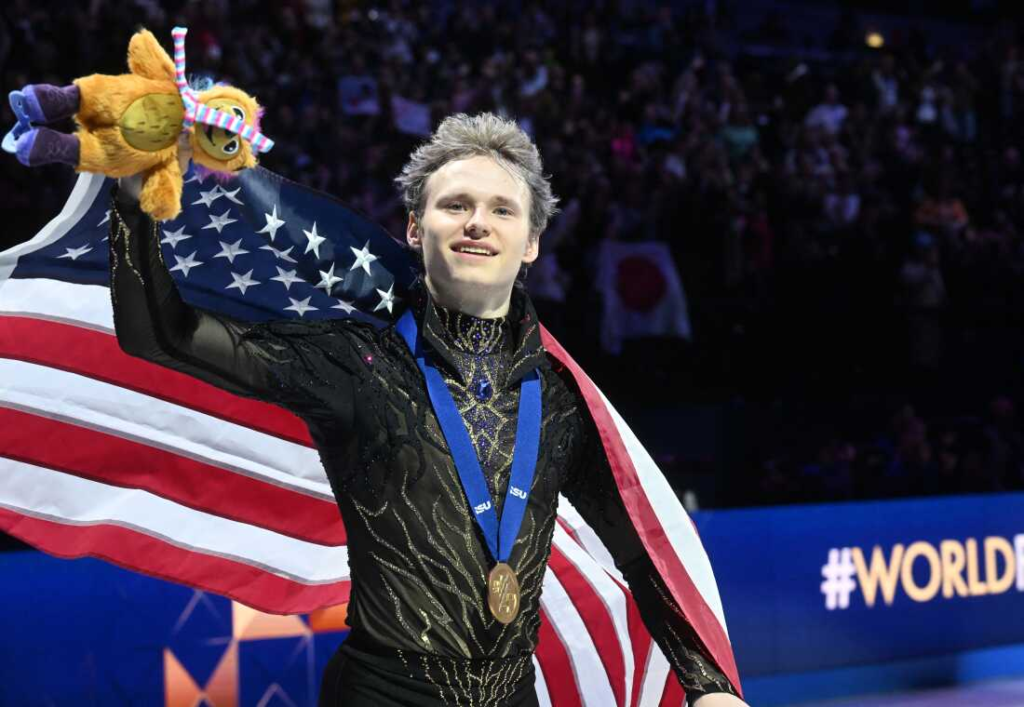
After the 2026 Winter Olympics, where expectation weighed heavier than ever, something shifted in how he carries pressure. Not lighter, not easier — just different. More internal. Less reactive. Almost as if he stopped skating against the moment… and started skating through it.
That shift doesn’t make him calmer. It makes him sharper.
Because now, the mistakes — when they happen — don’t look like collapse. They look like interruptions. Temporary, almost inconvenient, in a larger trajectory that doesn’t feel easily shaken anymore.
And maybe that’s why the hunger hasn’t disappeared.
For most athletes, dominance eventually answers the question: Am I enough?
For Malinin, it seems to have done the opposite. It’s expanded the question into something far more demanding: What else is possible?
That question is dangerous. Because it doesn’t allow rest. It doesn’t accept repetition. It keeps moving the finish line just far enough that satisfaction never quite settles in.
But it’s also what separates great from generational.
There’s a moment, often missed in highlights, where this becomes visible. Not in the jump itself — but immediately after. A glance. A micro-expression. Not relief, not celebration — but calculation. As if he’s already replaying it, already measuring it against a version that doesn’t exist yet.
That’s not the behavior of someone who’s arrived.
That’s the behavior of someone still building something.
And maybe that’s the real story beneath the titles.
Because three world championships should feel like a conclusion — or at least a pause. A moment to stand still and let the weight of achievement catch up. But with Malinin, there is no stillness. Only continuation.
Only motion.
Only this quiet insistence that whatever he’s done so far… isn’t the final version.
Which leaves the rest of the skating world in an unusual position — not chasing what he’s already achieved, but trying to anticipate where he’s going next.
And the unsettling truth?
He might not know either.