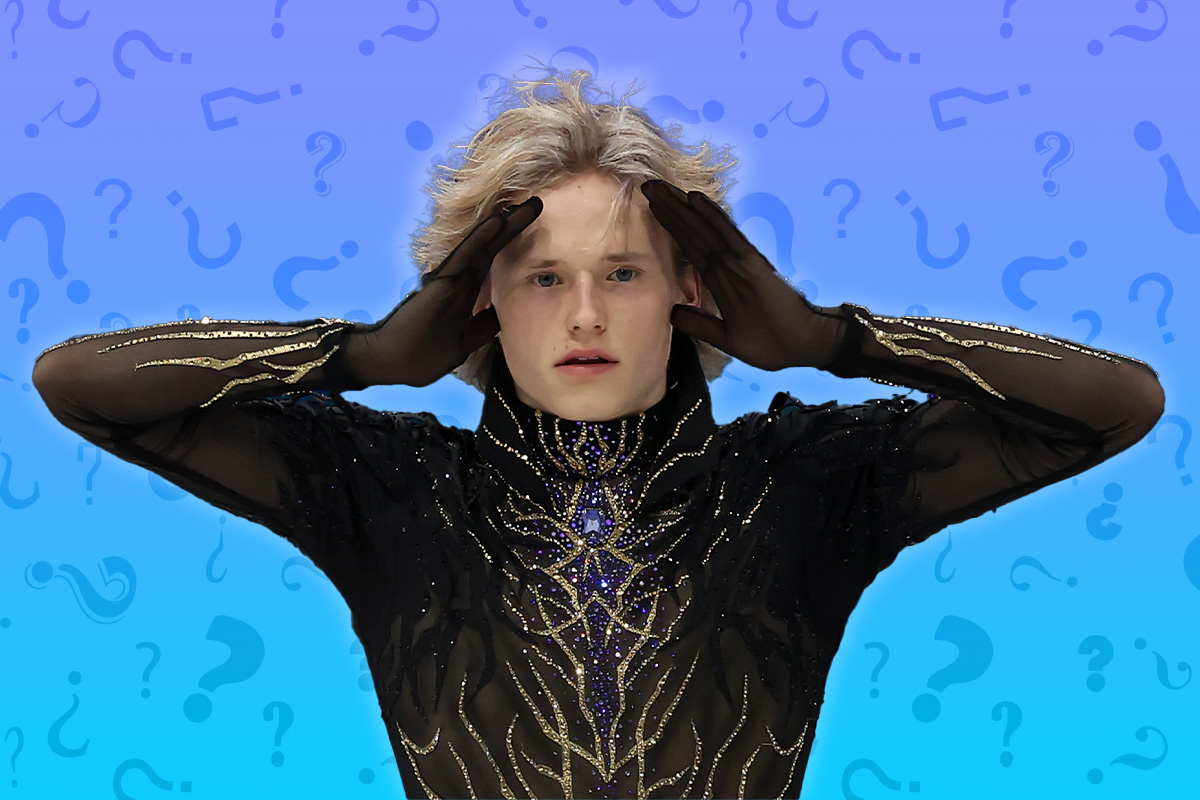
There are moments in sport that feel almost unreal—where what you’re watching doesn’t quite register as possible. When Ilia Malinin launches into a backflip on ice, it’s one of those moments. Not just because of the danger, or the rarity, but because it seems to exist outside the rules that define the sport itself.
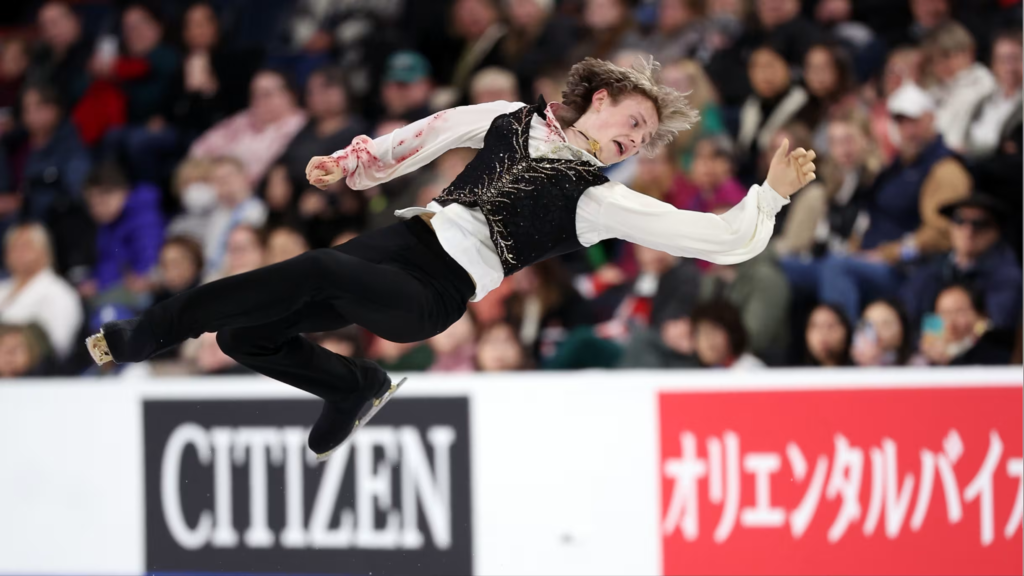
The crowd doesn’t cheer immediately.
They hold their breath.
Because instinctively, everyone understands that what’s about to happen shouldn’t be easy—even for someone who has already redefined what’s possible on ice. The timing has to be perfect. The rotation has to be exact. The landing has to absorb forces that most athletes never train for. And yet, Malinin makes it look… almost casual.
Which is exactly what makes his confession so unsettling.
When he revealed that his mind isn’t racing before the move—that there’s no surge of fear, no overthinking, no conscious calculation—it disrupted the entire narrative. Because we expect greatness to come from intense focus, from mental battle, from pushing through fear.
But Malinin doesn’t fight the moment.
He steps out of it.
“For me, it’s muscle memory.”
It sounds simple. Almost too simple.
But beneath those words is something far more complex.
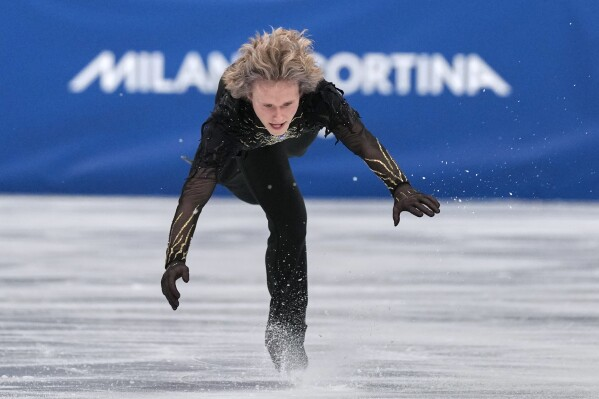
Muscle memory is not instinct in the way most people imagine. It is repetition layered over years, precision built through failure, confidence carved out of countless attempts where things didn’t go right. It’s not the absence of thought—it’s the evolution beyond needing it.
What Malinin is describing is a state where the body no longer asks the mind for permission.
It just executes.
And that’s where the real fascination begins.
Because letting your body take over is not about losing control—it’s about reaching a level of control so deep that conscious thought becomes unnecessary. It’s the same phenomenon seen in elite performers across disciplines: the moment where action becomes automatic, where awareness narrows, where everything slows down even as the body moves at extreme speed.
Athletes call it “the zone.”
But what Malinin is doing feels like something even more refined.
Because the move itself—the backflip—is not just technically demanding. It’s psychologically defiant. On ice, where friction is minimal and mistakes amplify instantly, flipping backward requires a level of trust that borders on irrational. There is no visual reference mid-rotation. No correction once committed.
Just movement.
And landing.
So the question becomes: how do you remove fear from something that should naturally create it?
The answer isn’t bravery.
It’s familiarity.
Malinin has repeated the motion so many times, trained his body so precisely, that the unknown has been replaced with certainty. Not because the risk disappears—but because his relationship with it changes. The danger is still there. The consequences remain real.
But they no longer dominate the moment.
That’s what makes his skating feel different.
It’s not just about pushing limits—it’s about redefining how those limits are approached. Where others might tense up, calculate, hesitate, Malinin releases. Where others rely on conscious control, he leans into subconscious execution.
And that shift is what creates the illusion of effortlessness.
But make no mistake—there is nothing effortless about it.
Behind that single backflip is years of discipline, thousands of repetitions, and a mental framework built to withstand the pressure of performing the impossible in front of thousands of people. What we see in a few seconds is the visible tip of something much deeper.
Something quieter.
Something practiced.
And perhaps that’s why fans can’t stop talking about it.
Because the real story isn’t just the move.
It’s the mindset.
The idea that at the highest level of human performance, greatness doesn’t come from thinking more—but from thinking less. From trusting more. From allowing the body to become the final decision-maker when the stakes are highest.
And in that sense, Malinin’s confession doesn’t make the backflip less impressive.
It makes it more unsettling.
Because it suggests that what looks impossible… might actually be repeatable.
And if that’s true, then the limits we thought existed on the ice may not be limits at all.
Just thresholds—waiting for someone willing to stop thinking… and finally let go.