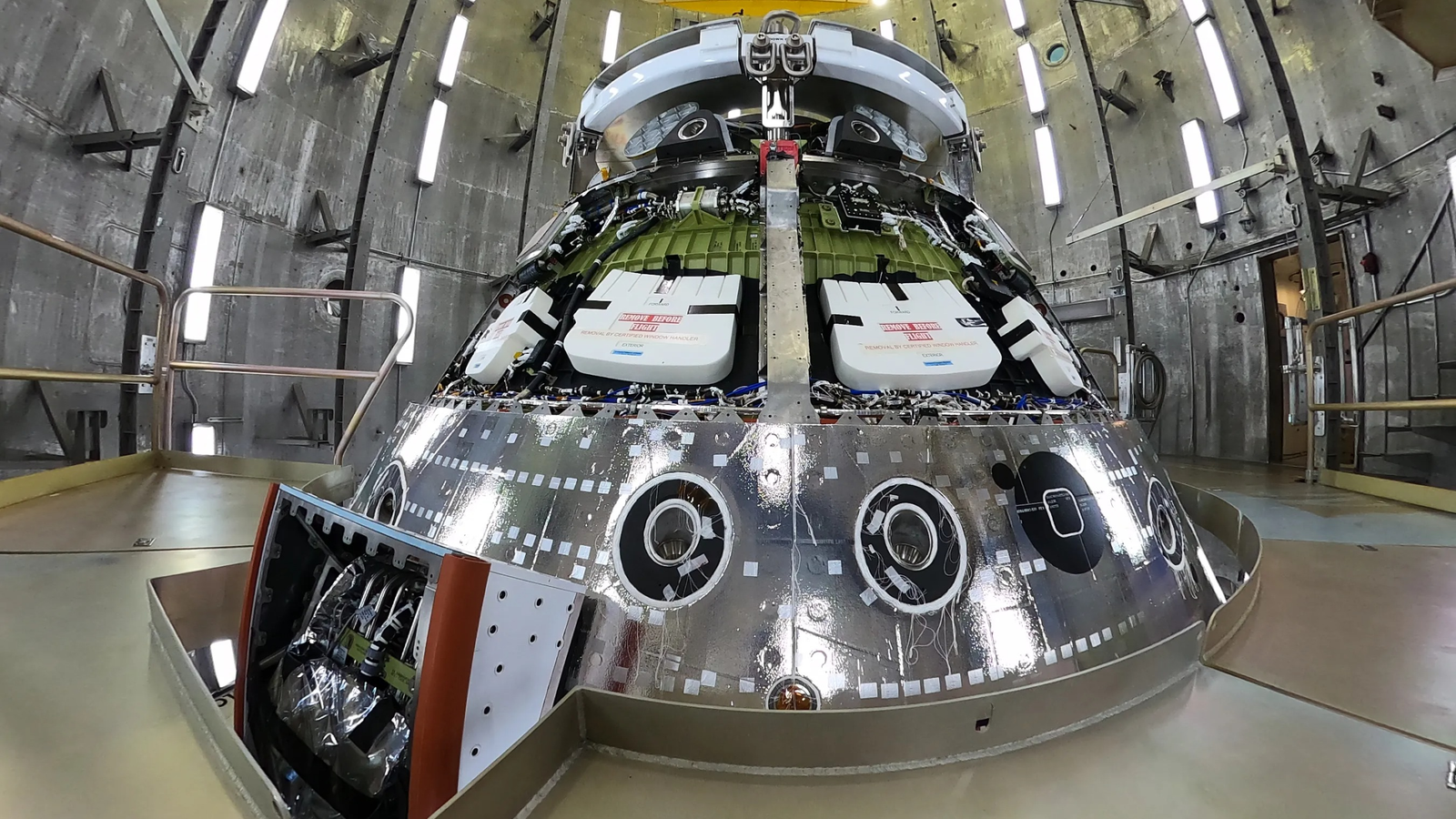
There are moments in human exploration that feel almost too small to comprehend—and yet, they carry the weight of everything. The image of the Artemis II Orion capsule returning to Earth on April 10, 2026 is one of those moments. Not because of what it shows, but because of what it quietly reveals.
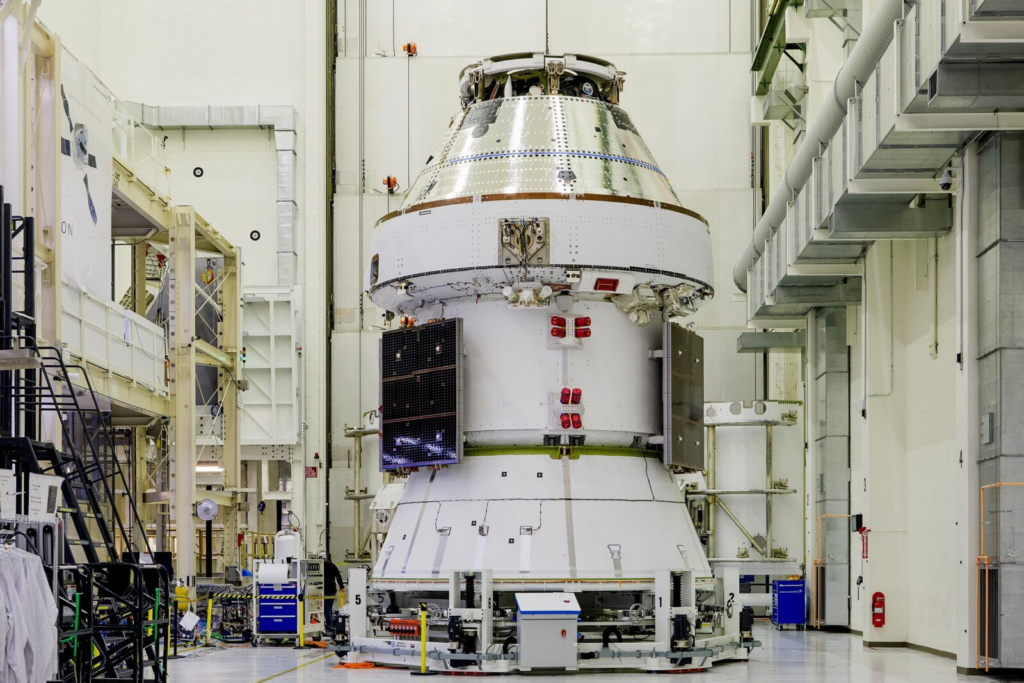
At first glance, it’s almost nothing.
A single, distant point of light suspended against the vast curve of Earth. No detail. No dramatic framing. Just a tiny presence, barely visible, captured by external cameras aboard the International Space Station from roughly 250 miles above the surface.
But that “nothing” is everything.
Inside that nearly invisible dot was a spacecraft named Integrity—carrying four human beings who had just completed a journey farther from Earth than anyone in history. And at that exact moment, they were returning home at a speed of 25,000 miles per hour, wrapped in plasma, enduring temperatures that could reach up to 5,000 degrees Fahrenheit.
From the ground, reentry is often imagined as spectacle.
A blazing streak across the sky. A roaring descent. A dramatic return.
But from orbit, it looks different.
From orbit, it looks quiet.
That’s what makes this image so unsettling in its beauty. There is no visible chaos. No indication of the violence unfolding around the capsule. Just a calm, distant glow—like a star that has somehow fallen too close to Earth.
It’s a perspective that changes everything.
Because it strips away the drama and leaves only scale. The overwhelming contrast between the fragility of human life and the enormity of the environment it dares to navigate. That tiny dot isn’t just small—it’s impossibly small, set against a planet that itself floats in something even larger.
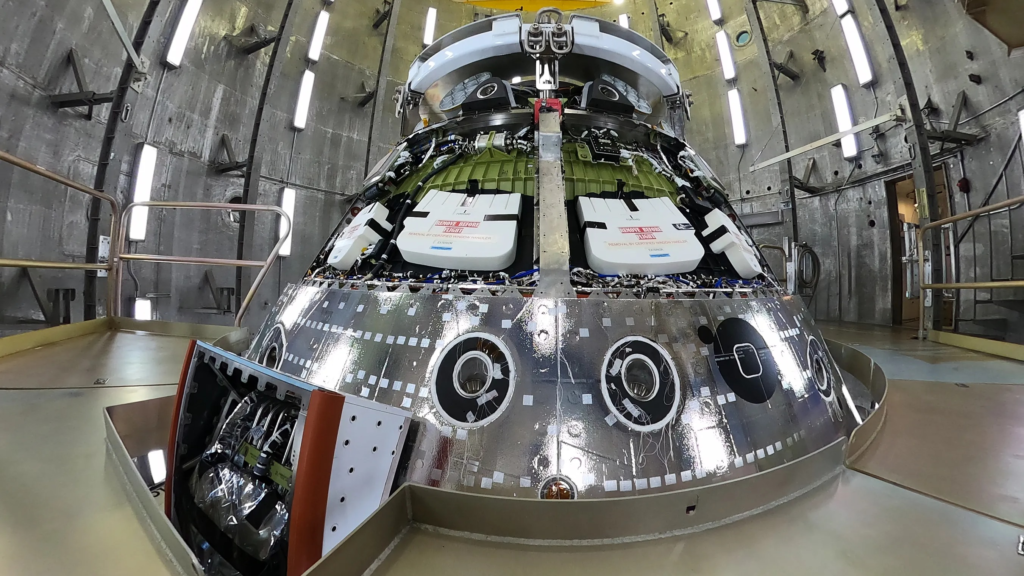
And yet, inside it, there is breath.
There are heartbeats.
There are thoughts—perhaps quiet ones, perhaps overwhelming ones—as the crew feels the force of reentry pressing them back into gravity after days of weightlessness. There is no audience in that moment. No applause. Just the raw, physical reality of returning.
That’s the part we rarely see.
We celebrate launches. We document landings. But the in-between—the invisible tension of reentry—is often reduced to numbers and technical descriptions. Speed. Heat. Trajectory. Data that explains the process, but not the experience.
This image does something different.
It invites you to feel it.
To look at that distant point and realize how much is happening within something so small. To understand that while the world waits below, watching, the real moment exists in isolation—far above the noise, suspended between space and home.
There’s something deeply human about that.
Because in a way, it mirrors how we experience our own defining moments. From the outside, they may seem insignificant. Unremarkable, even. But from within, they carry everything—fear, hope, memory, meaning—all compressed into a single point in time.
The Orion capsule, named Integrity, becomes more than a spacecraft in that image.
It becomes a symbol.
Of risk. Of return. Of the quiet courage it takes to leave everything familiar and trust that you’ll find your way back.
And maybe that’s why this perspective lingers.
Because it reminds us that exploration isn’t always grand in appearance. Sometimes, it’s almost invisible. A flicker against something vast. Easy to miss if you’re not looking closely.
But for those who are—those who pause, who really see—it becomes something unforgettable.
A tiny dot.
Carrying the weight of the human story.