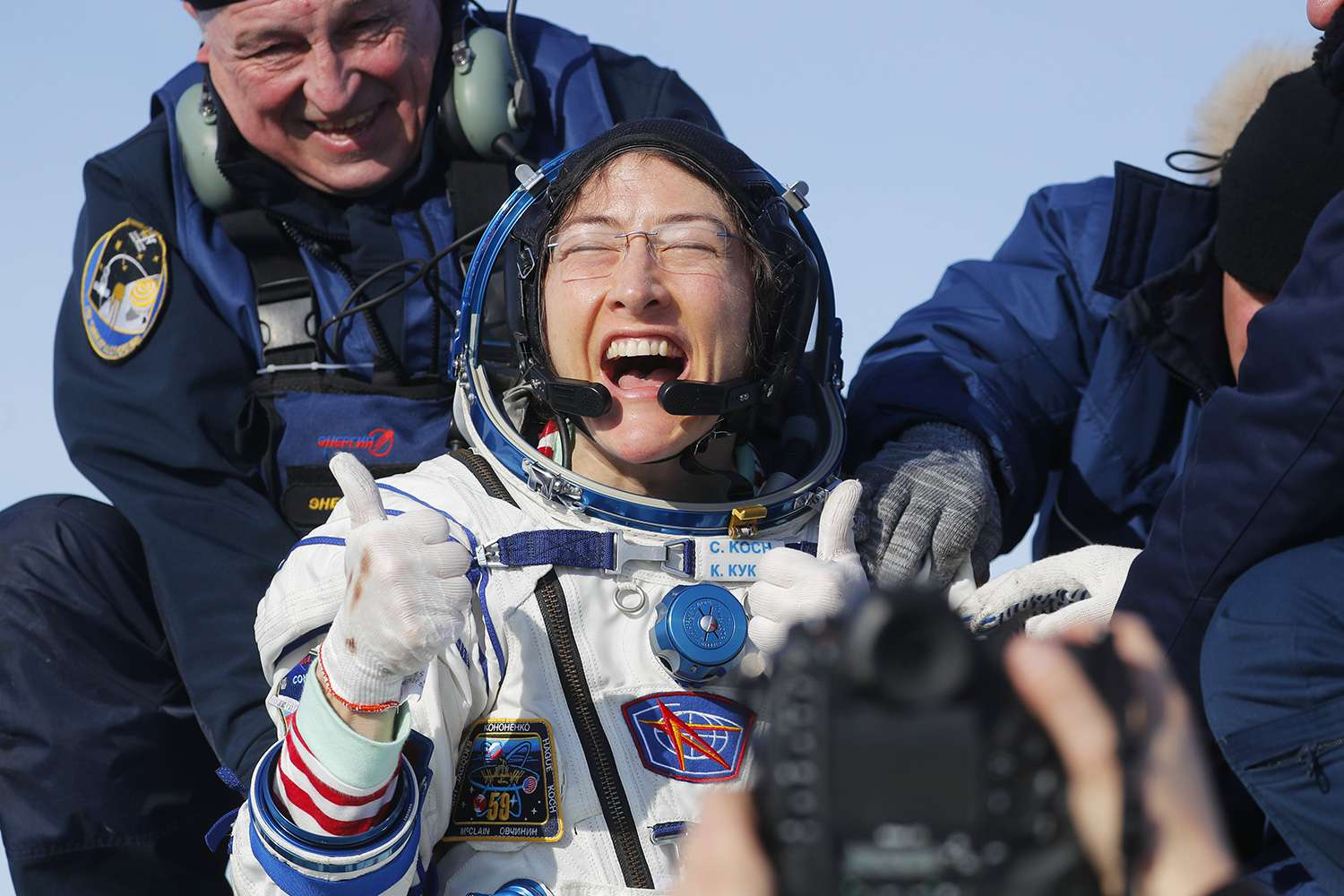
There are stories that inspire, and then there are stories that quietly expand what we believe is possible. The journey of Christina Koch belongs to the latter—a narrative not built on noise, but on persistence, curiosity, and a kind of courage that doesn’t always announce itself.
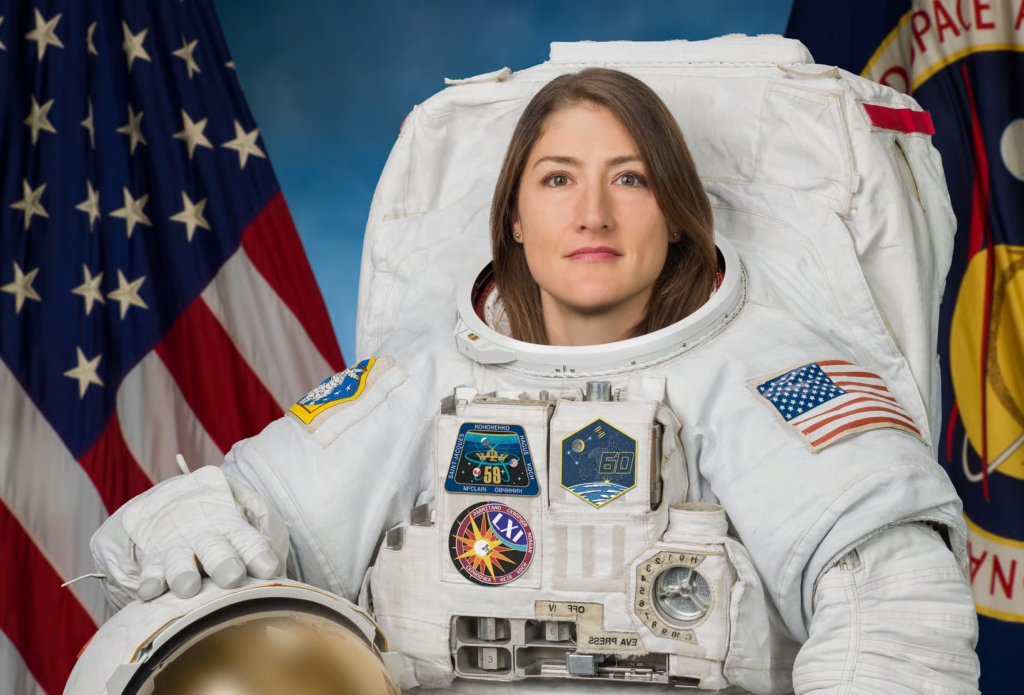
Before the headlines, before the records, there was a question.
What if the boundaries we accept are not limits, but starting points?
Koch’s path didn’t begin in space. It began in classrooms, in labs, in places where curiosity meets discipline. With a foundation in physics and electrical engineering, she chose a direction that demanded both precision and imagination. It’s easy to romanticize spaceflight, but the reality is rooted in years of study, problem-solving, and a willingness to work in environments that test both intellect and endurance.
And she didn’t choose the easy environments.
From the vast, frozen isolation of Antarctica to the controlled intensity of research facilities, Koch placed herself in spaces where comfort was secondary to discovery. These weren’t just career steps—they were quiet preparations for something much larger. Places where resilience isn’t taught, but lived.
When she was selected as a NASA astronaut in 2013, it wasn’t a sudden transformation.
It was a continuation.
A progression of everything she had already built—knowledge, adaptability, and an ability to remain steady in conditions that would overwhelm most. But even then, no one could fully anticipate the mark she would leave.
Because in 2019, she did something that redefined endurance.
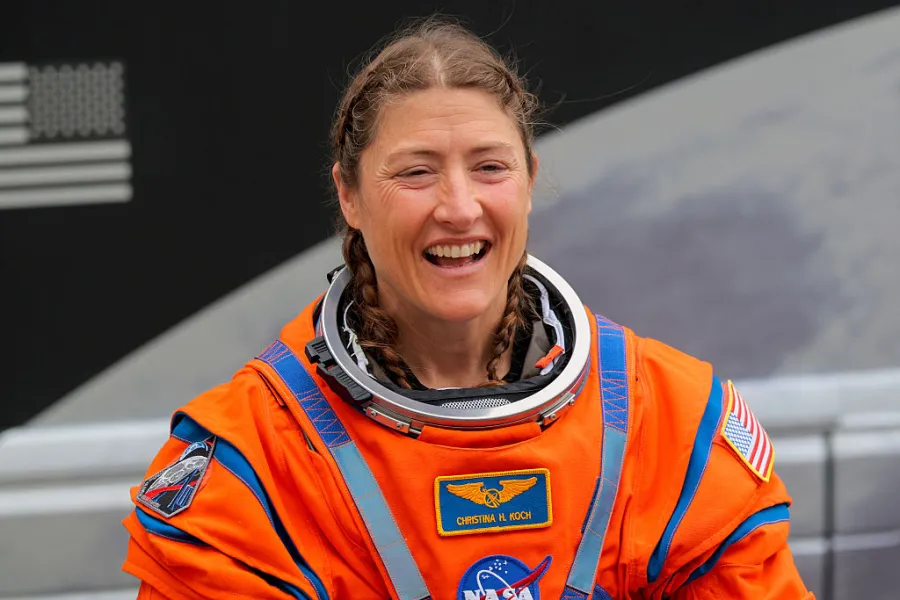
Aboard the International Space Station, Koch spent 328 consecutive days in orbit—setting the record for the longest single spaceflight by a woman. But numbers alone don’t capture what that means. Nearly a year away from Earth. Nearly a year of microgravity, isolation, and the constant awareness that home is always just out of reach.
It wasn’t just a physical challenge.
It was an emotional one.
Time behaves differently in space. Days blur. Distance stretches. And yet, within that altered reality, Koch maintained something essential—a connection to purpose. A reminder that every experiment, every observation, every orbit carried meaning beyond the moment itself.
And then came another milestone.
Alongside fellow astronaut Jessica Meir, Koch took part in the first all-female spacewalk. It was historic, yes—but what made it powerful wasn’t just the “first.” It was the normalization of something that had once been considered exceptional. Two women, working side by side in the vacuum of space, not as a statement, but as a reality.
That’s how change truly happens.
Not through singular moments, but through the quiet accumulation of them.
By 2026, Koch’s journey reached another threshold as she joined the crew of Artemis II. This time, the mission extended beyond low Earth orbit, carrying her around the Moon—farther than any woman had traveled before. It wasn’t just distance. It was history unfolding in real time.
And yet, even in that achievement, there was something deeper.
Because Koch’s story isn’t just about where she went.
It’s about what she represents.
For countless young girls watching from classrooms, from homes, from places where dreams are still forming, her journey offers something tangible. Not just inspiration, but permission. Permission to imagine themselves in fields where they may not always see reflections of who they are.
Science. Technology. Engineering. Mathematics.
These aren’t just disciplines.
They are pathways.
And Koch’s presence within them sends a message that doesn’t need to be spoken loudly to be heard clearly: you belong here too.
What makes her story resonate isn’t perfection.
It’s authenticity.
The understanding that behind every achievement is effort. Behind every milestone is uncertainty. And behind every moment of success is a series of decisions to keep going, even when the path isn’t fully visible.
In a world that often celebrates outcomes, Christina Koch reminds us to value the process.
The preparation.
The persistence.
The quiet belief that what you’re building—day by day, step by step—matters, even before the world notices.
And maybe that’s the most powerful legacy of all.
Not just the records she set or the distances she traveled, but the doors she helped open—doors that lead not just to space, but to possibility itself.