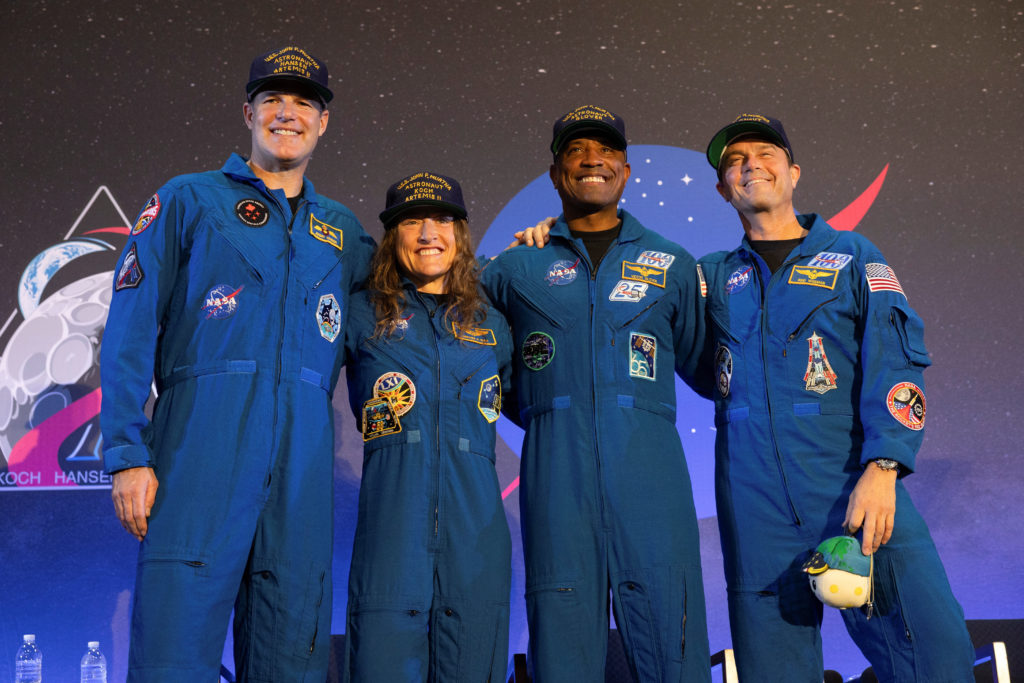
There are moments in history that look grand from the outside but feel deeply human up close. A spacecraft returning from the edge of possibility is one of them. Cameras flash, crowds cheer, officials speak proudly, and headlines celebrate achievement. Yet sometimes, in the middle of all that noise, a single sentence cuts through everything. That is what happened when Reid Wiseman stood beside Victor, Christina, and Jeremy after returning from nearly 200,000 miles away.
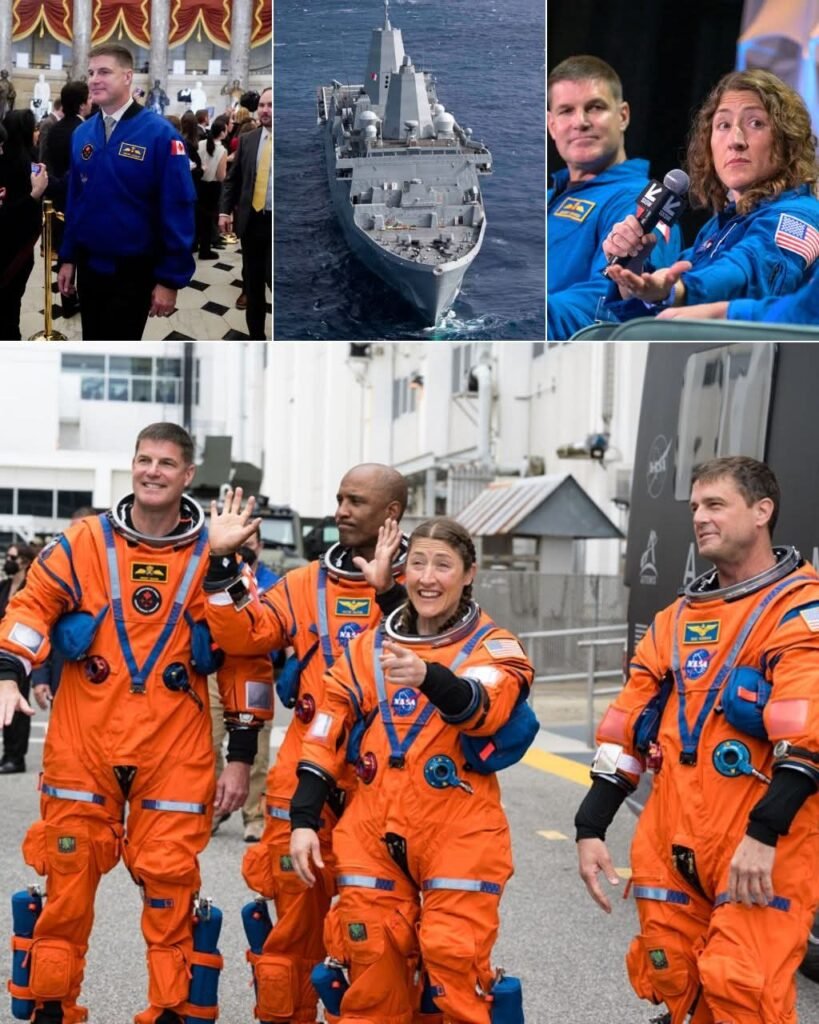
He did not begin with machinery. He did not lead with science, trajectory charts, or the brilliance of engineering. He looked at the three people beside him and spoke about something far more difficult to explain. He said no one on the ground could truly understand what they had gone through together. It was not a dramatic statement. It was quiet, sincere, and heavy with truth.
That kind of truth only arrives when people have shared something beyond ordinary language. We often assume space missions are defined by precision — numbers, timing, fuel, altitude, distance. But numbers can only describe where someone went. They cannot describe what it felt like to be there. They cannot measure silence inside a capsule, the pressure of responsibility, or the strange intimacy formed when four people become each other’s entire world for days.
Imagine the distance for a moment. Nearly 200,000 miles from home. Far enough that Earth no longer feels close. Far enough that every familiar comfort becomes memory. In that place, ordinary routines disappear. There are no casual walks outside, no open skies above, no quick phone call to clear your mind. There is only mission, discipline, trust, and the people beside you.
That is why Wiseman’s words mattered so much. He was telling us that some experiences cannot be transferred through interviews or photographs. They can be described, but never fully handed over. The same way no one can completely explain grief, parenthood, survival, or devotion to someone who has not lived it. Space, for all its technology, still returns us to the oldest truth: the deepest things are felt, not narrated.
And then came the part that changed the room. His voice softened when he spoke of their families. The people who stayed behind often become the invisible half of every mission. While astronauts carry risk into the sky, families carry uncertainty on Earth. They wait through delays, watch every update, and measure time differently. Each hour stretches longer when the people you love are somewhere you cannot reach.
Those families also travel, in their own way. They journey through worry, pride, loneliness, and patience. They smile for cameras while privately carrying fear. They become experts in calmness because panic serves no one. When Wiseman acknowledged them, he was recognizing that exploration has always had two crews — the one that launches, and the one that waits.
Something had shifted in him out there. You can hear it in the restraint of his words. People often return from extraordinary experiences louder, eager to explain everything they saw. But sometimes the most profound journeys make a person quieter. They come back knowing that wonder does not always shout. Sometimes it stands still for a second, searching for words that are not big enough.
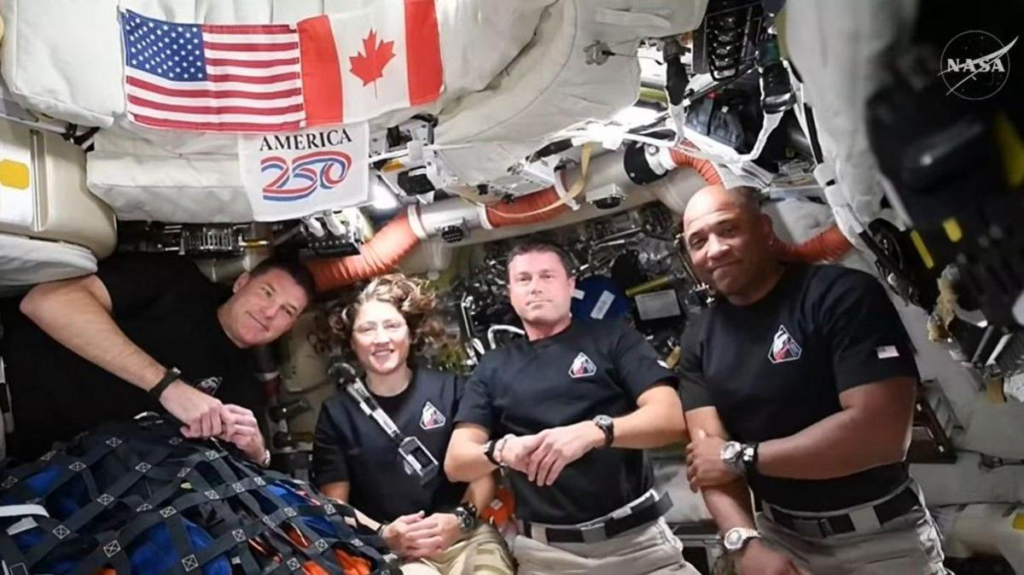
Perhaps that is what the Moon still does to people. It reduces ego. It reminds humans how small they are, yet how astonishingly brave they can be. To look back at Earth from that distance must reorder the heart. Borders disappear. Arguments shrink. Urgency changes shape. What once felt massive may suddenly seem temporary. What once felt ordinary — family, friendship, breath, sunlight — becomes priceless.
The four who stood there had shared not just a mission, but dependence. Every decision mattered. Every movement required trust. In environments where mistakes carry consequences, people learn each other differently. They see discipline under pressure, humor in exhaustion, courage in uncertainty. Bonds formed there are not casual bonds. They are forged bonds.
And that is why no one on the ground can fully understand it. We can admire it. We can study it. We can celebrate it. But the complete emotional weight belongs to those who lived inside it together. It belongs to the glances exchanged in silence, the private fears never spoken aloud, the moments of awe no camera captured, and the relief of returning home alive.
History will remember the mission for its milestones. It will note dates, distances, objectives, and achievements. But human memory often keeps something else. It keeps the tremble in a voice. The pause before speaking. The way someone looks at the people who stood beside them when everything was far away.
So yes, they came back from the Moon. But perhaps the greater story is that they returned carrying something rarer than data. They brought back perspective. Gratitude. Brotherhood. A deeper tenderness for those who waited. And a truth so large it could only be spoken simply: some journeys are too immense for language, and some bonds are only understood by those who crossed the darkness together.