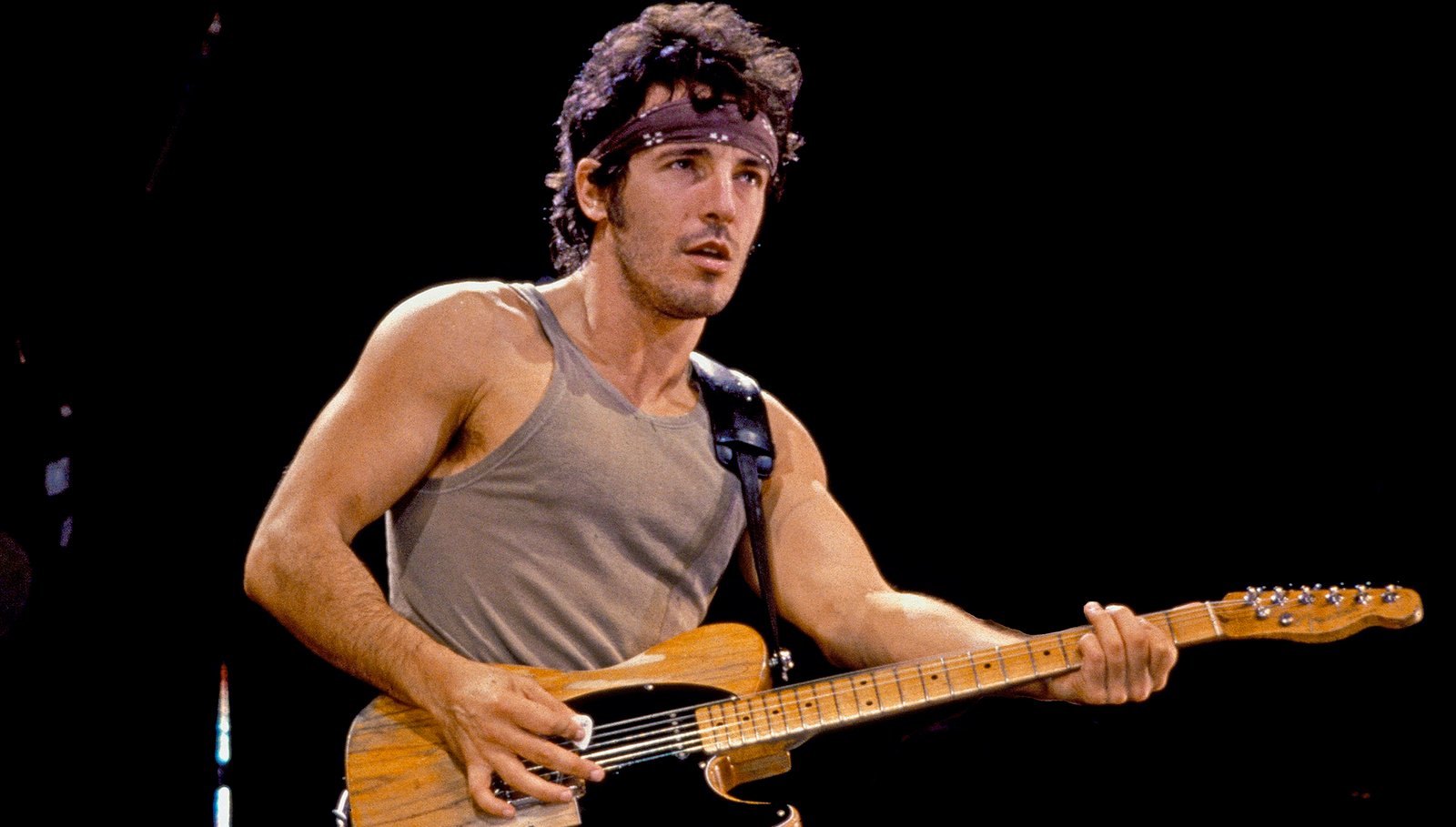
The night was already warm with music when Bruce Springsteen leaned toward the microphone with a grin that felt almost conspiratorial. The arena was alive, but in that moment, a hush slipped in between the cheers, as if everyone sensed something unscripted was about to happen.
He spoke like someone remembering out loud. Every night we try to pull one out that we haven’t played since we were what… sixteen? The words landed softly, carrying the weight of time, of youth folded carefully into the present.
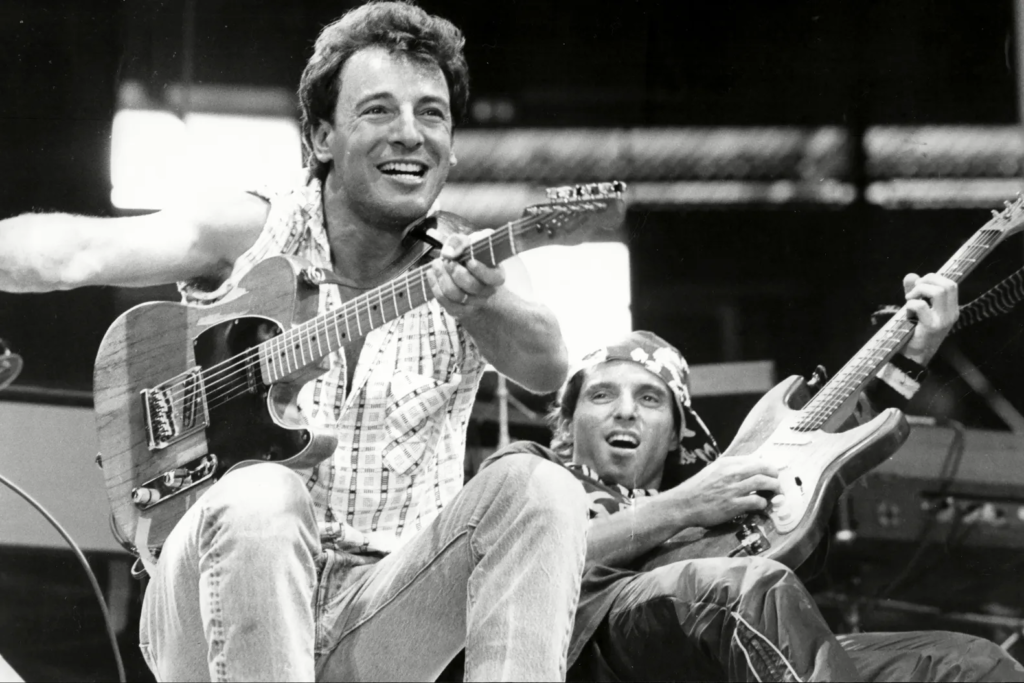
In his hands, a simple sign appeared: You Never Can Tell. The title itself felt like a wink from another era, a door cracked open into an older jukebox world of chrome and dancing shoes.
He lowered his gaze to the guitar, and the stage lights caught the curve of the instrument like a quiet moon. His fingers began to search for the chords, not rushed, not performative—just honest, human figuring-out in real time.
The crowd didn’t roar. They listened. You could feel thousands of people leaning forward, breath held, watching the way a master still allows himself to be uncertain for a moment.
A few notes rang out, tentative as footsteps in an empty hallway. Then another. The melody hovered just out of reach, and Bruce smiled as if chasing a memory that kept darting away.
And then he looked up, eyes bright. I’ve got it. The words weren’t triumphant so much as delighted, like a boy finding the right key in the dark.
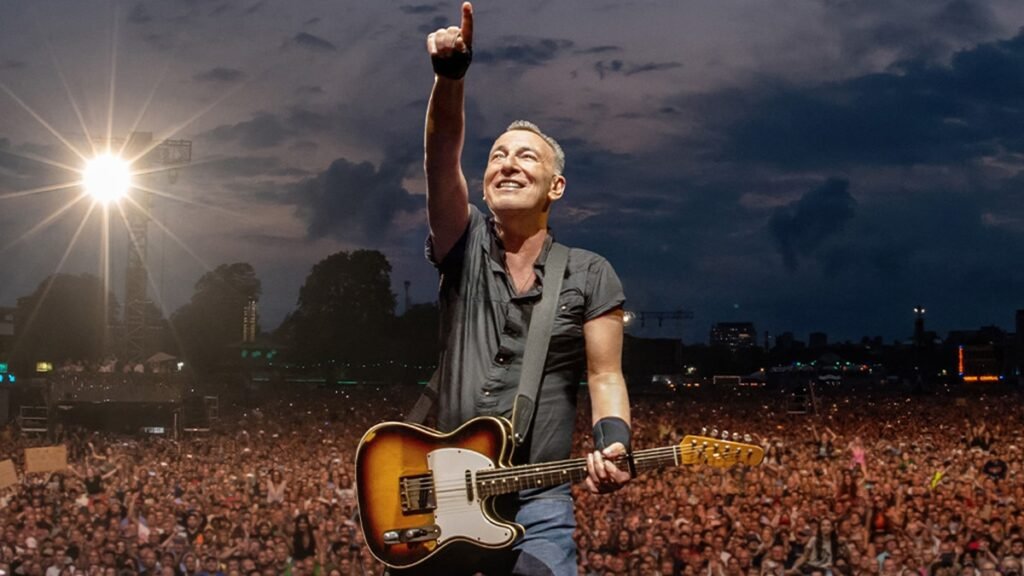
He turned slightly toward the E Street Band, the way you turn toward family. You got that, horns? he asked, already humming the line, already inviting them into the mystery.
The horns answered instantly, not with perfection, but with motion—quick, living, laughing sound. A wrong note slipped out, then another, like pencils scratching across paper, musicians sketching the shape of something before it becomes real.
Bruce laughed, the kind of laugh that makes an arena feel suddenly small, intimate, like a rehearsal room filled with friends. The band grinned back, eyes flashing with the joy of the chase.
And then, almost without anyone noticing the exact second it happened, the pieces clicked into place. The horns lifted, the rhythm settled, the melody stood up straight—suddenly whole, suddenly glowing.
It wasn’t just a song returning. It was time folding in on itself, sixteen and sixty and everything in between living together for a few bright minutes under the lights.

When it all came together, the sound didn’t feel rehearsed—it felt alive, like proof that music is still a conversation, still a risk, still a miracle. And long after the last note faded, what remained was the quiet comfort of watching joy find its way home.