Morning settled softly over the white valleys of 2026 Winter Olympics, the light thin and silver against the snow. Breath hung in the air like quiet promises. Skis whispered across the course. Flags barely moved. It was the kind of stillness that belongs only to winter and to moments that feel carefully prepared, as if nothing unexpected could possibly enter them.
The women moved in rhythm, each stride measured, each turn precise. Coaches leaned forward without speaking. Spectators watched with the contained intensity of people holding their breath together. The race was unfolding exactly as expected—discipline, endurance, silence broken only by the soft carving of edges against packed snow.
Then, somewhere beyond the edge of attention, something small and alive broke the pattern.
At first it was only movement—a blur against the white. A shape too quick, too joyful to belong to the careful geometry of competition. Heads lifted. Eyes narrowed. For a second, no one reacted, as if the scene needed permission to become real.
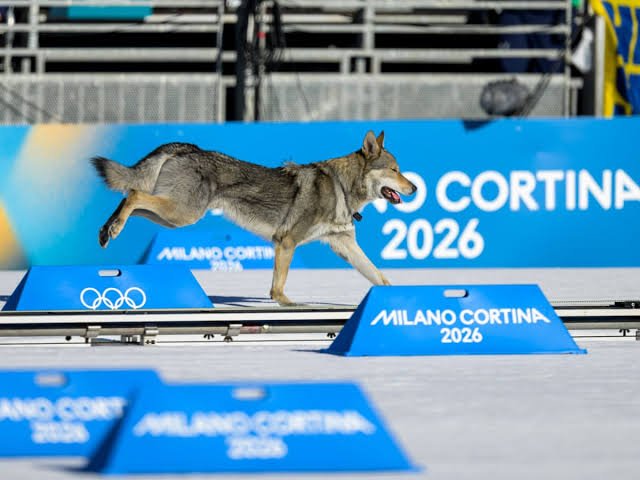
The dog did not hesitate.
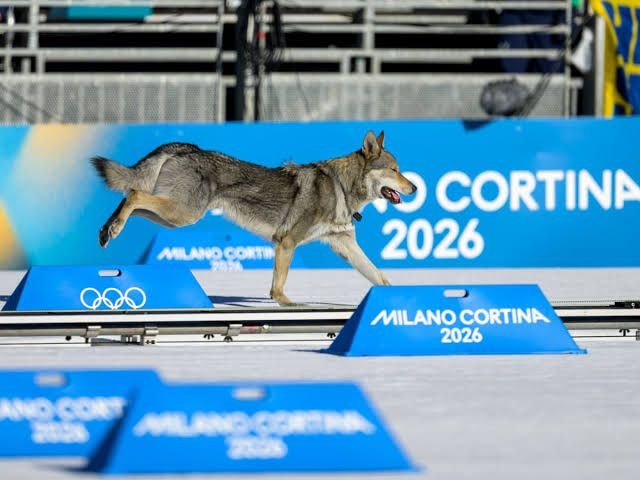
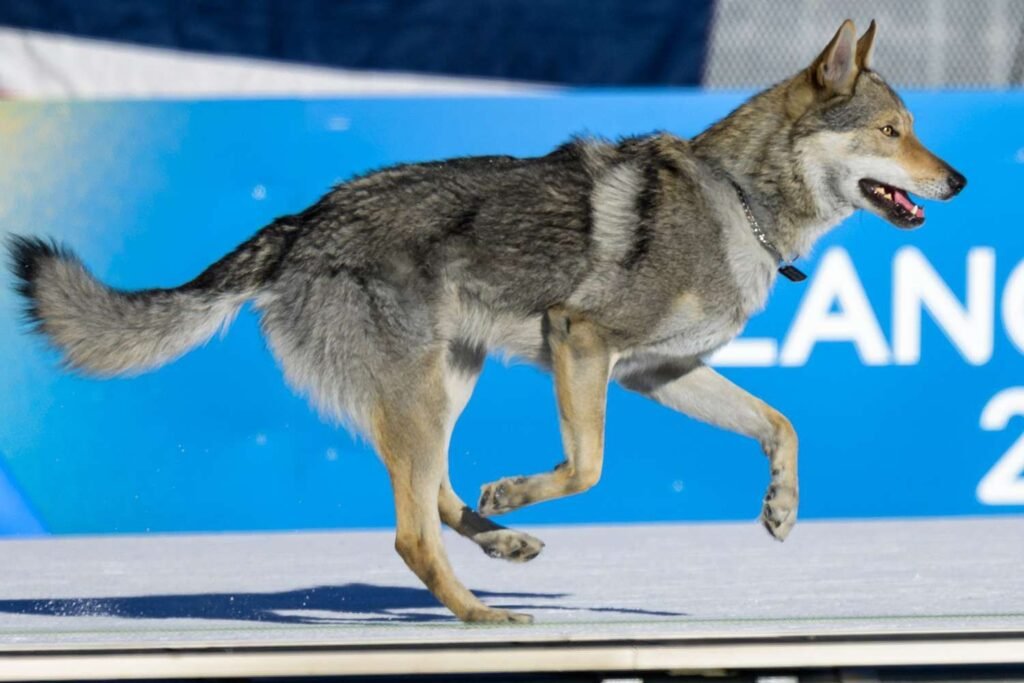
It ran with the easy certainty of something that did not understand pressure or consequence. Snow sprayed lightly behind its paws. Its ears lifted into the cold air. There was no fear in its stride, no confusion—only the simple, wholehearted commitment to the direction it had chosen.
For a moment, the athletes kept moving beside it.
Some glanced sideways, a flicker of disbelief crossing faces trained never to break focus. Others allowed the smallest shift at the corner of the mouth, a human reflex slipping through the discipline. The rhythm of competition continued, but something softer had entered the space between effort and outcome.
The crowd’s reaction arrived in waves.
First a ripple of confusion, voices rising but uncertain. Then laughter—warm, uncontrollable, spreading from section to section like sunlight moving across the stands. The sound filled the valley, echoing against the mountains, loosening the tight seriousness that had held the morning together.
The dog crossed the finish line without slowing.
There was no triumph in the gesture, no awareness of the line, the cameras, the moment. Just the natural completion of a run. For a second afterward, it stood there, looking around as if the world had suddenly grown louder than expected.
Behind the barriers, someone called its name.
Later, the owner would speak quietly about the instant it happened—the brief turn of the head, the small distraction, the leash slipping loose. Not negligence. Not intention. Just one ordinary human moment where attention drifted, and life, curious and unscripted, rushed into the space it left behind.
In the hours that followed, the images traveled far beyond the quiet valley.
But what remained for those who were there was not the surprise or the laughter. It was the way the tension had softened. The way strangers had looked at one another and smiled. The way competition, for a heartbeat, had made room for something gentler.
Long after the tracks were smoothed and the noise faded, the memory stayed.
A winter morning. The sound of skis. The sudden rhythm of small paws against snow. And the quiet reminder that even in the most carefully planned moments, the world still leaves space for innocence to run freely—crossing our lines, and somehow, without trying, bringing us back to ourselves.