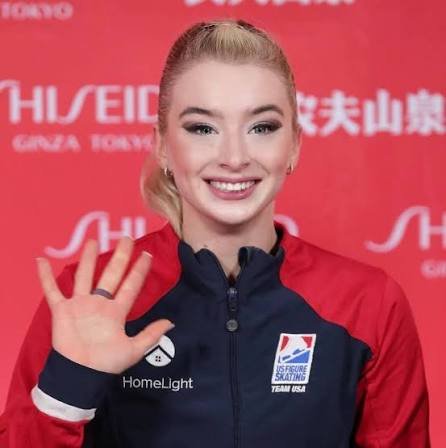
The arena lights glowed like winter sunlight caught inside glass. Everything felt suspended — breath, sound, expectation. When Amber Glenn stepped onto the ice at the 2026 Winter Olympics, the air carried that rare stillness reserved for moments that feel larger than time itself.
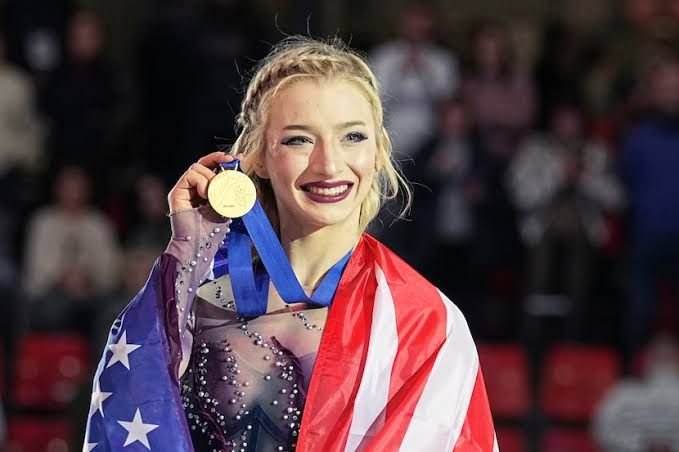
Her opening pose was calm, almost prayerful. Shoulders soft. Chin lifted. Somewhere in the arena, a blade scratched faintly across ice. Then the first notes of Like a Prayer rose — quiet, reverent, familiar — and she began to move.
The first seconds were pure lightness. Edges whispering. Arms unfolding like breath. There was confidence in the glide, the kind that comes from years of repetition, from mornings before sunrise, from believing the body will answer when called.
She gathered speed for the opening pass.
The takeoff came.
And then — something shifted.
It wasn’t loud. No dramatic fall. Just a small break in rhythm, a fraction of imbalance, the kind only skaters and silence truly understand. But when her blade touched down, the energy in the arena changed. Not panic. Not noise. Just a sudden, hollow quiet.
The program continued, because it had to. Glenn kept moving, turning the choreography into something softer, heavier. Her arms still reached, her edges still traced their patterns, but now each movement carried weight — the invisible kind, the kind that presses inward.
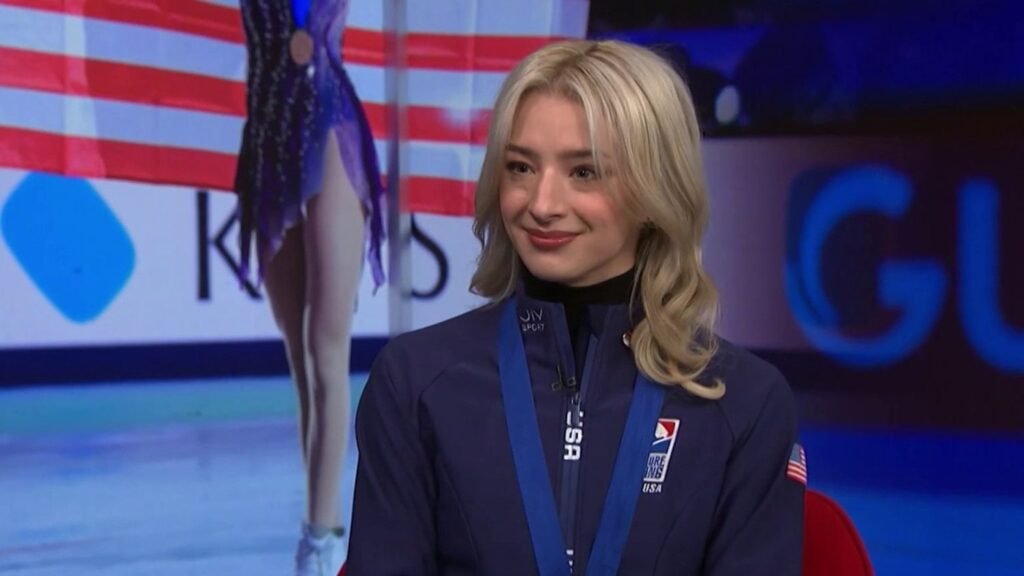
The music swelled, sacred and aching. Under the lights, her expression flickered between focus and something more fragile. The audience watched without sound, as if afraid even applause might break the moment further.
By the final sequence, grace had replaced certainty. She wasn’t skating for points anymore. She was skating to finish. To hold the moment together. To carry herself across the last seconds with dignity.
When the music ended, she didn’t move right away.
She stood at center ice, chest rising, eyes fixed somewhere far beyond the arena. The scoreboard glowed in the distance, but she didn’t look at it. The realization seemed to arrive slowly, like cold spreading through water.
Then the stillness broke.
Her face softened. Her mouth trembled. Tears gathered before she could turn away. At the boards, she fell into her coach’s arms, the kind of collapse that comes not from weakness, but from the sudden release of everything held too tightly for too long.
Later, long after the scores were archived and the programs forgotten, what remained wasn’t the mistake.
It was the silence.
The way an arena held its breath for her.
The way she finished anyway.
The way, even in the moment something slipped away, her courage stayed on the ice — quiet, unscored, and unforgettable.