The memory begins in silence. Not the absence of sound, but the kind that gathers before something fragile and human unfolds. The lights in Zurich softened into shades of rose, and for a moment the arena felt less like a stage and more like a held breath.
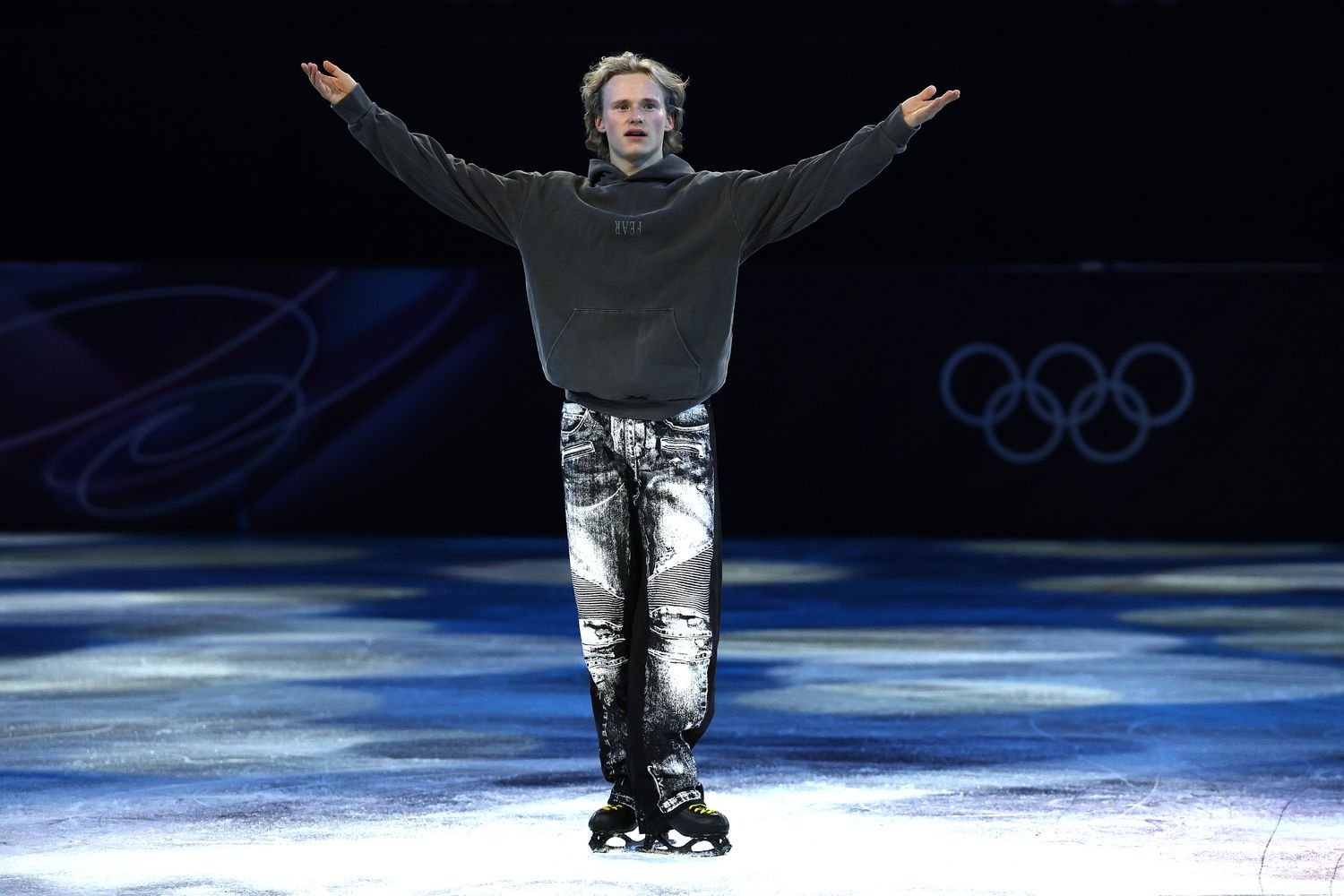
Ilia Malinin stepped onto the ice without ceremony. No triumphant energy, no theatrical confidence. His shoulders were relaxed, almost heavy, as if he had set something down just beyond the boards and chosen not to carry it with him.
Only days earlier, the weight of the Olympic stage had pressed into him. You could still see traces of it in the stillness of his face — the quiet aftermath of expectation, of noise, of everything that lingers when the world moves on but the heart does not.
Then the first notes of Pink Lemonade rose through the arena, live and warm, the voice of James Bay threading through the cold air. The music didn’t command the space; it opened it, like a door left gently ajar.
Malinin pushed off.
The first glide was not explosive. It was careful, almost listening — blade testing ice, body rediscovering balance. But then something shifted. His edges deepened. His stride lengthened. Movement began to flow from somewhere deeper than performance.
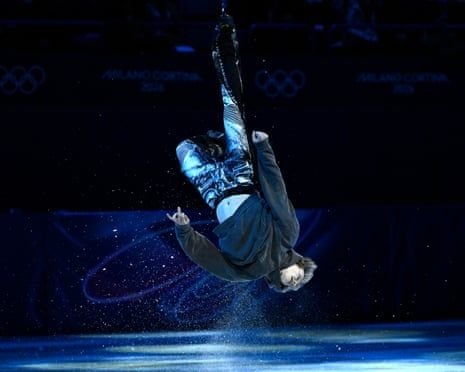
There was anger in the speed, but it was clean, focused. Not the sharp edge of frustration, but the kind of fire that comes after disappointment has settled into clarity. Each turn released something. Each jump rose like a refusal to carry doubt any longer.
The arena changed with him. Ten thousand people leaned forward without realizing it, their reactions delayed by the quiet intensity unfolding before them. Applause came late, then all at once, as if emotion had needed time to reach the surface.

Under the pink lights, his expression softened. The tension that had lived in his jaw dissolved. What remained was something lighter, almost private — the look of someone skating not for judges, not for history, but simply to feel whole again.
There were moments when the choreography disappeared entirely, replaced by instinct. Arms opened wider than planned. Landings held a fraction longer. He seemed to be moving through memory as much as through space, tracing a path back to himself.
When the music faded, he did not strike a dramatic final pose. He stood still, chest rising, eyes lowered, the ice holding the last vibration of motion. The applause grew around him, but he remained quiet inside it, as if the loudest sound he could hear was his own steady breath.
Long after the lights returned to white and the crowd began to leave, the feeling lingered — not of a comeback, not of redemption, but of something simpler and rarer.
That night in Zurich, he did not conquer the ice.
He made peace with it.