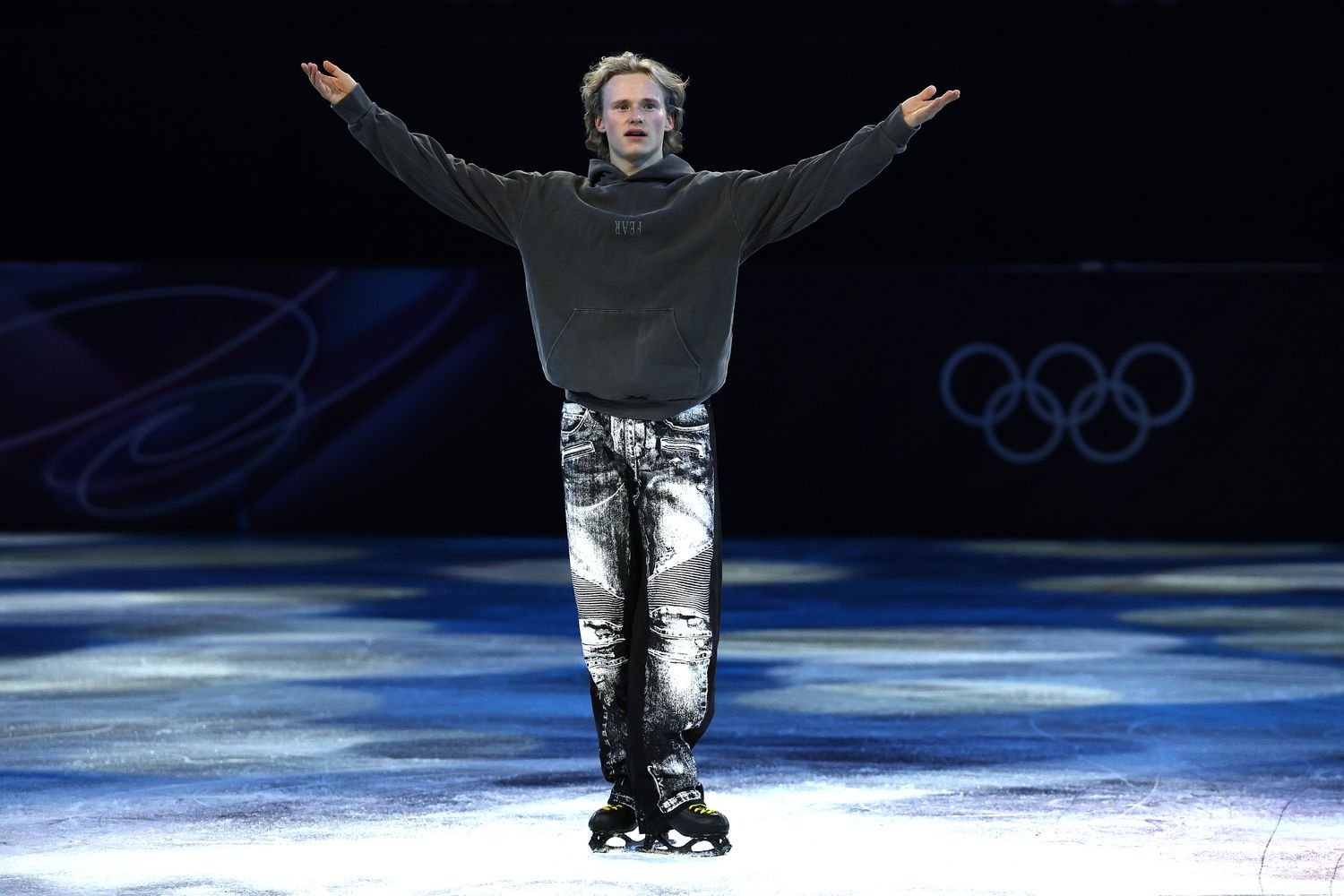
The arena lights felt softer that night, diffused through the thin mist that rises from fresh ice. Thousands of people leaned forward in their seats, coats rustling, whispers fading into the cold air. When Ilia Malinin stepped onto the rink, there was already an unspoken understanding in the room — the quiet recognition that something extraordinary might unfold.
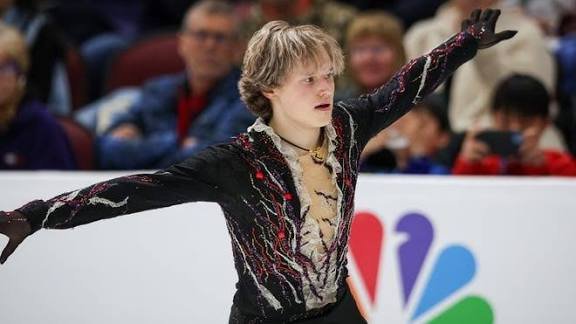
His blades touched the ice with a sound so light it almost disappeared into the stillness. For a moment he stood there, shoulders relaxed, eyes steady, as if listening to something deeper than the music about to begin. The arena settled around him, breath by breath, until the world outside that sheet of ice seemed very far away.
The first movements were fluid, almost delicate. Edges cut thin silver lines across the surface while the music floated through the rafters. Each turn carried a calm confidence, the kind that doesn’t ask for attention but draws it anyway. From the stands, you could see people leaning closer, their faces illuminated by the pale glow of the rink.
Then the jumps began.
The sound of steel biting ice echoed sharply through the arena — the quick thunder of takeoffs, the clean hush of landings. Every rotation unfolded in the air like a secret revealed for just a second before gravity reclaimed it. Somewhere in the crowd, someone exhaled loudly, the kind of breath people release when they realize they are witnessing something rare.
Halfway through the program, something shifted.
Malinin gathered speed across the rink, his stride stretching longer, faster. For a split second the music seemed distant, like it was playing from another room. The audience felt it before they understood it — a strange tension, a quiet question hanging in the cold air.
Then he jumped.
Not the familiar rise of a quad, not the tight spiral of rotations the skating world had learned to expect. His body opened in midair, arching backward in a motion so sudden and pure it seemed to suspend time itself.
A backflip.
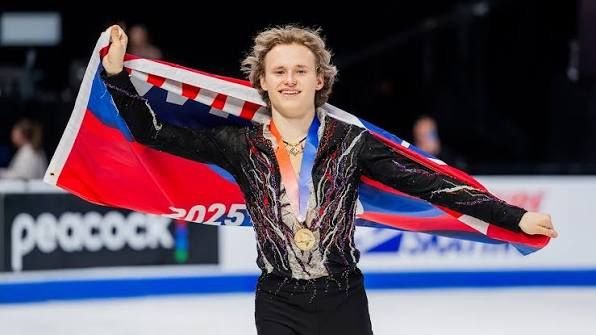
For one suspended heartbeat, the arena forgot how to react. Thousands of people sat frozen, eyes wide, hands halfway to their mouths. The moment stretched impossibly long — a human body turning against gravity above Olympic ice.
And then the sound came.
It arrived all at once, a crashing wave of disbelief and joy. The crowd erupted into cheers so loud the rafters trembled. Commentators stumbled over their words, laughter mixing with astonishment. Along the boards, teammates doubled over, shaking their heads in disbelief.
But on the ice, Malinin simply kept skating.
His expression barely changed. The blades returned to their quiet conversation with the rink, tracing confident curves as if the impossible moment had been nothing more than another breath in the choreography. The program flowed on, graceful and relentless, until the final note dissolved into silence.
When he stopped, the applause refused to end.
People stood slowly, almost reverently, as if they understood that what had just happened could not be repeated the same way again. The score eventually appeared, numbers glowing against the dark arena, but no one seemed to care about them in that moment.
Long after the cheers faded and the ice was smoothed for the next skater, the memory lingered — that strange instant when the arena held its breath and the laws of the sport bent for a single heartbeat.
And somewhere in that quiet memory, a young skater is still turning through the air, suspended between disbelief and wonder, while the world watches in silence.