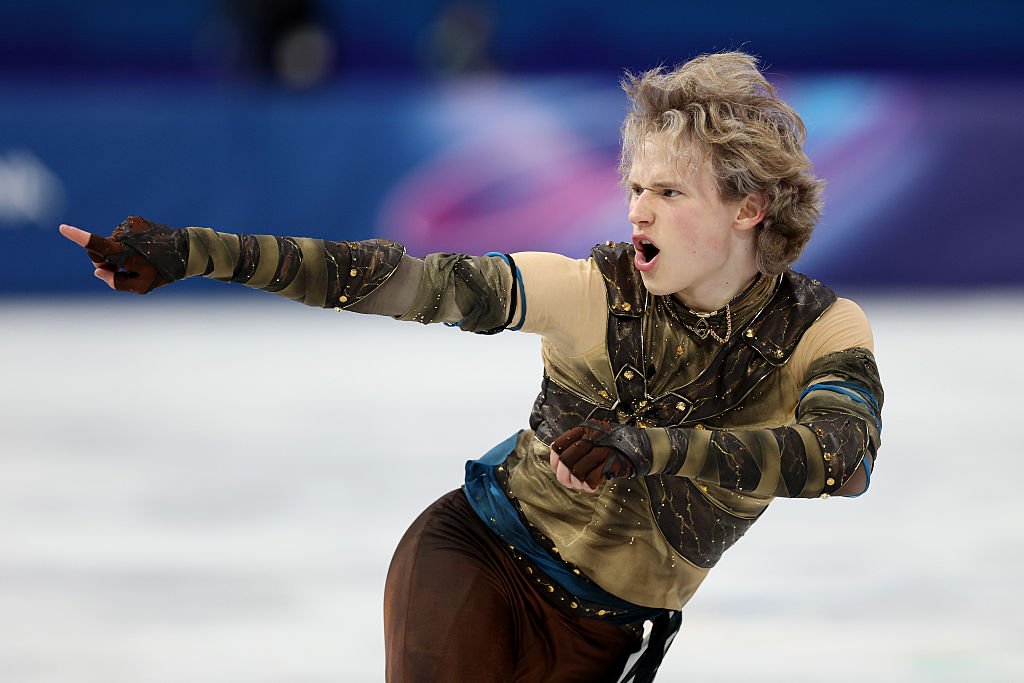
The arena had already emptied when the night truly began. The lights were dimmed to a hush, casting long reflections across the scarred surface of the ice. Somewhere in that quiet, beneath the fading echoes of applause and the scrape of blades, Ilia Malinin stood alone with a result that did not match the story the world had written for him.

He had imagined this moment differently. Not louder, not brighter—just steadier. But the stillness after the music stopped felt heavier than sound. It pressed against his ribs. It lingered in his breath. Eighth place glowed on the scoreboard like a foreign language, something unfamiliar and unyielding.
Later, when the cameras were gone and the corridors thinned into shadows, he would say he wasn’t unprepared for the stage. He had trained for the jumps, for the timing, for the precision of each edge. What he hadn’t trained for was the noise in his own head—the soft, insistent chorus of doubt that grew louder with every expectation placed upon his shoulders.
There is a particular silence that follows disappointment. It is not dramatic. It does not shatter. It settles. In the locker room, the hum of fluorescent lights filled the gaps between thoughts. His skates rested unlaced at his feet, blades dulled by effort. He sat forward, elbows on his knees, staring not at the floor but somewhere just beyond it.
The world had long called him untouchable. A prodigy. A future already sealed in gold. Those words, once buoyant, now felt like garments too heavy to carry. In the days that followed, instead of retreating behind them, he began to loosen their grip.
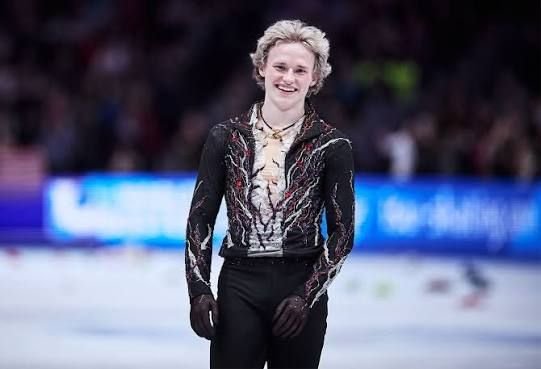
His posts were not declarations. They were confessions written in the quiet hours. Lines typed without spectacle. He spoke of pressure not as an enemy, but as a constant presence—something that hums beneath bright lights and swells in the spaces between breaths. He admitted to fear. Not of falling, but of disappointing.
There was a softness in his honesty. It showed in the way his shoulders seemed less rigid in photographs. In the way his gaze, once fixed on distant perfection, turned inward. Vulnerability did not fracture him. It altered the air around him. The narrative, once sharp and unforgiving, began to blur into something more human.
Memory has a way of polishing moments, but this one remains textured. You can still feel the cool air of the rink, still see the faint mist of breath rising in the cold. You can still sense the flicker of resolve forming—not in triumph, but in acceptance.
Because resilience rarely arrives as a roar. It arrives as a decision made in solitude. A quiet understanding that worth is not measured by placement, nor identity by a single night. It arrives when a young man chooses to remain open instead of closing himself off.
Long after the scores have faded and the headlines have dissolved into archives, what endures is not the ranking. It is the image of him standing in that dimmed arena, listening to the noise within—and choosing, gently, to quiet it.