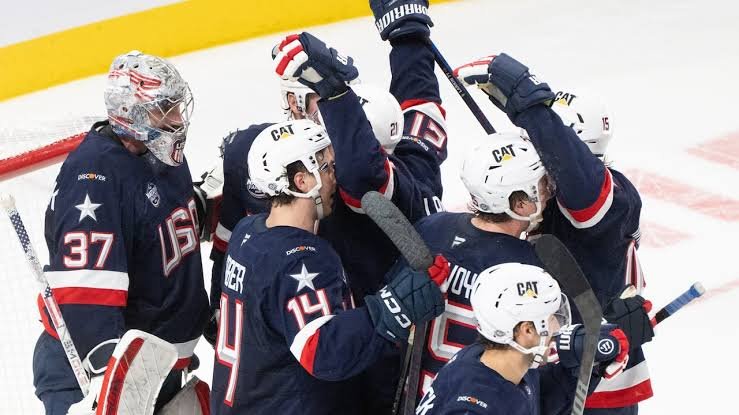
For forty-six years the moment waited somewhere in the background of American hockey — quiet, patient, unfinished. And when it finally arrived, it did not feel like an explosion. It felt like a breath being released. The puck slid across the ice in overtime, a blur of white against frozen light, and when Jack Hughes buried it past Canada’s final defender, the arena didn’t roar right away. For a heartbeat, everything stood perfectly still, as if the entire building needed a second to believe what it had just seen.
Then the sound came.
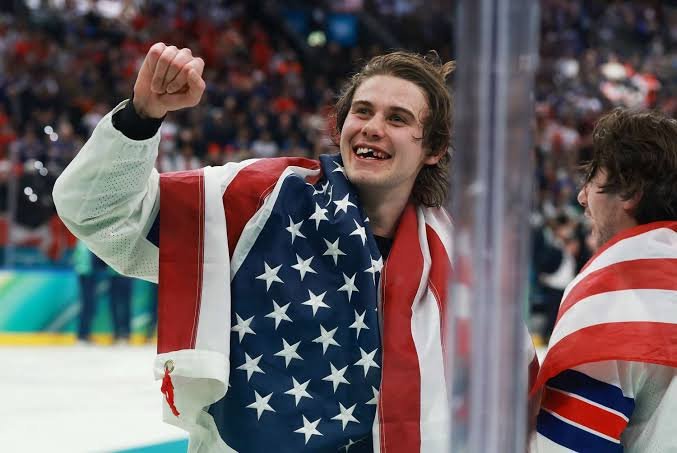
Gloves flew into the air. Sticks clattered like dropped swords. Red jerseys poured across the ice toward Hughes, who was already disappearing beneath a wave of teammates. Somewhere in the chaos, someone noticed the blood still on his lip — two front teeth gone from a collision late in the third period. He had skated the rest of the game like it meant nothing. Now he just laughed, breath fogging in the cold air, his smile uneven but shining.
Across the rink, the Canadian players drifted slowly toward their bench, quiet silhouettes beneath the lights. Their shoulders slumped in the soft way athletes carry defeat — not dramatic, just heavy. Meanwhile the American bench vibrated with something deeper than celebration. It was relief. Decades of near-misses and almosts melting into one long exhale.
The ceremony passed in a blur of metal and light. Gold medals were draped around necks still slick with sweat. The players stood shoulder to shoulder, blinking under the brightness as if waking from a dream. When the anthem ended and the cameras began to fade, they disappeared down the narrow tunnel toward the locker room — the place where victories become real.
Inside, the room was smaller than anyone expected.
Lockers rattled against the walls. Helmets thumped against the floor. Someone started pounding the door with the flat of a stick, and suddenly the whole room was moving, voices rising until they blurred into one hoarse chorus. Without music, without prompting, they began to sing.
“Courtesy of the Red, White and Blue.”
The song echoed off the concrete like something older than hockey itself. It belonged to Toby Keith — a voice forged in grief and patriotism after the shock of September 11 attacks and the loss of his father. Keith had passed away two years earlier. But in that cramped locker room, his words roared back to life, carried by players who sang them with cracked voices and red eyes.
Outside, the arena was still buzzing when the ice crew cleared the last of the celebration confetti. The rink lights softened. The crowd lingered in their seats, sensing something unfinished in the air. Then the doors at the far end opened again.
Two small figures stepped carefully onto the ice.
They walked beside a jersey that seemed far too large to belong to memory alone — the number worn by Johnny Gaudreau. His children held hands as they approached center ice, their steps slow and unsure against the wide sheet of frozen white. For the first time all night, the building fell completely silent.
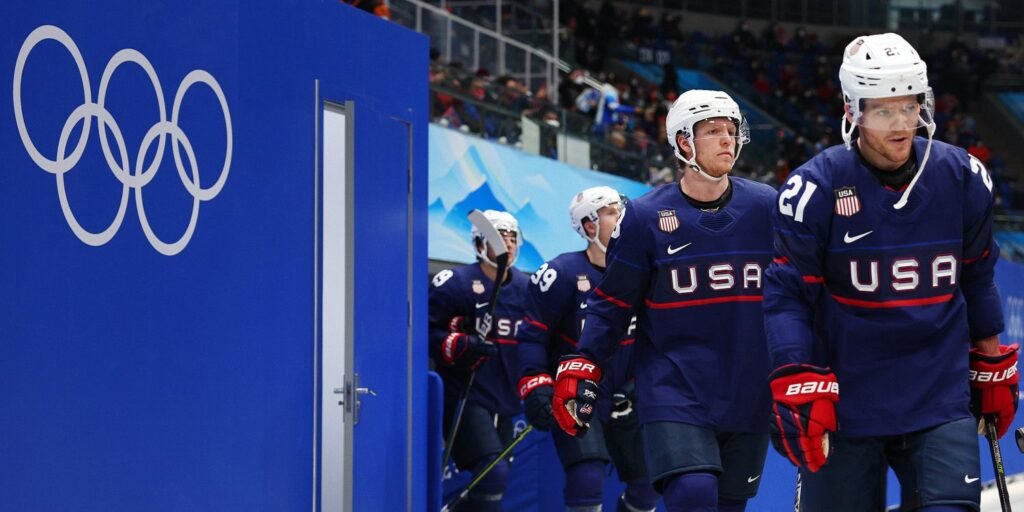
Players from United States men’s national ice hockey team stood along the boards, helmets removed. Some stared down at the ice. Others watched the children with the fragile attention people give to sacred things. No music played. No announcer spoke. Only the quiet hum of the arena lights remained.
For a moment that felt suspended outside of time, the victory no longer belonged to the scoreboard or the medals hanging from tired necks. It belonged to memory — to fathers and songs and years that stretched behind this night like a long winter finally breaking.
Later, when the locker room emptied and the arena lights dimmed, the echoes still lingered in the rafters — skates scraping, voices singing, a crowd holding its breath. Long after the ice was cleared and the doors were locked, the night remained exactly where it had happened.
Somewhere between a goal, a song, and two children standing quietly beside a jersey.