The arena had already given its medals, its anthems, its measured applause. Gold, silver, bronze — they had found their rightful places beneath the lights. And yet, when the night of the exhibition arrived, there was a quiet murmur in the air, as if something unfinished was waiting to be said.
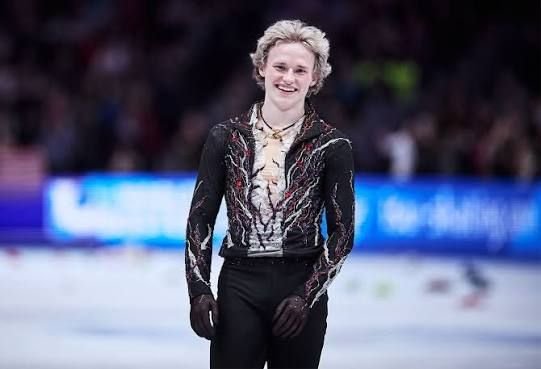
It was not supposed to be his moment. Eighth place is a number that usually fades into the margins of Olympic memory. But when Ilia Malinin stepped through the curtain, there was no sense of margins. Only a hush that felt deliberate, almost reverent.
The lights softened as though the arena itself had exhaled. The ice, freshly carved by medalists, shimmered with faint tracings of their triumphs. He paused at the boards for half a heartbeat longer than usual, gloved fingers resting against the cool barrier, eyes steady but distant — like someone listening for a sound only he could hear.
The music did not crash in. It arrived gently. A single note, suspended in the rafters. He pushed off without spectacle, blades whispering across the surface. There was no urgency in his movement now, no frantic pursuit of points. Only space. Only breath.
Earlier in the week, the air around him had been heavier. Expectations had hung like fog, thick and blinding. But here, beneath exhibition lights, the weight seemed to dissolve. His shoulders lowered. His arms opened. The tension that once tightened every jump had softened into something almost tender.
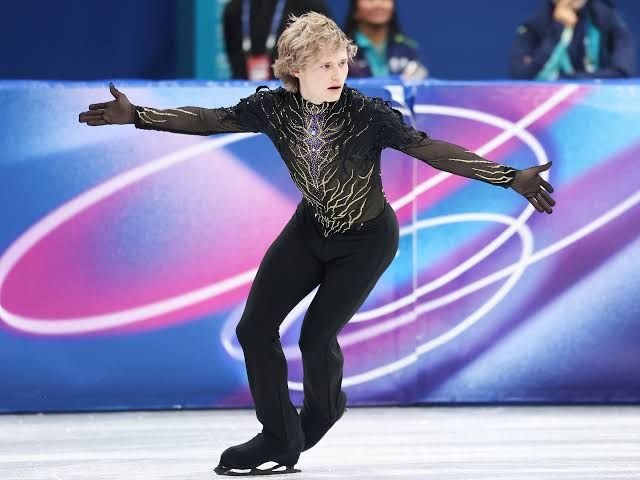
Each glide felt unguarded. The kind of skating that doesn’t ask to be judged. His edges traced long, patient arcs, as if he were writing a letter in cursive across the ice. The audience leaned forward without realizing it, drawn not to difficulty but to stillness — to the fragile honesty in the way he held his hands at the end of each phrase.
There were no medals waiting at the end of this program. No podium. No anthem. Only the quiet contract between performer and witness. And somehow, that made every movement feel larger. The arena lights caught in his hair as he turned, and for a moment his expression flickered — not triumphant, not defeated, but clear.
Midway through, he closed his eyes during a step sequence that seemed to unravel time. The blades cut deeper now, sending a faint spray of frost into the glow. It was the sound that lingered most — the steady carving of steel against ice, rhythmic and sure, like a heartbeat finding its calm after a storm.
When the final pose came, it was not explosive. He did not throw his arms skyward. He simply stood there, chest rising and falling, chin lifted slightly toward the darkened ceiling. The music faded into silence, and in that silence was something fuller than applause — an understanding.
The clapping arrived slowly, then all at once. Not for redemption, not for records, not even for placement. It was for presence. For choosing to return to the same ice that had once felt unforgiving and standing there without flinching.
Long after the exhibition ended, long after the lights cooled and the rink was emptied, people would remember the way the air felt in that moment — softer, almost luminous. They would remember how he did not chase the night, but allowed it to meet him.
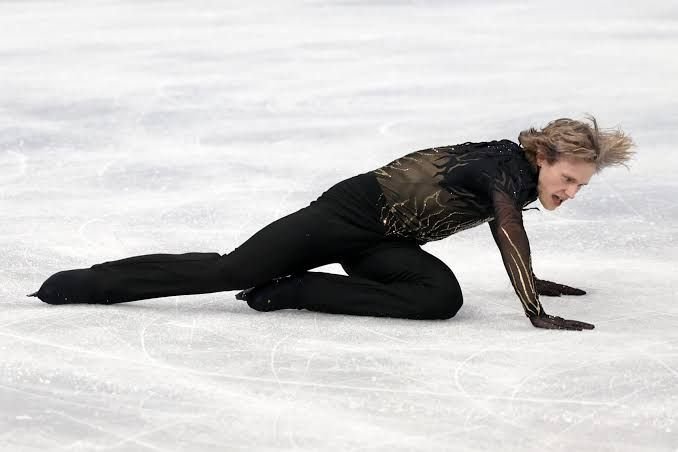
And somewhere in the quiet of that memory, the medal no longer mattered.