The arena lights were still blazing when it happened, but somehow the world felt dimmer. Beneath the glare of the scoreboard and the restless shimmer of cameras, Ilia Malinin stood very still, as if listening for something only he could hear. The ice, scarred by blades and bright with reflected gold, held the echo of two falls that had already begun to travel far beyond the rink. In that moment, the noise of the crowd seemed distant, like waves breaking on another shore.
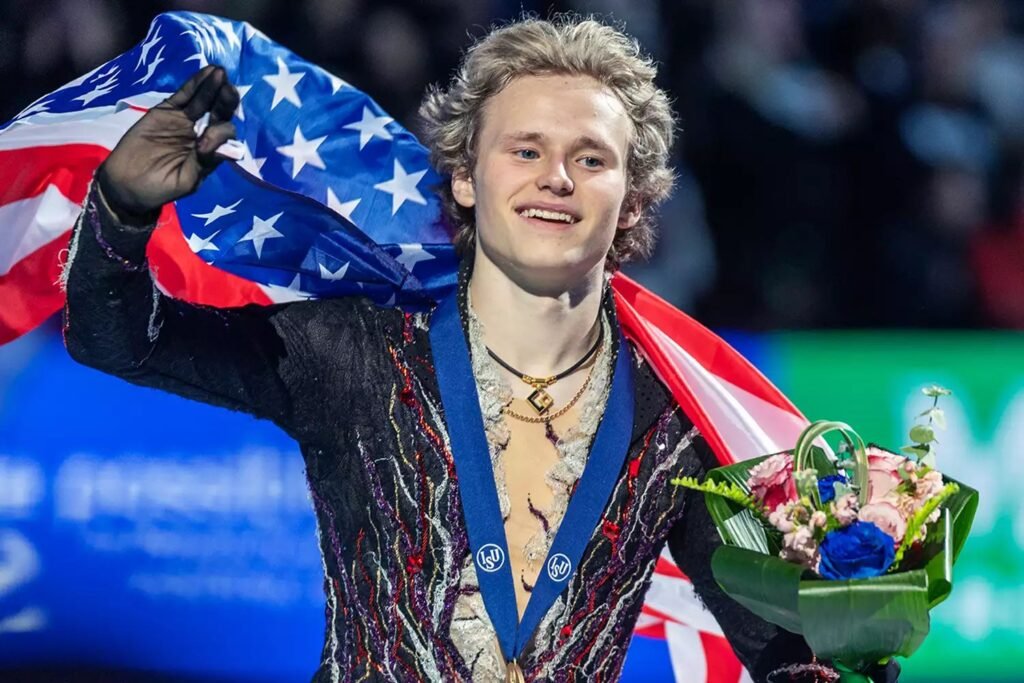
He had entered these Games crowned with a nickname that felt heavier than it sounded. The “Quad God.” A title forged in rotation and defiance, in gravity resisted and records rewritten. At the 2026 Winter Olympics, the air around him had carried expectation the way winter carries frost—quietly, completely. You could almost see it settle on his shoulders as he took his opening pose.
The first fall came with a sound no one forgets. A sharp scrape. A breath caught mid-throat. His body struck the ice with a blunt finality that seemed to ripple through the arena. For a fraction of a second, there was only the white expanse beneath him and the ceiling lights trembling above. He rose quickly, instinctively, the way champions do. But something invisible had shifted.
The second fall was softer, almost gentle in comparison, and somehow more devastating. A slip of balance, a tilt of the world. His hands met the ice before the music had the chance to resolve. The melody continued, brave and indifferent, while he gathered himself again. When he stood this time, his expression was not shock, not anger—just a stillness that felt older than his years.
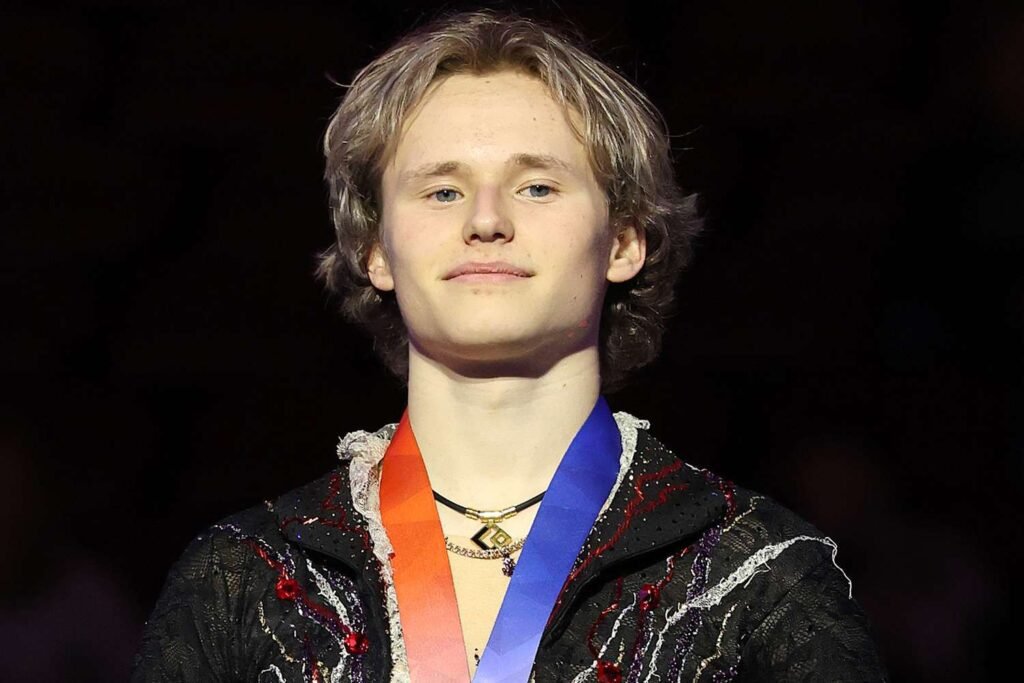
Eighth place blinked onto the screen in quiet digits. It did not shout. It did not accuse. It simply existed. Around him, flags waved and cameras turned, but he seemed to shrink inward, like a candle protecting its last flame from wind. He bowed, as he always does, composed and deliberate. Yet there was a tremor in the exhale he released toward the ice.
Later, long after the arena emptied and the blades were tucked away, a different kind of silence unfolded. In the blue glow of a phone screen, he reposted small, fragile videos. Words about not being good enough. About a tired little boy who had kept fighting for so long he forgot what rest felt like. There were no captions of explanation. Just a quiet acknowledgment, like placing a hand over a bruise.
Fans felt it before they understood it. Not the result, not the statistics—but the weariness in his eyes as he left the rink. The way his shoulders curved slightly forward, as if protecting something tender inside. For years, they had watched him defy physics. That night, they watched him meet it.
Memory softens the edges of spectacle. What remains is not the falls themselves, but the pause afterward. The moment he stood alone at center ice, breath rising in small clouds, music fading into rafters. He looked less like a prodigy and more like a son, a boy who once laced his skates with trembling excitement, long before the world began counting rotations.
The nickname will linger. So will the expectations. But somewhere beneath them is the quieter truth of a young man learning the weight of both triumph and fracture. The ice did not reject him that night; it simply reminded him that even gods feel gravity.
And in the hush that followed—deeper than applause, deeper than disappointment—there was something almost sacred. Not the sound of a legacy ending, but of a heart still beating beneath the glare. A little boy, tired perhaps, yet still standing.