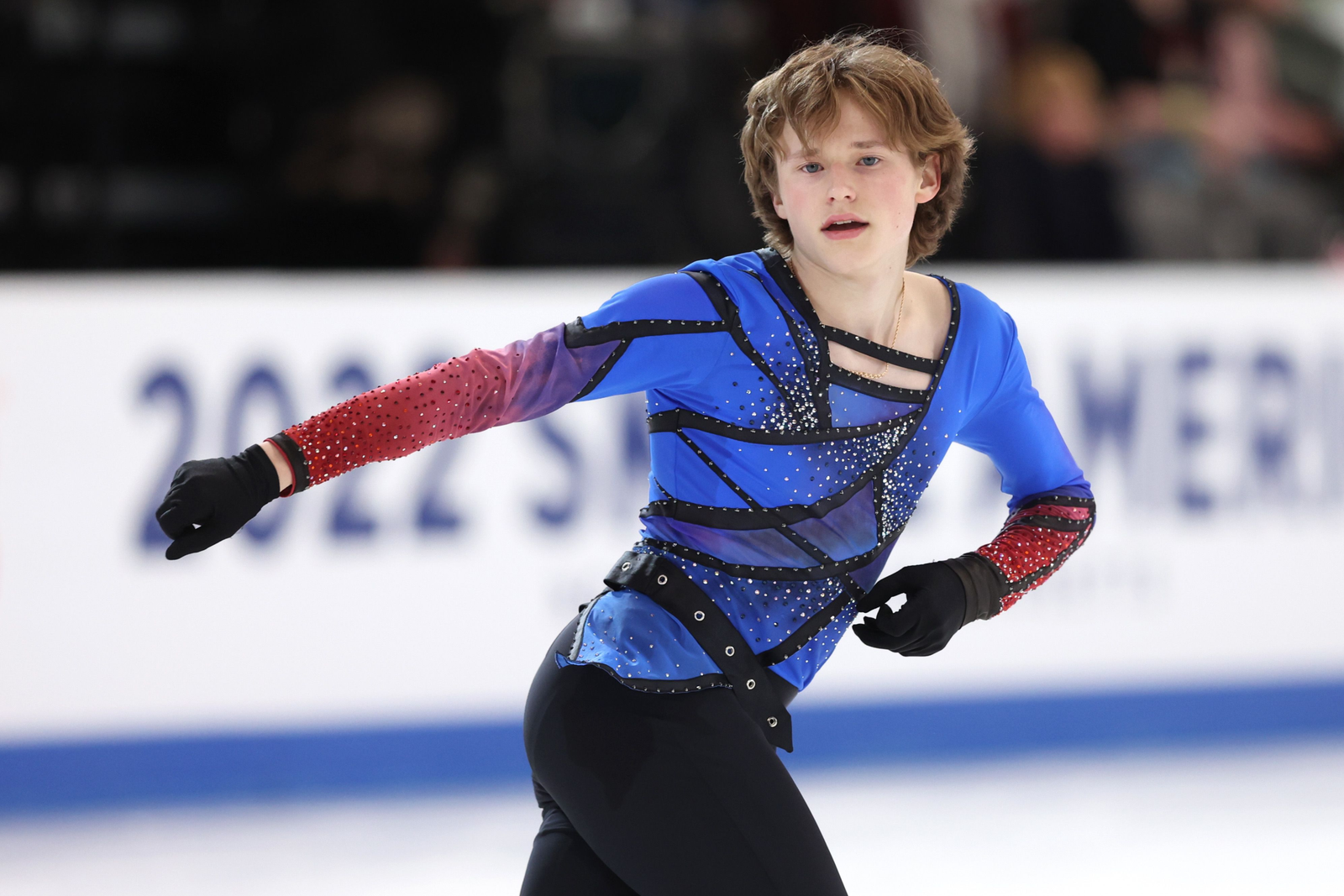
There was a time when figure skating had clear boundaries—lines drawn not just by the ice, but by imagination itself. Difficulty was something measured, calculated, and ultimately contained within the structure of a judging system designed to reward progression without chaos. Then came Ilia Malinin… and suddenly, those boundaries didn’t just blur—they began to dissolve.
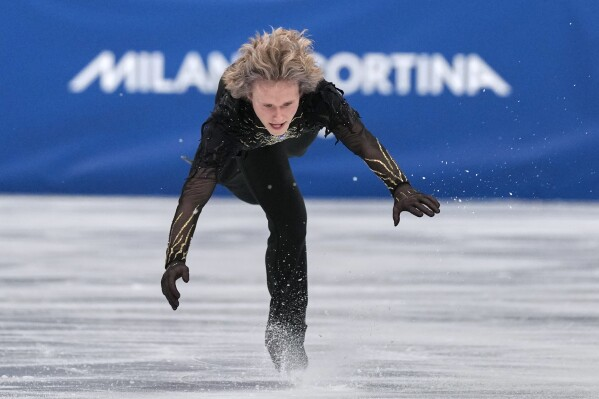
At first glance, Malinin’s rise feels like a natural evolution. Every generation produces a skater who pushes technical limits further than the last. But what makes his presence different—almost unsettling—is not just how far he’s pushing, but how fast he’s outgrowing the very system meant to evaluate him. It’s as if the rulebook is trying to catch up to a language it doesn’t fully understand yet.
The scoring system in figure skating was built on a delicate balance: reward difficulty, but preserve artistry; encourage risk, but ensure control. It works because it assumes that progress will be incremental. A slightly higher jump here, a cleaner landing there. But Malinin doesn’t move in increments—he leaps in revolutions, both literally and metaphorically.
The quad axel—once considered nearly impossible—was supposed to be the peak, the unreachable frontier. When Malinin didn’t just attempt it but landed it with conviction, it should have marked the summit. Instead, it felt like the opening chapter. Because what followed wasn’t satisfaction… it was escalation.
And that’s where the tension begins.
Judging systems are inherently reactive. They are built on history, on patterns, on what has already been done. But Malinin operates in a space that feels almost predictive—like he’s skating in the future while being judged in the present. The points he earns, while staggering, often feel like an approximation rather than a true reflection of what’s unfolding on the ice.

There’s a quiet debate growing beneath the applause: can a system truly measure something it was never designed to anticipate?
Because difficulty, in its purest form, isn’t just about rotations or combinations—it’s about risk layered with originality. And Malinin’s programs are beginning to carry a kind of unpredictability that scoring sheets struggle to quantify. When a performance includes elements that feel unprecedented, judges are left with a choice: adapt in real time… or compress greatness into existing categories.
What complicates this further is perception. For the audience, Malinin’s performances often feel revolutionary—moments that redefine what’s possible in real time. But for judges, those same moments must be translated into numbers, compared against criteria that were established in a different era of skating.
And that gap—the emotional magnitude versus numerical representation—is where the conversation intensifies.
It’s not that the system is failing. In many ways, it’s doing exactly what it was designed to do: maintain fairness, consistency, and structure. But what happens when structure encounters something that thrives on breaking it? Malinin doesn’t just test limits; he shifts them, forcing the system to reconsider its own definitions.
There’s also a deeper layer to this evolution—one that goes beyond technicality. Because as Malinin continues to raise the ceiling of difficulty, he inadvertently challenges other skaters to follow. And when they do, the entire competitive landscape begins to tilt. What was once extraordinary becomes expected, and the cycle accelerates.
But here’s the paradox: as difficulty increases, the risk of imbalance grows. If technical elements begin to overshadow artistry entirely, the identity of figure skating itself starts to shift. And yet, Malinin doesn’t seem to abandon artistry—he redefines it through intensity, through ambition, through a kind of fearless expression that feels modern, almost cinematic.
So the question isn’t simply whether he is exceeding the judging system.
It’s whether he is quietly rewriting the philosophy behind it.
Because every sport has moments where an athlete doesn’t just dominate—but disrupts. Where their existence forces officials, fans, and even fellow competitors to rethink what the sport is supposed to be. Malinin feels like one of those moments—not a phase, not a peak, but a turning point.
And maybe that’s why his performances feel different.
They don’t just aim to win—they ask questions.
What is difficulty, really?
Is it the number of rotations… or the courage to attempt what no one else dares?
Can greatness be fully measured… or only witnessed?
As the ice settles and the scores flash, one thing becomes clear: Ilia Malinin isn’t just skating against competitors.
He’s skating against the limits of definition itself.
And the most fascinating part?
The system hasn’t caught up yet… but it’s starting to listen.