
There are moments in sport when time feels stable—predictable, almost obedient to the rules that define it. And then, there are moments when someone arrives who doesn’t just move within time… but seems to outrun it. Ilia Malinin is that kind of moment.

At first, it looks like dominance. Clean landings, sharp edges, jumps that feel almost rehearsed by physics itself. But the longer you watch, the more unsettling the realization becomes—this isn’t just excellence. This is acceleration. Not within the sport, but beyond it.
Figure skating has always been a delicate negotiation between risk and reward. The system—carefully structured, meticulously calculated—was designed to evolve alongside athletes. Step by step. Quad by quad. A steady climb. But Malinin doesn’t climb. He leaps ahead, leaving the ladder behind.
The quad axel was supposed to be a myth whispered between generations. A possibility discussed, but rarely believed. When Malinin turned that myth into reality, it should have felt like an ending—a final chapter in technical evolution. Instead, it felt like a beginning. Because once you prove the impossible… what comes next no longer feels constrained.
And that’s where the tension lives.
Because the sport is built on measurement. Numbers, grades, components—everything reduced to a system that promises fairness. But what happens when an athlete introduces something that feels bigger than measurement? Something that doesn’t just earn points, but challenges how points are even assigned?
Malinin’s skating exists in that space. A place where the audience sees awe, but the system sees categories. Where a moment that feels historic must still be broken down into base value and execution. And somehow, in that translation, something gets lost—not in error, but in limitation.
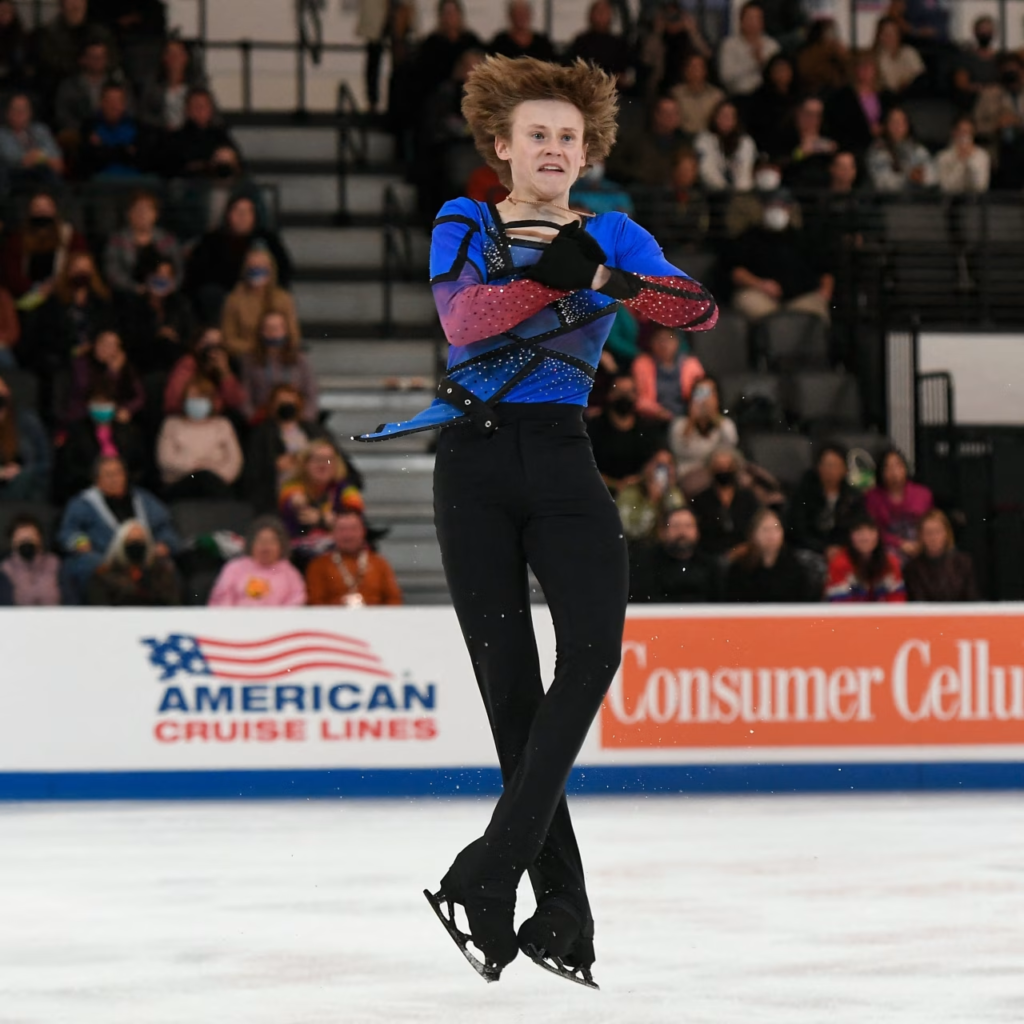
It’s not that the system is flawed. It’s that it was never meant for someone like this.
Because sports evolve through patterns. Records are broken, then rebroken, but always within a rhythm the system understands. Malinin disrupts that rhythm. He compresses years of evolution into single programs, forcing the sport to adapt in real time—or risk becoming outdated in its own present.
And yet, what makes his rise even more compelling is that it isn’t reckless. There’s control in the chaos. Precision in the ambition. He doesn’t chase difficulty for spectacle alone—he carries it with intention, weaving it into performances that feel both technical and emotional, sharp yet strangely poetic.
Still, a quiet question lingers beneath every performance.
If the sport cannot evolve as quickly as the athlete, who defines greatness?
Because eventually, the gap between what is performed and what is recognized begins to widen. Judges refine criteria, adjust scales, reconsider values—but adaptation takes time. And Malinin doesn’t wait. He continues forward, skating into a future that hasn’t fully been written yet.
Other athletes watch, and the landscape shifts. What once felt unreachable now feels necessary. The standard rises—not gradually, but suddenly. And with it, the pressure to keep up grows heavier, more urgent, more unforgiving.
This is how transformation happens. Not slowly, but all at once—through someone who doesn’t just follow the trajectory of a sport, but bends it.
And maybe that’s what makes Malinin so compelling.
He isn’t just competing against others.
He isn’t even competing against himself.
He’s competing against the speed at which the sport can understand him.
And right now… he’s still faster.