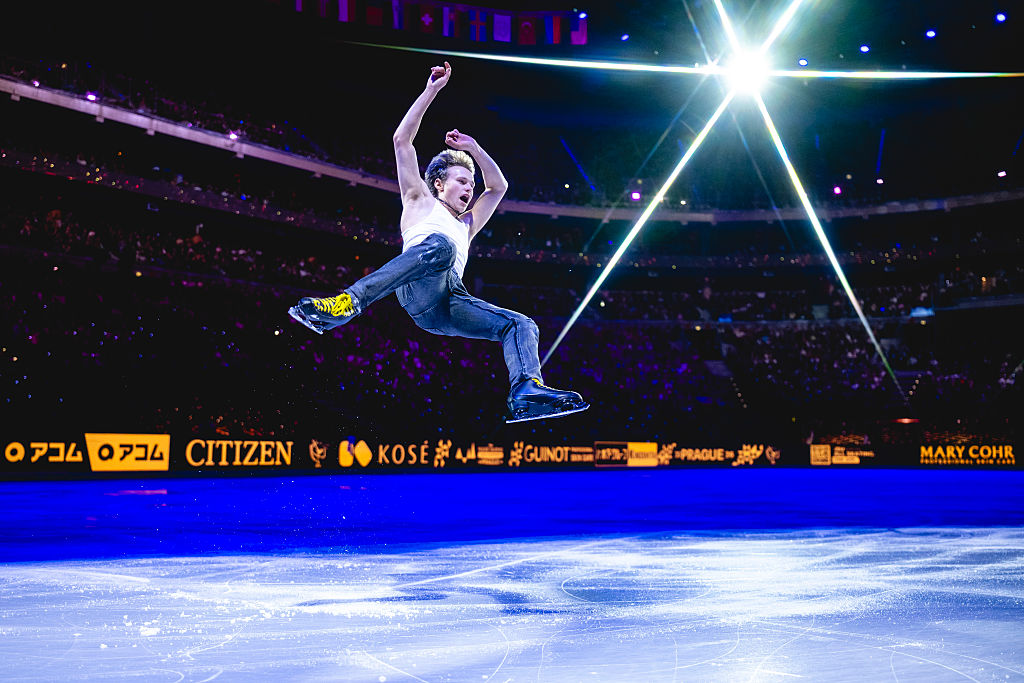
There is a moment in figure skating when time quietly slips out of the equation. It doesn’t happen when the jump is announced or when the blade leaves the ice—it happens in between. A fraction of silence, a breath held too long, a heartbeat that suddenly feels louder than the music. In that instant, the sport forgets to count. It forgets rotations, base values, and execution scores. And what remains is something far more fragile: a feeling that cannot be measured, only remembered.
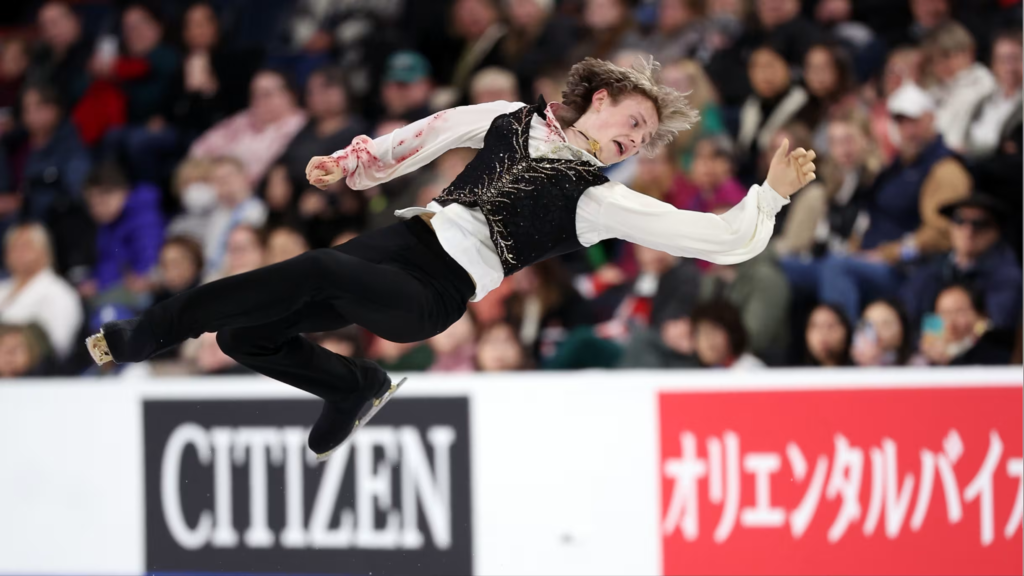
This is the space where figure skating reveals its deepest contradiction. It is a sport built on numbers, yet sustained by emotion. Judges calculate, but audiences remember. One writes history in decimals, the other in memory. And somewhere between those two systems, every skater must decide—not consciously, but instinctively—what they are truly chasing when they step onto the ice.
In today’s era, that tension feels sharper than ever. Athletes like Ilia Malinin have redefined what is physically possible, turning once-mythical elements into expected routines. Seven quads in a single program no longer feel like an anomaly; they feel like a new standard. The sport has accelerated, pushing its limits at a pace that almost feels unsustainable, as if it’s racing against its own evolution.
And yet, even as difficulty rises, something quietly resists being overtaken.
Because not every unforgettable performance is built on maximum technical content. Some are built on restraint. On stillness. On the courage to slow down when everything else is speeding up. These are the programs where a single edge holds more weight than a jump, where a pause says more than a landing, where the skater is not performing for the score—but for something deeper, something unseen.
This is where the paradox begins to take shape.
The judging system demands clarity—rotations must be clean, edges must be precise, timing must be exact. There is a structure to excellence, a framework that defines what it means to win. But emotion exists outside of that framework. It doesn’t follow rules. It doesn’t arrive on command. And yet, it often defines the performances that outlive the competition itself.
Look at Nathan Chen, a skater who didn’t just master difficulty—he reimagined its purpose. His programs were not a collection of elements, but a conversation between movement and music. Every jump had a place, every transition a reason. He didn’t separate technique and artistry; he fused them until the distinction disappeared. And in doing so, he showed that the real question isn’t whether quads or emotion win—but whether they can exist without diminishing each other.
Because quads alone rarely leave a lasting imprint.
They astonish in the moment. They demand attention. They force the world to acknowledge what is physically possible. But when the noise fades, what remains is rarely the number of rotations. It is the feeling those rotations carried—or failed to carry—when they were performed.
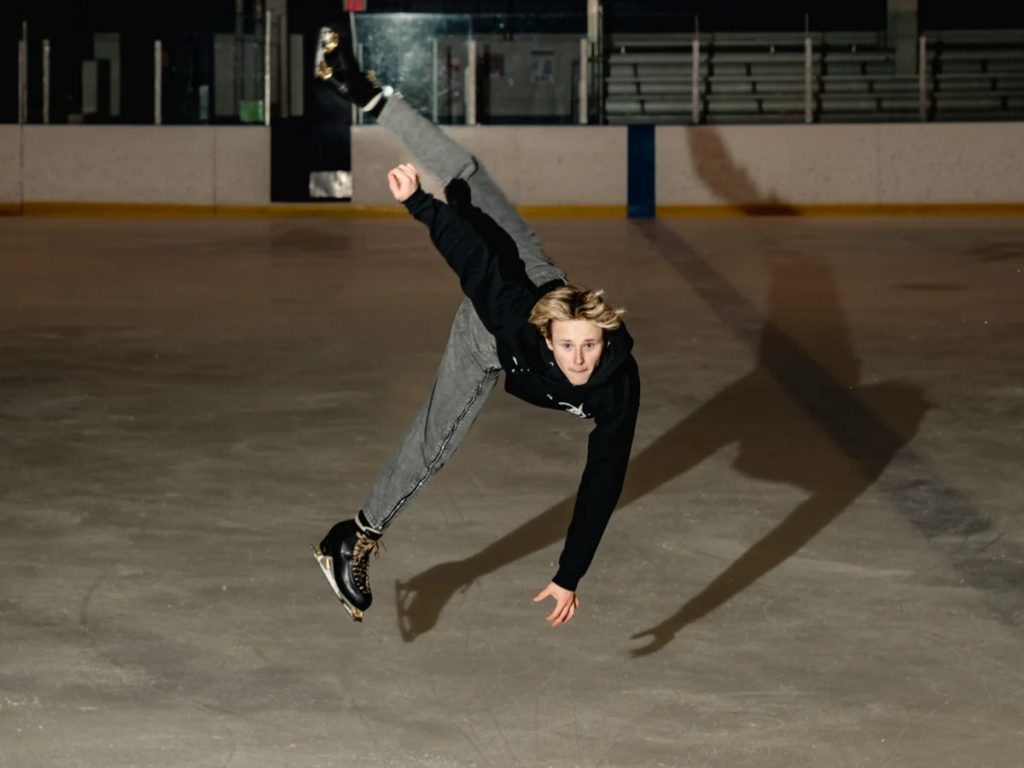
At the same time, emotion without foundation struggles to survive in a system that prioritizes measurable achievement. A program filled with sincerity but lacking difficulty risks being overlooked, no matter how deeply it resonates. Figure skating, for all its artistry, is still a competitive discipline. It requires balance—not just on the blade, but in intention.
So what actually wins?
Not the skater who chooses one over the other.
But the one who dissolves the line between them.
The true victory lies in transformation—the moment when a quad is no longer just a jump, but an extension of the music itself. When it arrives not as a requirement, but as a necessity. When the audience doesn’t applaud the difficulty, but the meaning behind it. That is when technique stops feeling like effort and starts feeling like expression.
And this is where the future of the sport quietly shifts.
Because for skaters like Ilia Malinin, the challenge is no longer proving what they can do. That question has already been answered. The next challenge is far more complex: discovering why they do it, and allowing that answer to shape every movement, every pause, every risk they take on the ice.
Dominance can be calculated.
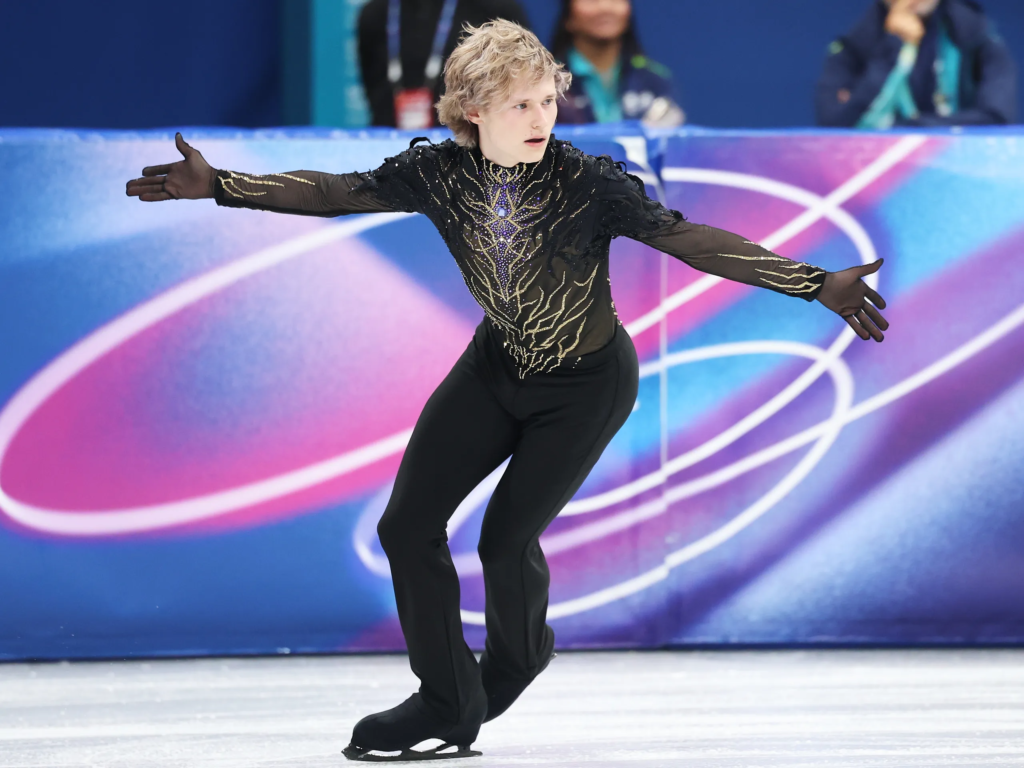
Records can be broken.
But connection?
Connection cannot be engineered.
It has to be revealed—often in the moments where control loosens just enough for something real to emerge. And those are the moments that stay. Not because they were perfect, but because they were honest.
The future of figure skating will not belong to the skater who lands the most quads, nor to the one who simply performs with the most visible emotion. It will belong to the one who understands that both are incomplete on their own. That the ice is not a stage for choosing between power and vulnerability, but a place where both must exist, inseparable and indistinguishable.
Seven quads may win the scoreboard.
But one true emotion?
That’s what wins the world—and long after the scores are forgotten, it’s the only thing anyone remembers.