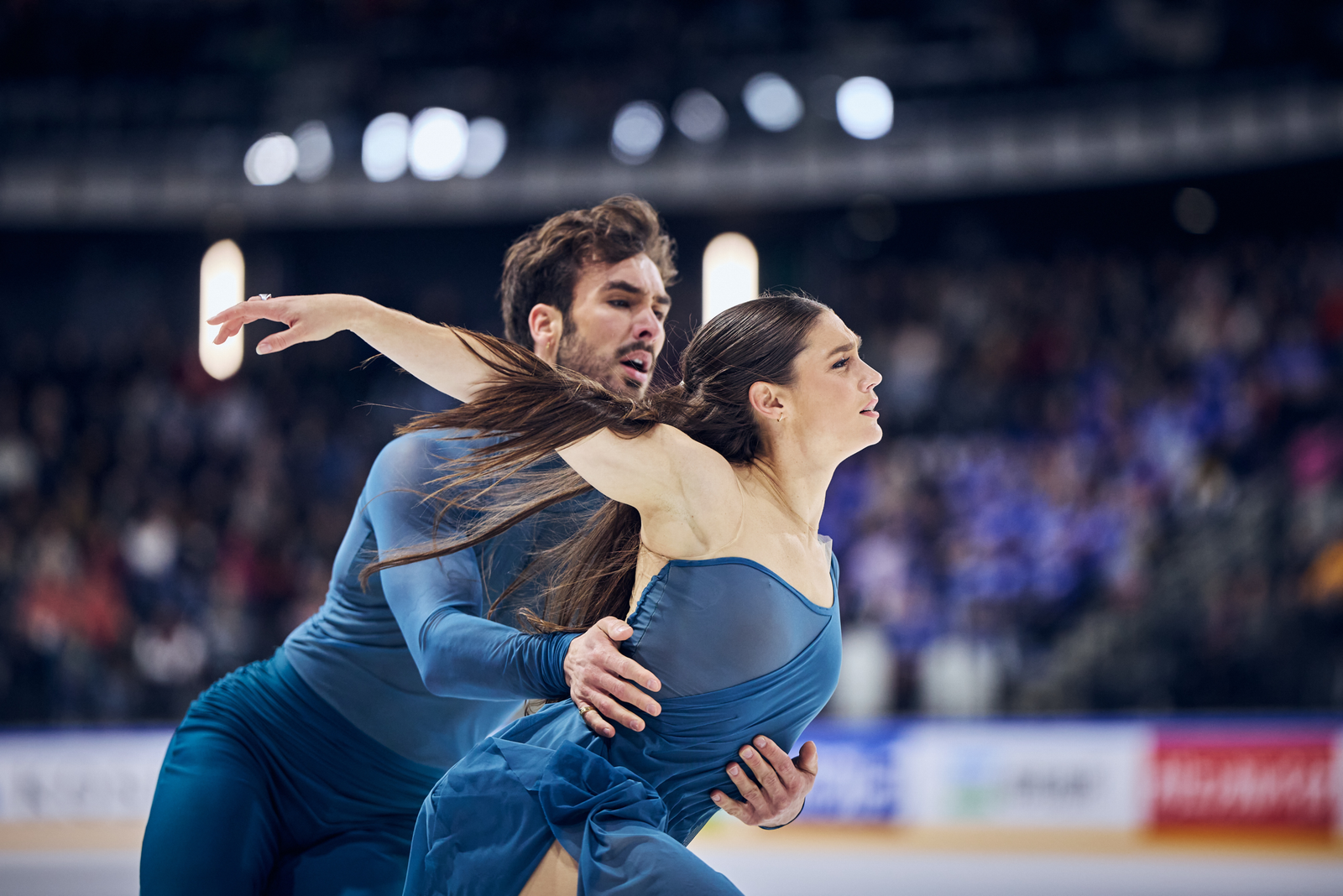
There are victories… and then there are seasons that feel almost unreal. What Laurence Fournier Beaudry and Guillaume Cizeron accomplished in a single competitive cycle belongs to the latter. Olympic gold, European gold, and World gold—three titles that rarely align, now stitched together into one flawless narrative. It wasn’t just dominance. It was timing, precision, and something harder to define—inevitability.
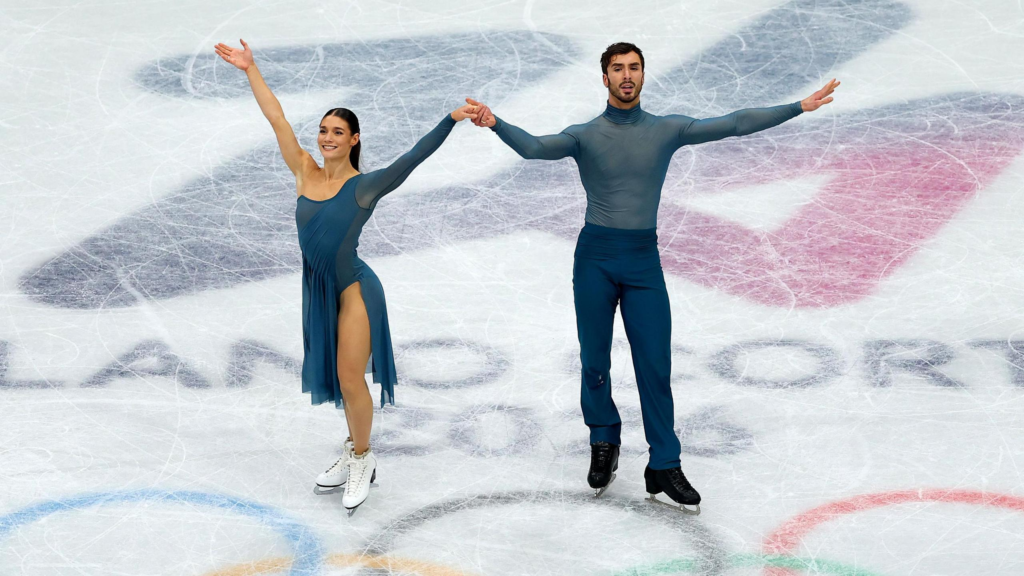
Because from the very first glide of their season, there was a quiet sense that this wasn’t going to be ordinary.
By the time they arrived at the ISU World Figure Skating Championships 2026, the expectations were already immense. Yet expectations can suffocate even the best. What made this performance different was how effortlessly they seemed to breathe within the pressure, as if the stakes only sharpened their connection rather than weighing it down.
Then came the free skate.
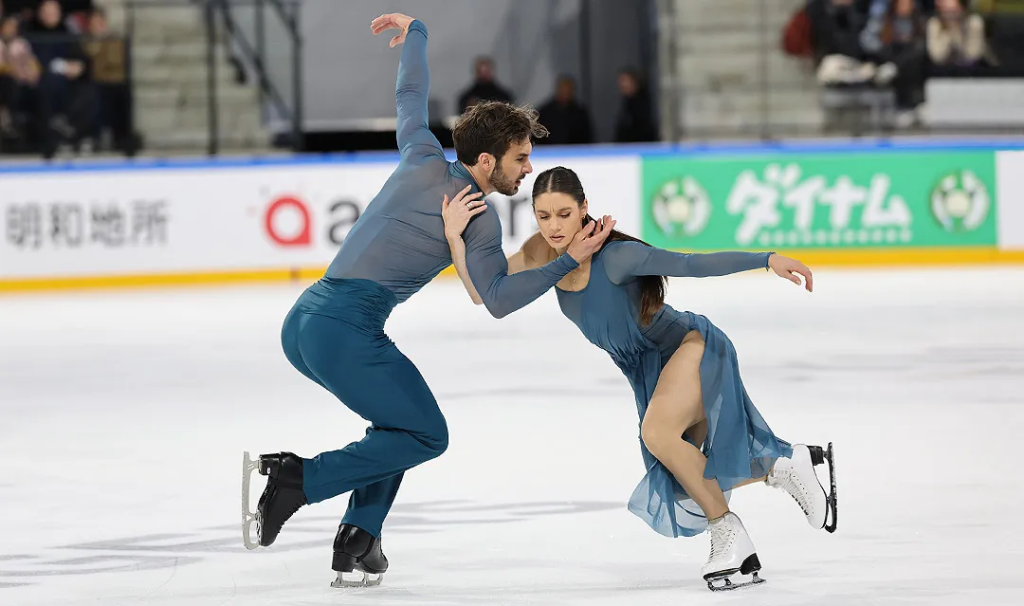
Inside the O2 Arena, the atmosphere shifted the moment the music began. There was no rush, no visible strain—just two skaters moving as if the ice itself had chosen them. Every edge carved with intention. Every transition felt less like choreography and more like conversation.
And when the final note faded, the silence lasted just long enough to make the eruption feel seismic.
A total score of 230.81. A free skate of 138.07. Numbers that will live in record books—but numbers alone fail to explain what actually happened. Because this wasn’t just technical superiority. It was emotional clarity, the kind that reaches beyond judges and lands directly in the chest of anyone watching.
Far behind them, the battle for silver and bronze unfolded with its own intensity.
Canada rose to second with 211.52 points, delivering a performance that could have won in many other years. Close behind, the United States—on debut at this level—claimed bronze with 209.20, turning the podium into one of the tightest and most dramatic finishes in recent ice dance history. It was a reminder that while one pair may define the peak, the climb beneath them is just as fierce.
But even within that competition, the center of gravity never shifted.
Because what Fournier Beaudry and Cizeron delivered wasn’t just about being better—it was about being unmistakable. Their skating carried a signature, a clarity of identity that made comparisons feel irrelevant. Others competed. They arrived.
And that distinction is what separates champions from eras.
This “legendary hat-trick” places them among only a handful in history who have managed to align Olympic, European, and World titles in a single stretch. But history, as it turns out, isn’t always about repetition—it’s about how something is done. And this felt less like a repetition of greatness and more like a redefinition of it.
Because there was no single moment where they “peaked.”
The entire season was the peak.
From the Olympics to Worlds, there was no visible dip, no hesitation, no recalibration. Just a steady, almost quiet escalation—like a story that never needed a twist because it was already perfect in its telling. And that kind of consistency is rarer than any medal.
For French figure skating, this isn’t just a triumph—it’s a shift.
A reminder that dominance doesn’t always announce itself loudly. Sometimes, it unfolds with elegance, with control, with a kind of confidence that doesn’t demand attention because it naturally commands it. This season didn’t just add to France’s legacy—it reshaped how that legacy is perceived.
And perhaps the most remarkable part of it all is this:
It didn’t feel like the end of something.
It felt like the beginning of a standard that others will now spend years trying to reach.