There are moments that feel like endings—and then there are moments that quietly announce a beginning. On April 10, 2026, somewhere in the vast calm of the Pacific Ocean, the crew of Artemis II stepped into one of those rare intersections of both.
They had already done the impossible.
A 2.3-million-mile journey around the Moon. A return through fire. A descent that demanded perfection at speeds no human body was ever meant to feel. And yet, as their feet met the deck of the USS John P. Murtha, the moment didn’t explode into celebration.
It settled.
Because survival, at that scale, isn’t loud—it’s deeply, almost overwhelmingly quiet.
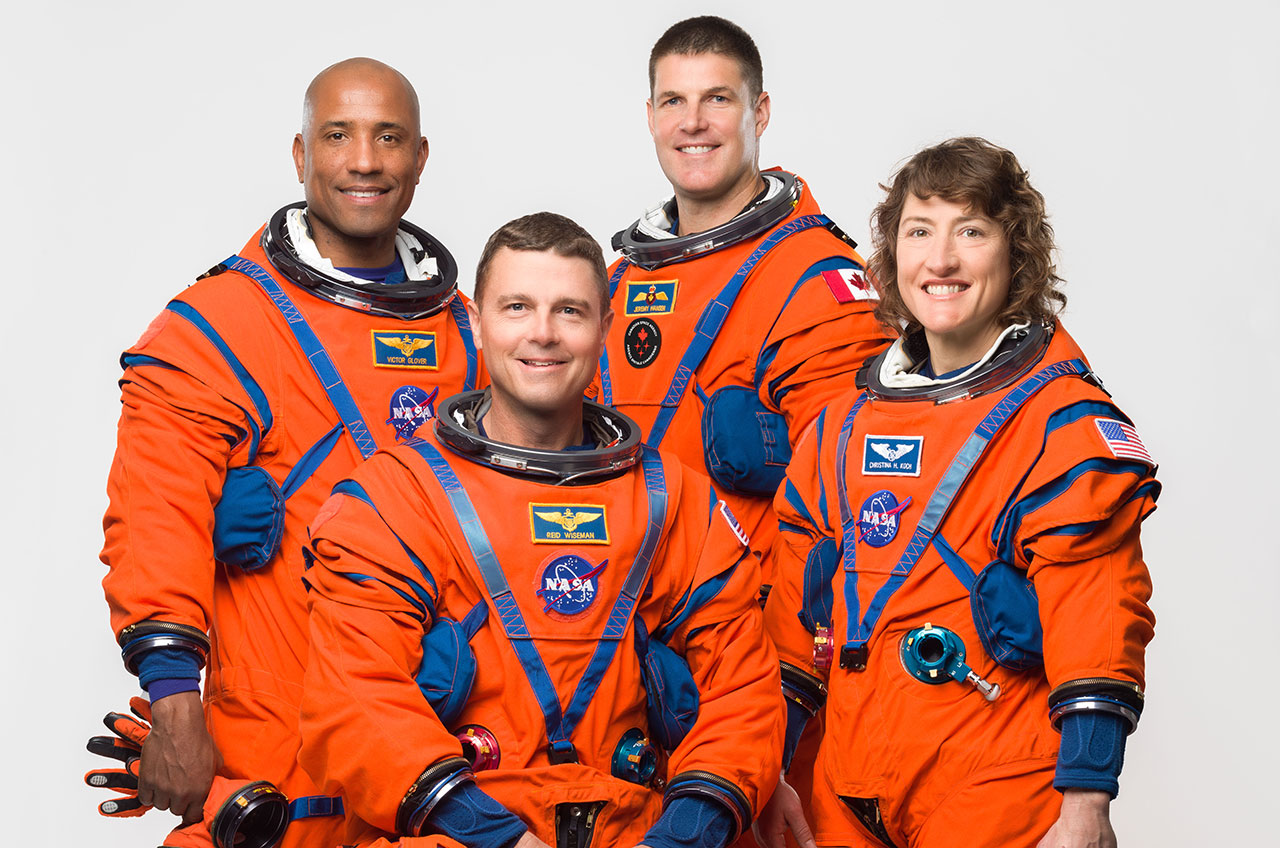
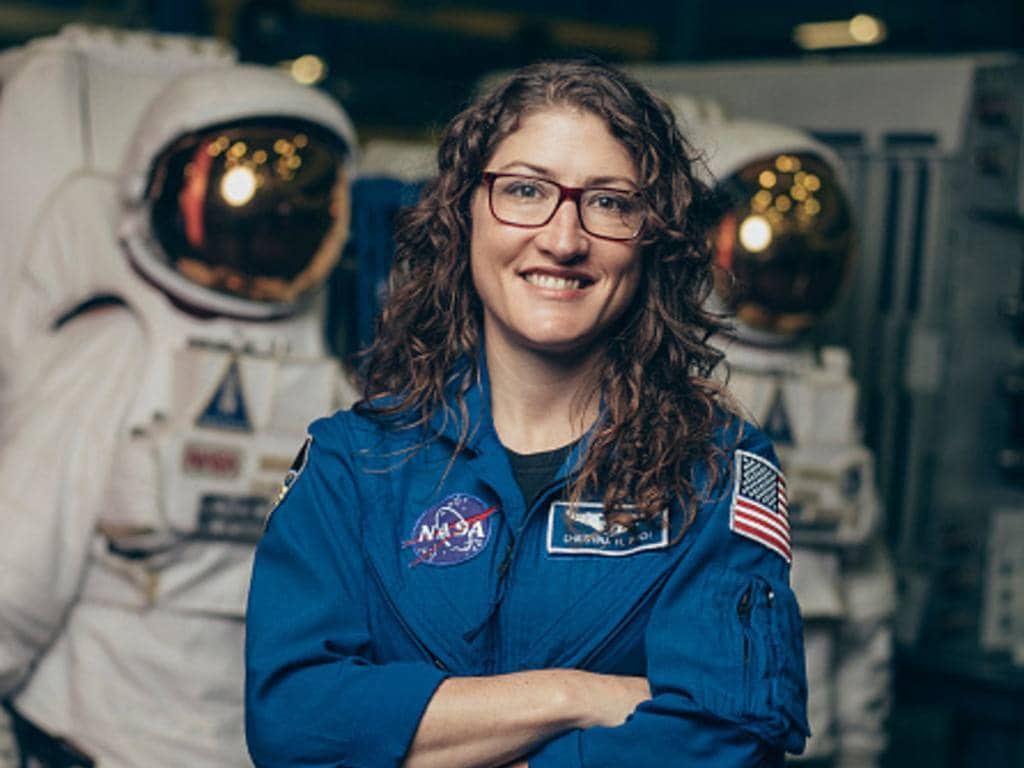
Still dressed in their flight suits, Reid Wiseman, Victor Glover, Christina Koch, and Jeremy Hansen stood together for their first photograph back on Earth. It wasn’t staged in the traditional sense. There was no attempt to manufacture emotion.
They didn’t need to.
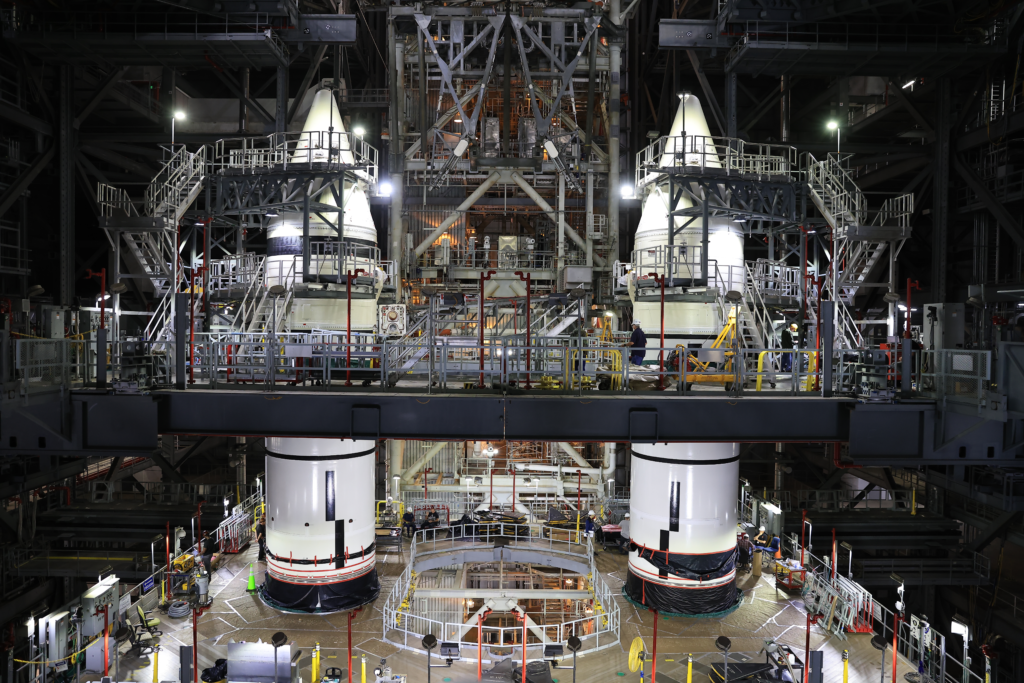
Behind them stood the Orion spacecraft—scarred, darkened, marked by its passage through 5,000°F re-entry heat. Its 16.5-foot heat shield, now charred and uneven, told a story no words could fully capture. It wasn’t damage. It was proof.
Proof that they had gone farther than anyone had in over half a century—and made it back.
Just hours earlier, the capsule had plunged into Earth’s atmosphere at Mach 33. A speed so extreme it compresses time, turning minutes into something almost abstract. Wrapped in plasma, communication severed, they were alone again—just as they had been on the far side of the Moon.
And then, the fire gave way.
Recovery teams moved with precision. MH-60S Sea Hawk helicopters hovered overhead, lowering lines into the ocean where the capsule floated, rocking gently against the surface. One by one, the astronauts were lifted from the water—not as distant figures from space, but as humans returning to gravity.
There’s something profoundly symbolic about that transition.
From weightlessness to weight. From silence to sound. From the infinite to the immediate.
And yet, even as they stood on solid ground again, something of space remained with them. You could see it in the way they held themselves—not in exhaustion, but in awareness. As if they had seen something too vast to fully leave behind.
The photograph captured more than four astronauts.
It captured contrast.
The untouched blue of the ocean behind them. The steel certainty of the ship beneath them. And at the center, a spacecraft that had just endured one of the most extreme environments imaginable. Fire and water. Motion and stillness. Distance and return.
All in one frame.
But perhaps the most striking part wasn’t the technology. It wasn’t the scale. It wasn’t even the history.
It was the simplicity.
Four people, standing side by side, having completed something that once belonged only to another era. There were no grand gestures. No raised arms. Just presence. A quiet acknowledgment that they had crossed a boundary—and come back with something more than data.
They came back with perspective.
Because NASA didn’t just send them around the Moon to prove it could be done again. It sent them to remind us that exploration isn’t finished—it’s evolving. This mission wasn’t a repetition of the past. It was a recalibration of the future.
A signal.
That the distance between Earth and the Moon is no longer a memory—it’s a pathway.
And as the image of those four astronauts began to circulate across the world, it carried something subtle but undeniable. Not urgency. Not spectacle. But possibility.
Because the story didn’t end on that deck.
It shifted.
The Orion capsule, still marked by fire, will eventually be studied, analyzed, archived. The data will be broken down. The mission will be summarized. The milestones will be recorded.
But that photograph—that single, quiet moment—will linger differently.
Because it doesn’t just show where we’ve been.
It hints, almost gently, at where we’re going next.