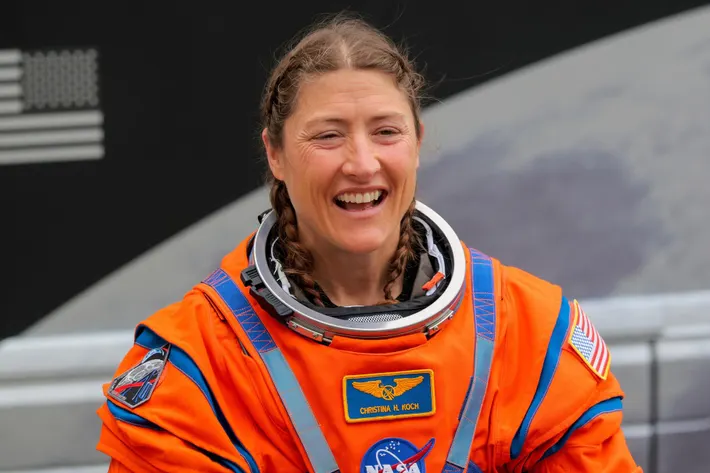
There are moments in history that feel like quiet tremors before an earthquake—moments where the world hasn’t changed yet, but you can feel it about to. The upcoming journey of Christina Koch aboard Artemis II is one of those moments. It is not loud yet. It is not fully visible. But it is already rewriting the boundaries of what humanity dares to attempt.
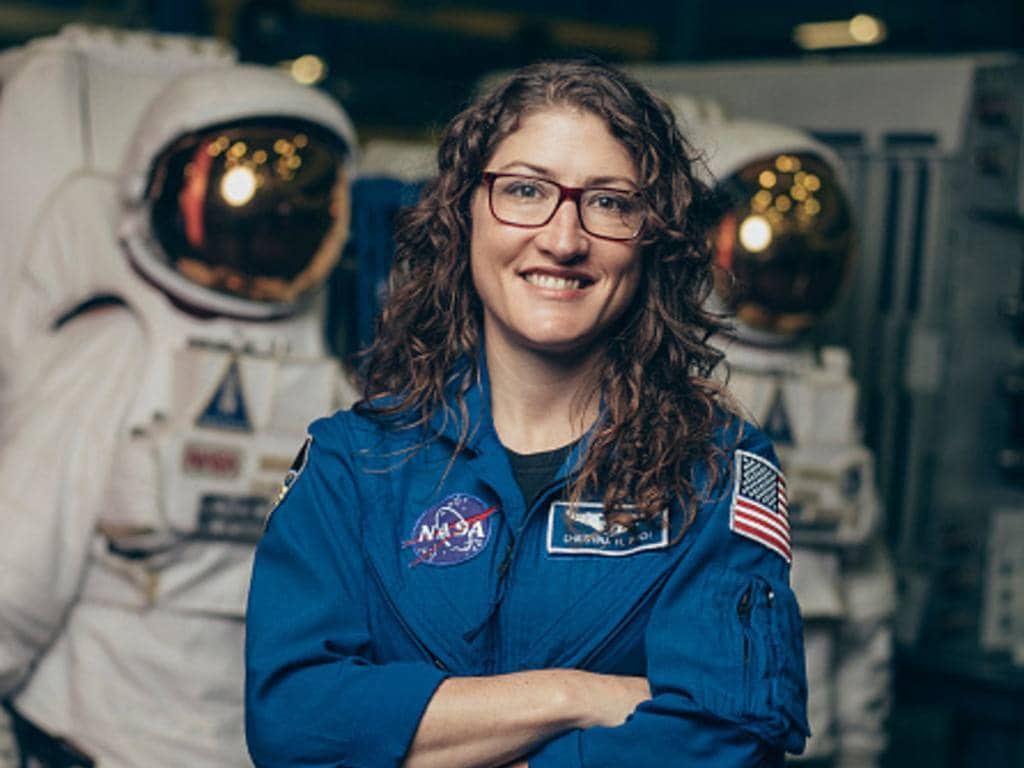
Koch is not new to the edge of human endurance. Her 328-day mission aboard the International Space Station quietly reshaped expectations of long-duration spaceflight. She did not just survive space—she adapted to it, studied it, lived inside its silence. But orbiting Earth is one thing. Leaving it entirely is something else. Artemis II is not a continuation—it is a departure into a deeper unknown.
What makes this mission feel almost mythic is its trajectory. Unlike missions that circle Earth in predictable patterns, Artemis II will break free from the planet’s gravitational comfort zone. The spacecraft will arc around the Moon, traveling farther than any human has gone in decades. For Koch, this means stepping into a region where rescue is not immediate, where communication delays stretch longer, and where every system must work flawlessly—because failure has no easy recovery.
And that is where the danger becomes real, not dramatic. Space is not loud or chaotic—it is indifferent. Beyond Earth’s protective magnetosphere, radiation exposure increases. Micrometeoroids move invisibly at lethal speeds. Even the smallest malfunction in navigation, oxygen, or thermal control can escalate into a chain reaction. Artemis II is designed with precision, but the truth remains: deep space does not forgive uncertainty.
Yet, this mission is not driven by risk alone—it is driven by necessity. Humanity’s future in space cannot remain tethered to low Earth orbit. If the goal is Mars, if the ambition is long-term survival beyond a single planet, then missions like Artemis II are not optional—they are foundational. They are rehearsals for something much larger, something that extends far beyond a single orbit around the Moon.
There is also something quietly symbolic about Koch’s role. For decades, space exploration has been shaped by milestones that defined who could go, who could lead, and who could represent humanity beyond Earth. Koch’s presence aboard Artemis II is not framed as a first for the sake of headlines—it is a natural progression of capability. And yet, its impact will ripple far beyond the spacecraft itself.
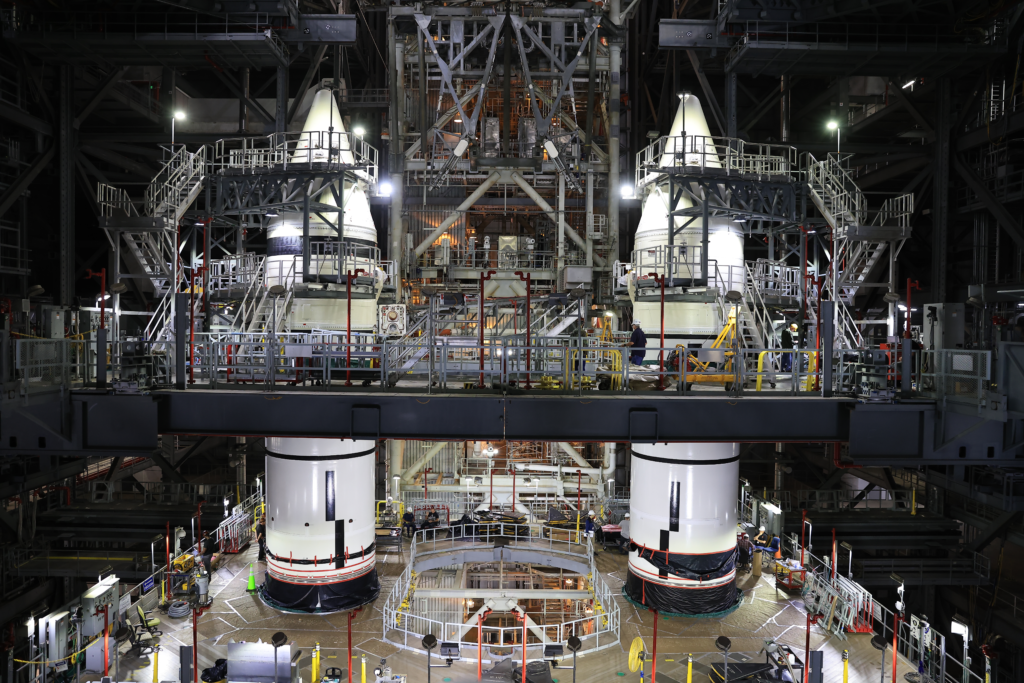
Inside the Orion spacecraft, the experience will not resemble anything seen in previous missions. The distance from Earth will reshape perception itself. Our planet will shrink into something fragile, distant, almost abstract. For the crew, time will stretch differently. Every decision will carry weight. Every silence will feel deeper. This is not just travel—it is perspective, rewritten in real time.
But perhaps the most compelling part of Artemis II is what it represents collectively. It is not just a NASA mission—it is a global statement that exploration is still part of human identity. That despite technological comforts and terrestrial challenges, there remains a pull toward the unknown that cannot be ignored. Artemis II is not about proving we can go—it is about proving we still will.
And beyond the Moon lies the real question. Not just physically, but philosophically. What does it mean for humanity to leave Earth, not temporarily, but permanently? Missions like Artemis II begin to answer that—not with conclusions, but with steps. Careful, calculated, but undeniably forward.
For Christina Koch, this mission will not just be a milestone. It will be a threshold. A crossing point between what humanity has done and what it is about to attempt. And for the rest of us, watching from a small blue planet, it will feel like witnessing the first lines of a story that has no clear ending yet.
Because the truth is, Artemis II is not the destination.
It is the moment just before everything changes.