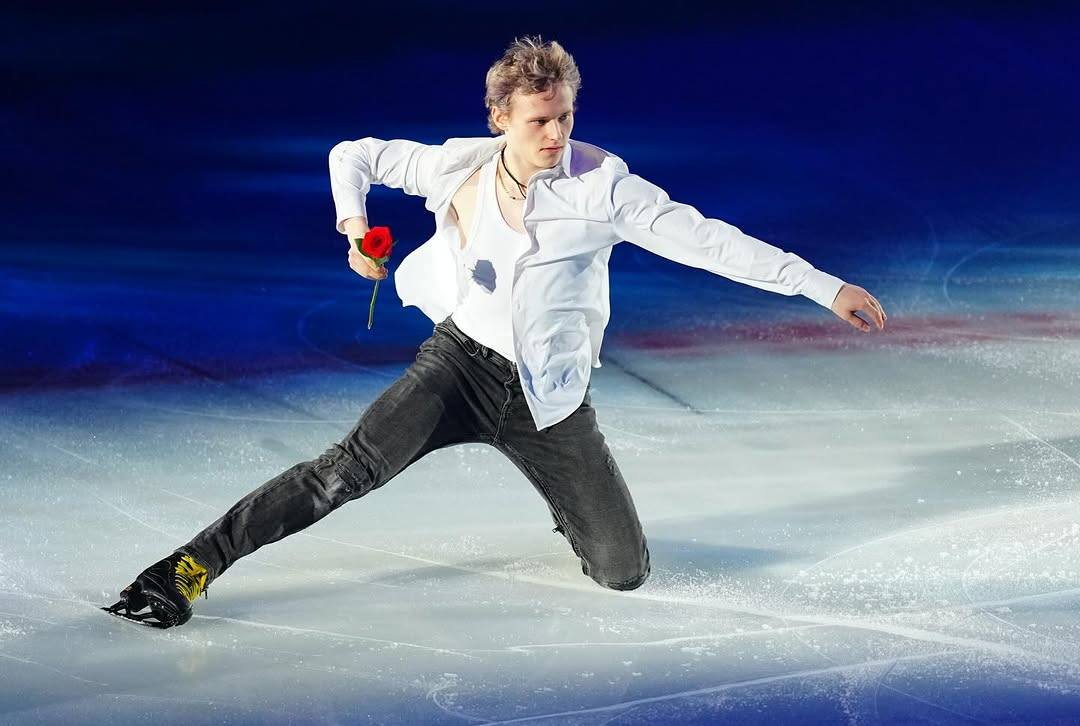
There are seasons that elevate athletes—and then there are seasons that expose them. For Ilia Malinin, the 2025–2026 campaign did both, but not in the way anyone expected. It began with certainty, the kind that surrounds a name already carved into the sport’s future. And then, in a moment that felt almost unreal, that certainty fractured.
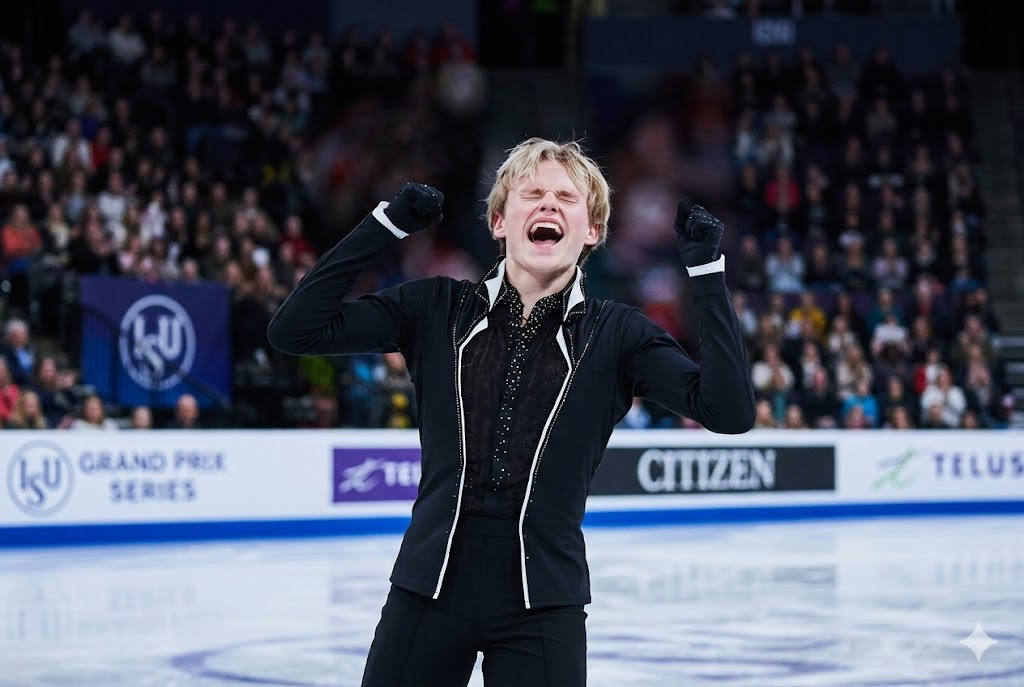
The Olympic stage—where narratives are supposed to conclude—became instead the place where his story unraveled.
It wasn’t just the result that shocked the world. It was the disruption of inevitability. Malinin, the skater who had turned difficulty into identity, suddenly found himself in a space where control slipped, even if only for a moment. And in that moment, something rare happened.
He became human again.
What followed could have gone in many directions. For most, an Olympic setback becomes a shadow that lingers. But for Malinin, it became fuel. Not loud, not dramatic—but deeply internal. A recalibration rather than a reaction.
Because greatness, when it’s real, doesn’t disappear under pressure.
It evolves.
The months that followed felt different. Not because the stakes were lower—but because his approach was. There was a quietness to his performances, a sense that he was no longer skating for the expectations that surrounded him, but through them. The technical brilliance remained, but it was no longer the only language he spoke.
There was intention now.
And by the time the World Figure Skating Championships arrived, the shift was undeniable. This wasn’t a redemption arc built on desperation—it was a statement delivered with clarity. Program after program, Malinin didn’t just execute; he commanded.
The result?
A third consecutive world title. Not as a continuation of dominance—but as a redefinition of it.
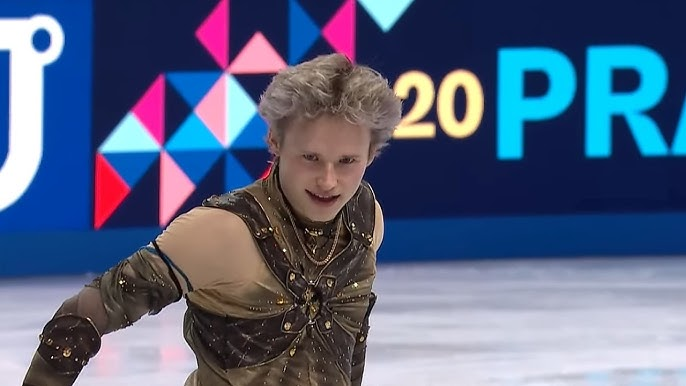
Because this victory carried something his previous ones did not: context. It wasn’t just about being the best. It was about becoming something more complete. A skater who could withstand disruption and return sharper, not shaken.
But if the performances told one story, his words told another.
When the season finally closed, Malinin didn’t celebrate loudly. He didn’t lean into triumph. Instead, he offered something quieter—almost reflective. Acknowledging the exhaustion, the stress, the unseen weight of a year that demanded more than it gave.
And then, almost subtly, he shifted the narrative.
A “new chapter.”
New goals.
Even the mention of a “new name.”
It wasn’t a declaration. It was a signal.
And signals, when they come from someone like Malinin, are never accidental.
Because what does it mean for an athlete who has already redefined technical limits to start again? What does reinvention look like when dominance is no longer enough?
The ice, for now, has gone still.
But stillness, in stories like this, is never empty. It’s preparation. A space where identity is reshaped away from cameras and scoreboards. Where the next version of an athlete is built quietly, without the noise that once defined them.
And perhaps that’s the most compelling part of this entire journey.
Not the shock of the Olympics.
Not even the triumph of the world title.
But the uncertainty that follows.
Because for the first time in a long time, the question around Ilia Malinin isn’t what he can do.
It’s who he’s about to become.
And if this season proved anything, it’s that the answer won’t arrive the way anyone expects.
It never does with him.