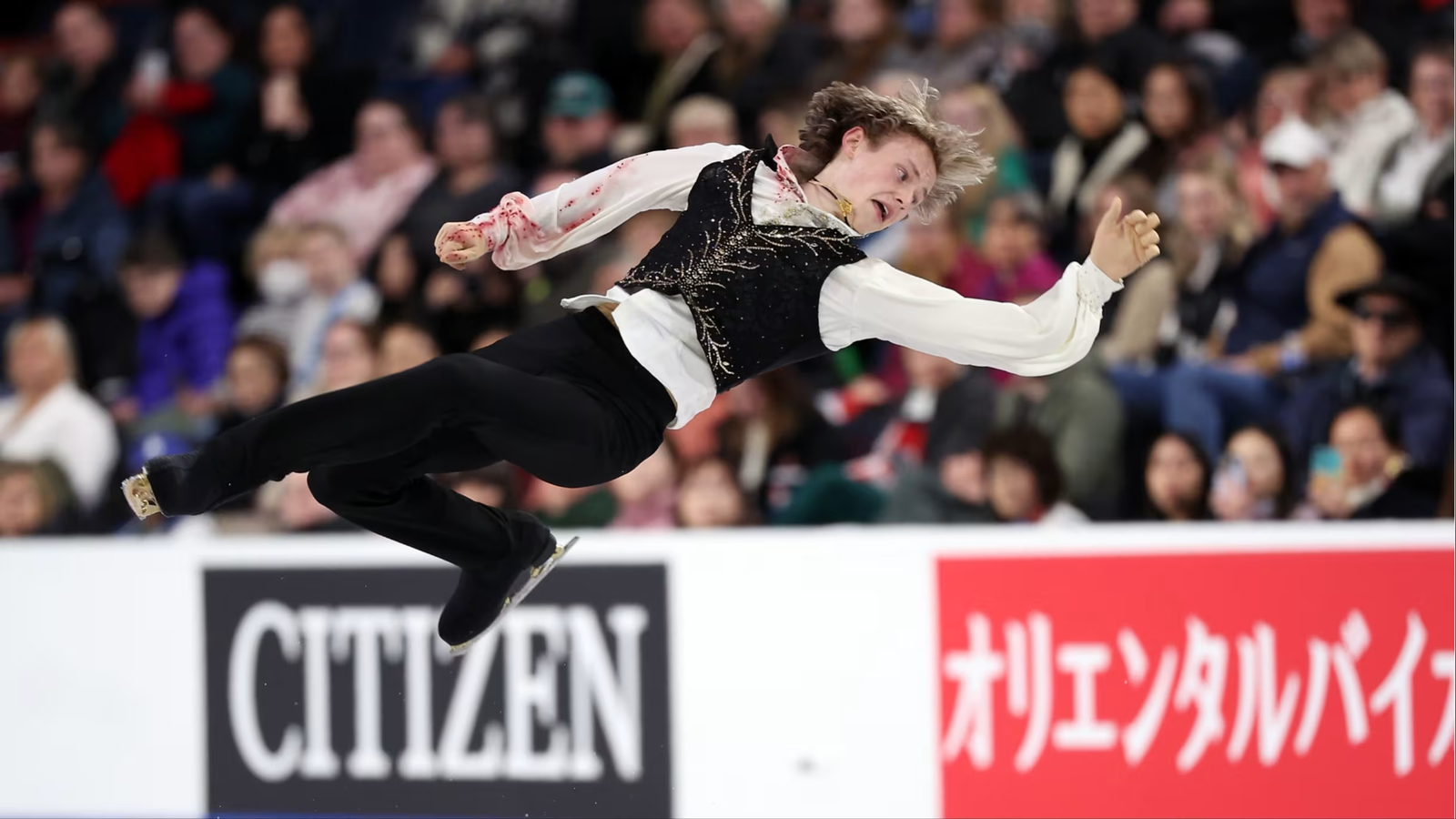
There is a certain expectation the world places on champions. They are supposed to be predictable in their greatness—polished, precise, almost mechanical in the way they deliver excellence. Every movement rehearsed, every emotion controlled, every victory inevitable. But every once in a while, someone rises who quietly dismantles that expectation… not by failing it, but by refusing to conform to it in the first place.
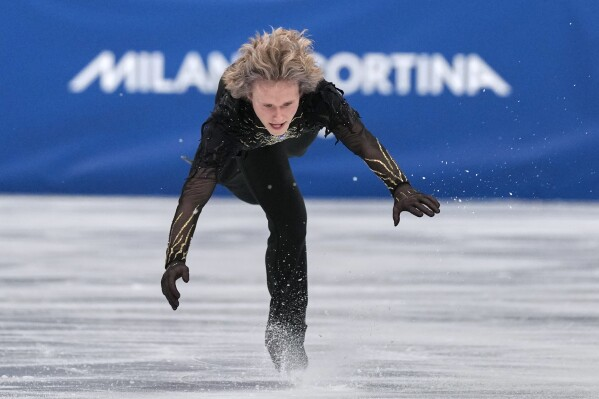
Ilia Malinin does not skate like a champion. And that is exactly why he is one.
When he steps onto the ice, there is no visible attempt to reassure the judges or satisfy tradition. There is no hesitation shaped by legacy, no restraint crafted by what the sport has historically rewarded. Instead, there is something far more unsettling—freedom. Not the kind that feels careless, but the kind that feels dangerous, as if at any second he might attempt something the sport itself hasn’t yet agreed is possible.
And he often does.
The irony is that Malinin has already achieved what most athletes spend their entire careers chasing. Titles. Records. Moments that rewrite rulebooks. Yet, he skates as if none of that is enough—not out of dissatisfaction, but out of curiosity. It’s as though winning was never the final destination for him… just proof that he could now afford to take bigger risks.
That’s where the tension begins.
Because the sport of figure skating has always lived in a delicate balance between artistry and control. Judges reward precision. Audiences admire perfection. Systems are built to favor consistency. But Malinin disrupts that ecosystem every time he performs. His programs don’t feel like controlled exhibitions—they feel like evolving experiments, unfolding in real time.
And experiments are not supposed to win.
But he does anyway.
There is something almost rebellious in the way he approaches competition. Not rebellious in attitude, but in instinct. Where others refine, he expands. Where others stabilize, he accelerates. He is not chasing the cleanest performance—he is chasing the edge of what’s possible, even if it means stepping beyond what feels safe.
That’s why his skating feels different to watch.
It’s not just about the jumps—the quads, the impossible rotations, the moments that leave commentators scrambling for words. It’s about what happens between them. The unpredictability. The sense that you are not watching a finished product, but a process. A mind thinking faster than the sport can keep up with.
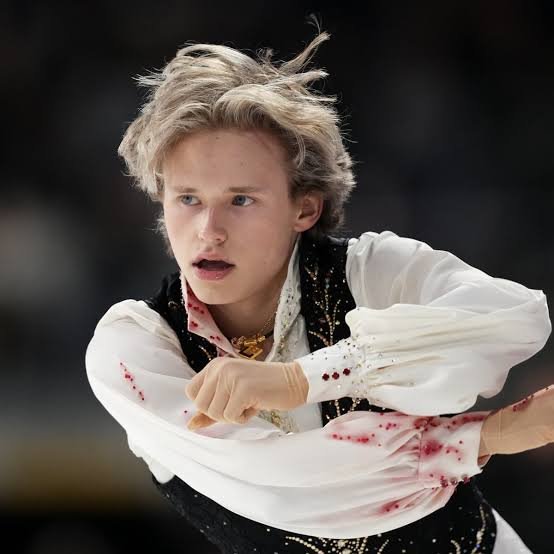
And that unsettles people.
Because champions are supposed to represent the peak of something already understood. They are meant to perfect the system, not challenge it. But Malinin exists outside that expectation. He doesn’t just perform within the structure—he questions it, stretches it, sometimes even ignores it entirely.
And yet, he still wins.
That contradiction is what makes his story so compelling. He is both the safest bet in the competition and the biggest risk on the ice. The most dominant skater and the most unpredictable performer. The champion who could easily play the game… but chooses not to.
Because somewhere along the way, he understood something most athletes never do.
That true dominance is not about repeating greatness—it’s about redefining it.
So while others aim to skate like champions, Malinin continues to skate like something else entirely. Something unfinished. Something evolving. Something that doesn’t quite fit into the language the sport has used for decades.
And maybe that’s the point.
Because the most dangerous athlete in any era is not the one who masters the system…
It’s the one who forces it to change.