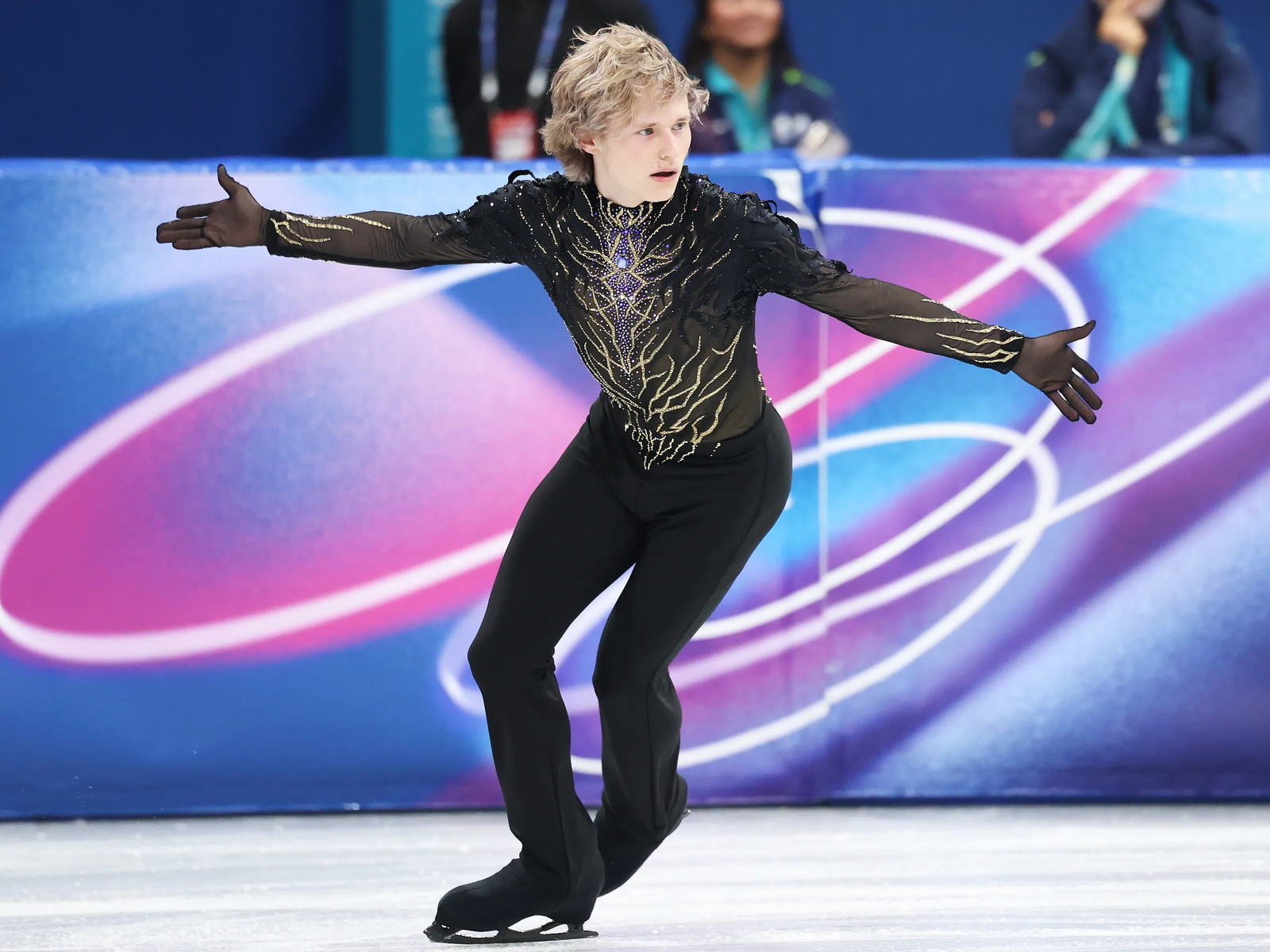
The arena in Milan felt unusually quiet that night, the kind of quiet that settles before something important begins. The lights reflected off the ice in long pale streaks, and every sound — a blade carving, a cough in the crowd, the soft echo of music from warm-ups — seemed to travel farther than it should. When Ilia Malinin stepped out, the air shifted almost without anyone noticing. It wasn’t noise that followed him, but expectation, heavy and invisible, moving with him across the rink.
Across the ice stood the others, each in their own corner of thought. Yuma Kagiyama, calm and precise, eyes lowered as if already inside the program he hadn’t skated yet. Shun Sato stretching slowly, breathing in rhythm, every movement controlled. Mikhail Shaidorov watching the ice with the stillness of someone who knew exactly what he came for. They were all chasing the same thing, but in that moment none of them looked like rivals. They looked like men standing at the edge of the same unknown.
Ilia had arrived at these Games with a name that sounded larger than the sport itself. People whispered it in the hallways, in the stands, even in the practice rink where no cameras followed. Quad God. The one who jumps higher. The one who changes what is possible. He had already carried his team to gold days before, landing jumps that felt less like risks and more like promises. When he left the ice then, the applause had sounded certain, as if the story was already written.
But the individual final felt different from the first step. The rink seemed wider, the lights colder, the space between one breath and the next just a little longer than usual. He stood at center ice waiting for the music, shoulders relaxed, face unreadable, the way he always looked before something difficult. From the stands it almost felt like watching someone stand at the edge of a cliff, not afraid, just aware of how far the drop could be.
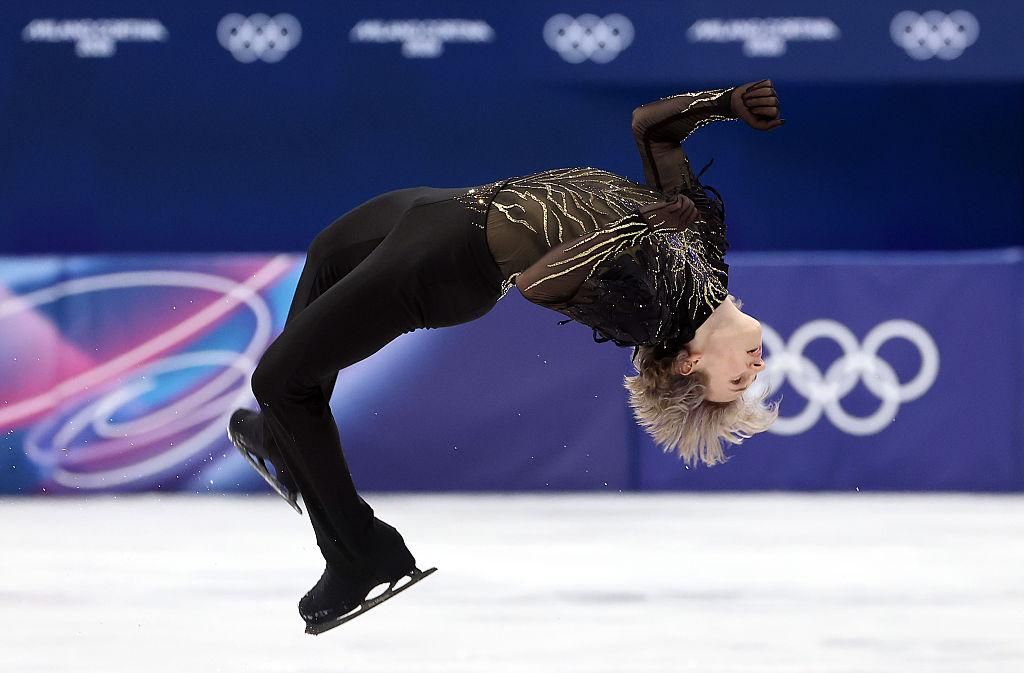
The first notes began softly, and for a moment everything moved the way it always had. The glide was smooth, the edge clean, the rhythm steady. Then came the jump everyone had been waiting for, the one that had followed him for years like a shadow. He rose into the air with the same fearless motion the world knew so well. But when the blade met the ice again, the sound was wrong. Not loud, not dramatic. Just wrong enough for the whole arena to feel it at once.
He kept going. That was the first thing people remembered later — not the mistake, but the way he didn’t stop. Another jump, another landing, another small fight to stay inside the music. The program moved forward even as the balance shifted under it, like a story refusing to end the way it was supposed to. Somewhere across the rink, another skater waited his turn, watching quietly, knowing the door had opened without anyone meaning to open it.
When Shaidorov skated, the ice sounded different again, sharp and certain under every step. Kagiyama followed with the calm of someone who trusted every movement. Sato held his lines with the kind of control that leaves no space for doubt. One by one, the programs finished, and the scoreboard changed without emotion, numbers appearing in silence that felt heavier than any cheer.
Ilia stood near the boards when the final results came up, hands resting on the barrier, eyes fixed forward as if he hadn’t heard them yet. There was no anger in his face, no shock, only the slow realization that the moment he had imagined for years had passed in a way no one had imagined at all. Somewhere behind him the crowd applauded for someone else, and the sound felt far away, like it belonged to another night.
Later, people would remember the gold medal from the team event, the jumps he landed days before, the way his name still carried the weight of something new in the sport. His rivals came to him one by one, quiet words, small nods, the kind of respect that doesn’t need to be spoken loudly. Under the lights, they all looked the same for a second — not winners or losers, just skaters who had given everything to the same piece of ice.
Long after the arena emptied, the rink stayed the way it always does, smooth again, silent again, holding nothing of what had happened on it. But somewhere in the memory of that night, the moment remained — not the fall, not the score, but the sight of a champion standing still in the cold light, learning that even when the story changes, the dream doesn’t disappear. It only waits, quiet and patient, for the next time the blade touches the ice.