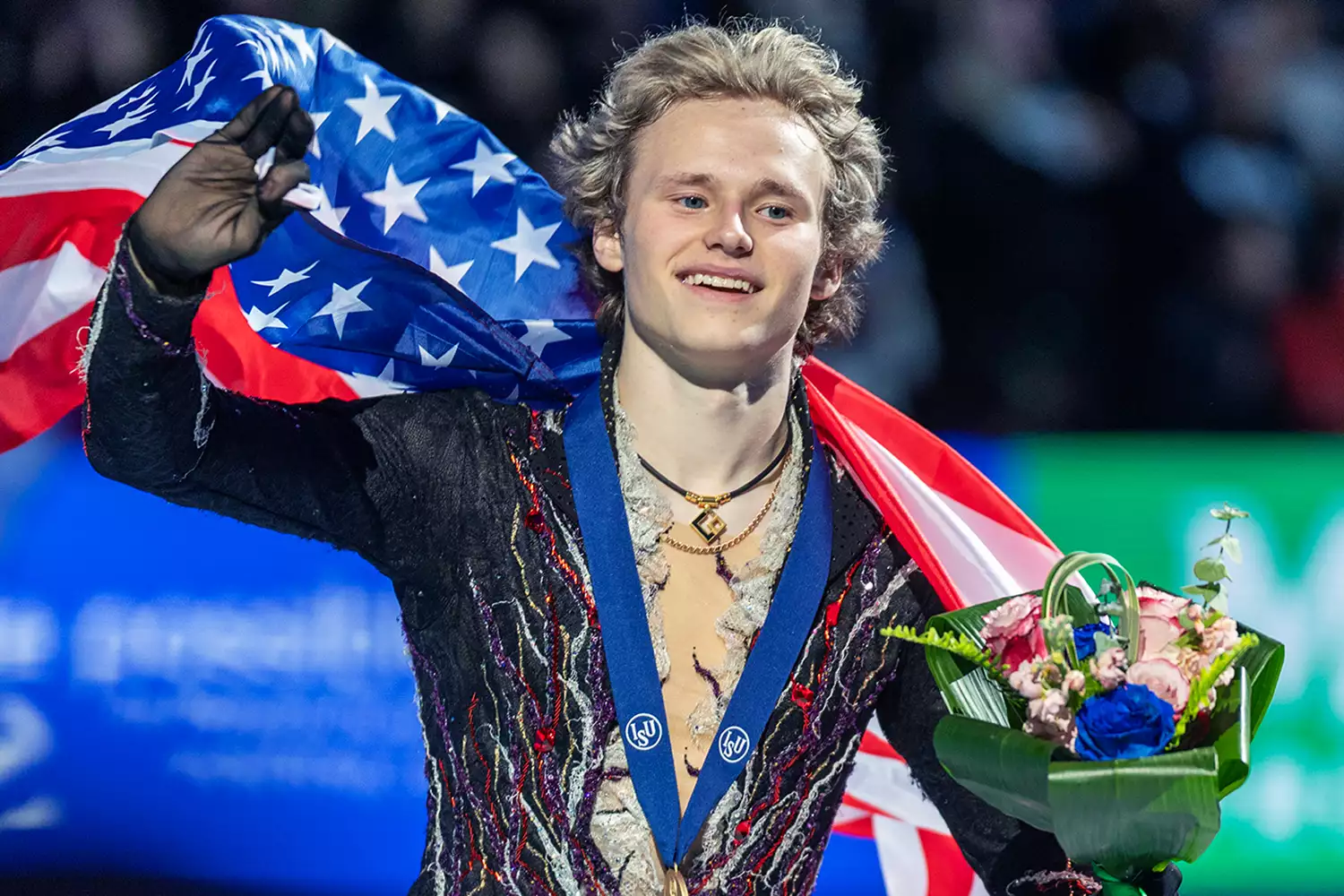
The ice in Prague did not look different when the arena lights came on, but something in the air felt heavier, like the building itself was holding its breath. The rink lay perfectly still, smooth and pale, waiting in the quiet way only ice can wait. People spoke softly in the stands, their voices fading into the hum of the arena, as if everyone understood that this night was not just another competition. It felt like a moment that had already happened once before somewhere, and was now returning to be finished.
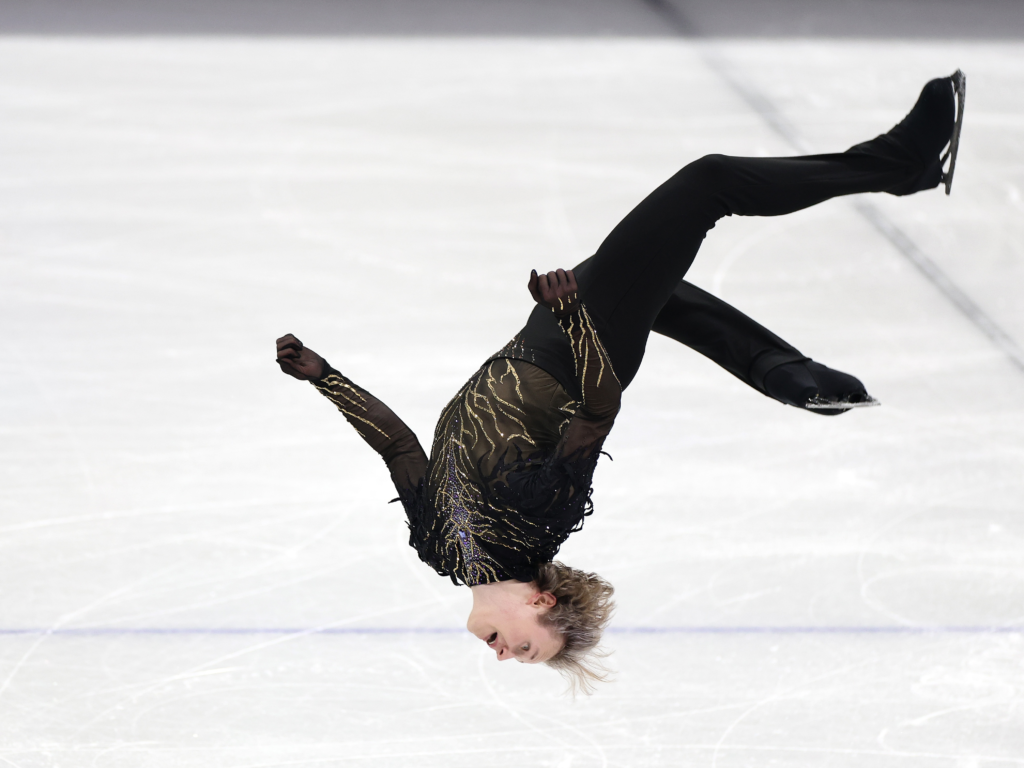
When Ilia Malinin stepped onto the ice, the sound of his blades touching the surface was almost too sharp in the silence. He did not look at the crowd right away. His head stayed low, shoulders relaxed, hands loose at his sides, like someone trying to feel the ground beneath his feet before taking the first step forward. The lights caught the edges of his costume, but his face stayed calm, unreadable, the kind of calm that only comes after you have already heard every doubt there is to hear.
People still called him the Quad God, but the name did not feel loud anymore. It hung in the air quietly, like something remembered rather than something shouted. There had been a time when the sound of his jumps felt unstoppable, when every landing made the crowd rise before the music even finished. But after the Olympic stumble, the noise around him had changed. Applause became questions. Headlines became pauses. And in that pause, he kept skating.
Practice rinks are never meant to be remembered, but the ones before Prague seemed to leave marks on him anyway. Early mornings, empty boards, the echo of blades cutting the same circles again and again. A jump missed, then tried again. A landing held a little longer than before. The kind of work no one sees, where the only sound is breath and the dull scrape of steel on ice. It was not the training of someone chasing a medal. It felt more like the training of someone trying to hear his own rhythm again.
Back in the arena, the music had not started yet, but his body already looked like it knew where it was going. He pushed once, then again, slow strokes at first, letting the ice answer him. The crowd quieted without being asked. Even the cameras seemed to move more carefully, as if the moment could break if it was touched too hard. When he reached the center, he stopped for just a second, eyes forward, the smallest breath rising in his chest.
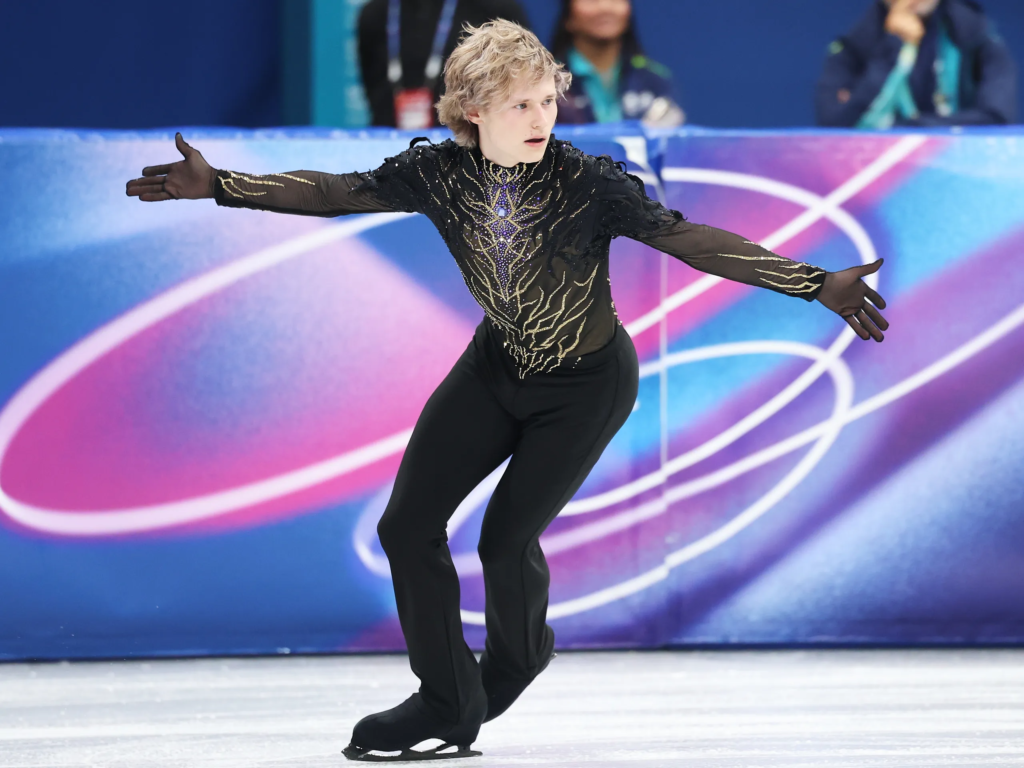
The first notes came softly, almost uncertain, and he moved with them like he was remembering something rather than performing it. The edges were clean, deep enough to leave pale lines behind him, lines that stayed on the ice for a moment before fading. When he set up for the first jump, there was no rush in it. His arms opened, closed, the timing exact, the takeoff so quiet it almost looked slow. Then the air caught him, and for a second he seemed to hang there longer than the music.
He landed without a sound the crowd could hear, only the clean whisper of the blade finding the ice again. No celebration, no reaction, just the next step, the next movement, like the jump had never been the point. Another pass across the rink, another setup, the rhythm building the way a storm builds far away before anyone feels the wind. Each time he rose into the air, the height looked the same as it always had, but the feeling around it was different — less like proving something, more like remembering how it feels to be fearless.
By the middle of the program, the arena had fallen into the kind of silence that only happens when people forget they are supposed to make noise. You could hear the music, the blades, even the faint sound of his breathing when he passed close to the boards. The judges did not move. The audience did not shift in their seats. It felt as if the entire building had leaned forward at the same time without realizing it.
The Axel came near the end, the moment everyone knew without needing to be told. He skated into it without looking at the ice, without looking at the crowd, his focus somewhere just beyond the lights. The takeoff was sharp, sudden, and then he was higher than anything else in the arena, turning in the air with that strange stillness he always carried with him. When he came down, the landing held, steady and sure, the blade carving a clean line that did not shake.
For a second after the music ended, nothing happened. No applause, no movement, only the sound of the last note fading into the rafters. Ilia stood in the center of the rink, chest rising slowly, eyes lowered, as if he was listening to something only he could hear. Then the noise came all at once, loud enough to fill the whole building, but by then the moment had already passed, sealed into the ice beneath his feet.
Long after the arena emptied, the marks of his blades were gone, smoothed away by the machine that erases every performance the same way. The rink looked untouched again, pale and quiet under the lights. But for those who were there, the ice in Prague never felt like ice that night. It felt like something remembering exactly who he was, and waiting for him to take it back.