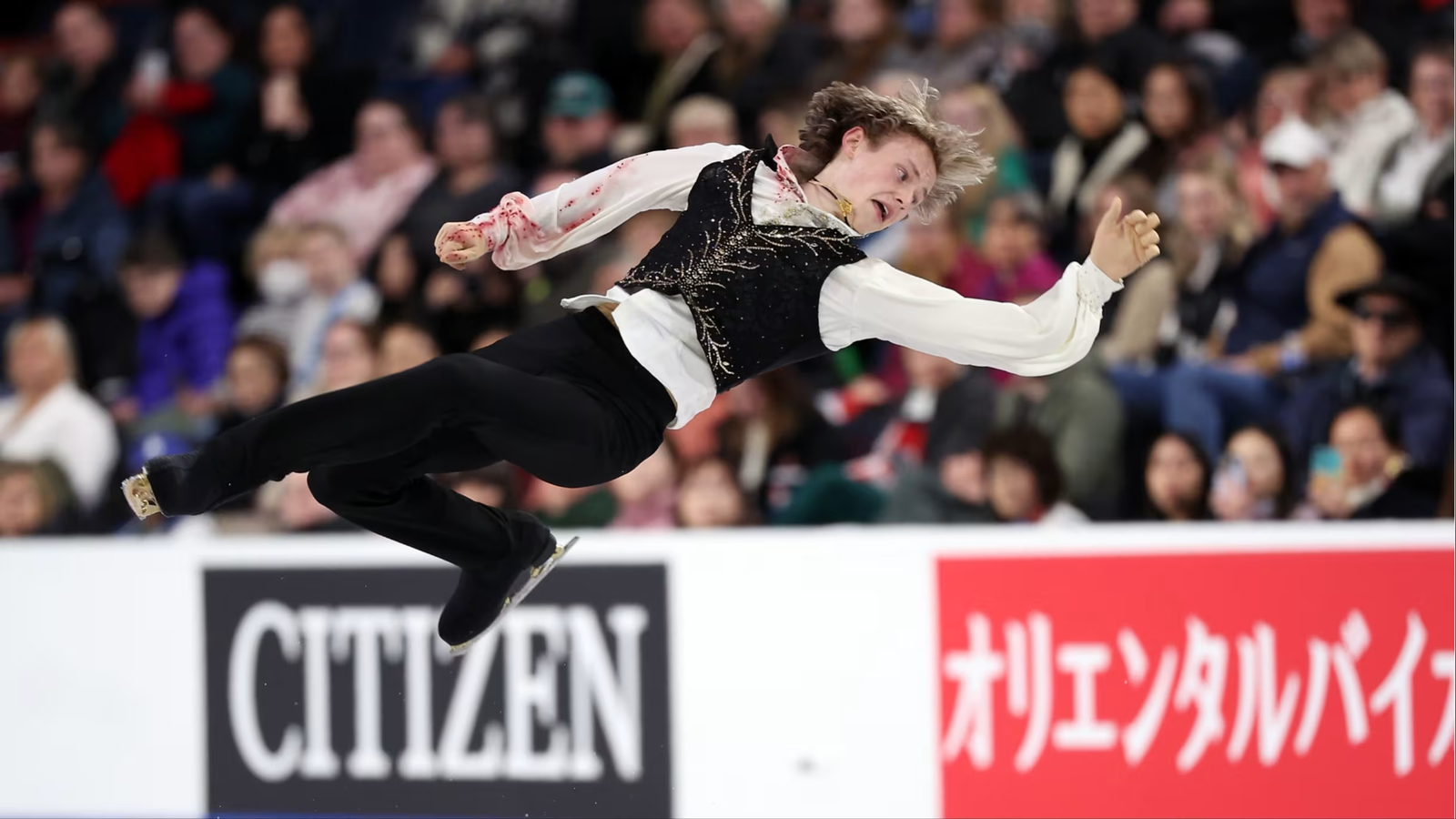
There are moments in sport when time seems to slow down—not because the world pauses, but because something extraordinary demands your full attention. When Ilia Malinin stepped onto the ice for Stars on Ice in Osaka, it wasn’t just another exhibition. It felt like the beginning of something deeper, something quietly unforgettable.
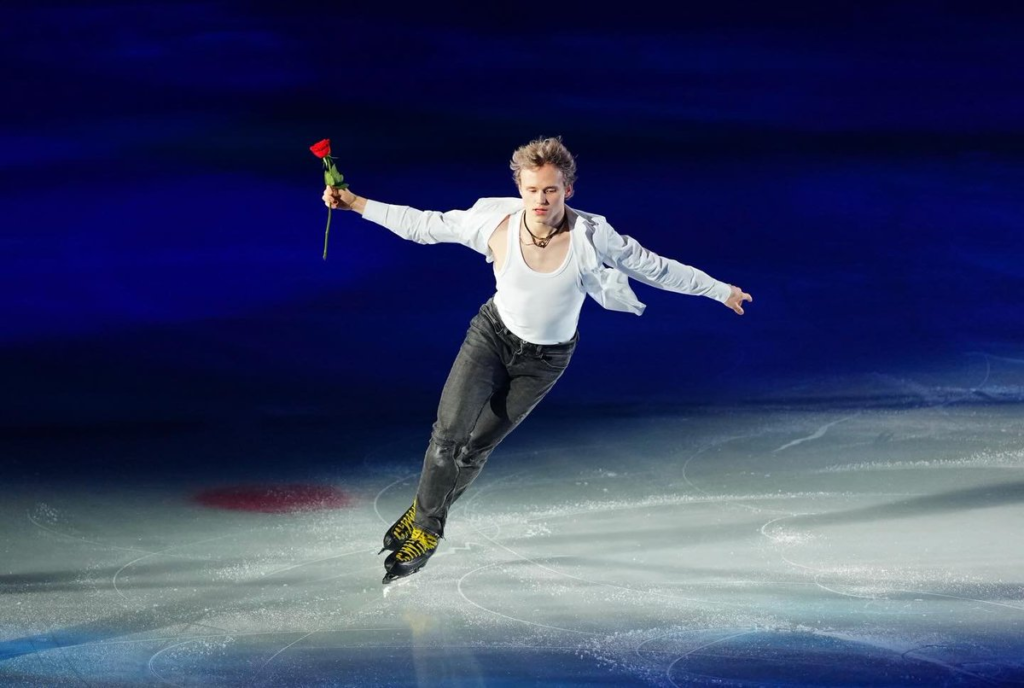
The arena lights softened, the music began, and for a brief second, there was stillness. Not emptiness—but anticipation. Malinin stood poised, not rushed, not eager—just present. That presence alone carried weight, as if he understood that what he was about to offer wasn’t just performance, but a conversation with every person watching.
From the first glide, it became clear—this wasn’t about technical dominance. This was about control, about storytelling. His edges carved lines into the ice like sentences being written in real time. Each turn felt deliberate, each extension of his arm a continuation of something unspoken yet deeply felt.
And then came the transitions—the subtle moments where most skaters simply move, but Malinin transforms. There’s a rare kind of intelligence in his skating, one that doesn’t scream for attention but earns it. You don’t just watch him… you follow him, almost instinctively, like you’re being led somewhere without knowing exactly where.
The Osaka crowd understood this. You could feel it in the silence between notes, in the way applause held back just a little longer than usual—as if no one wanted to interrupt the moment. Because what he was building wasn’t just a routine. It was tension, emotion, a quiet rise toward something inevitable.
When the jump came—the one everyone waits for—it didn’t feel like a stunt. It felt like a release. A moment where all the restraint, all the storytelling, suddenly found its voice. He launched, and for that split second, gravity didn’t seem like a rule—it felt like a suggestion.
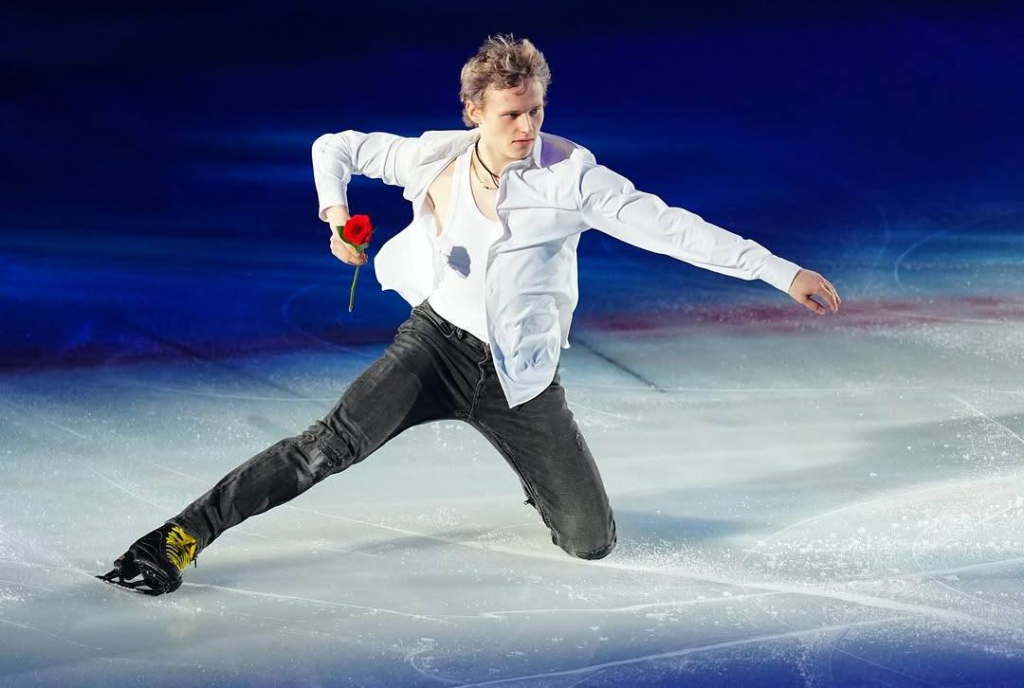
But what makes Malinin different isn’t just that he can do it—it’s how he does it. There’s no visible strain, no forced intensity. It’s controlled, almost calm. As if he’s not fighting the ice, but working with it. That balance between power and softness is what elevates him beyond just a skater—it turns him into an artist.
As the program continued, something shifted. You weren’t analyzing anymore. You weren’t counting rotations or judging landings. You were feeling. And that’s rare. In a sport often defined by numbers, Malinin creates moments that exist outside of them.
By the time the final note faded, the applause didn’t erupt immediately—it grew. Slowly, then all at once. A recognition not just of what was done, but of what was felt. People weren’t just impressed—they were moved. And that difference matters more than anything.
Because performances like this don’t end when the music stops. They stay. In memory, in feeling, in that quiet realization that you witnessed something honest. Something that didn’t need to prove itself—it simply existed, fully and unapologetically.
And maybe that’s what makes Ilia Malinin so compelling in moments like Osaka. He doesn’t just perform on the ice—he transforms it into something human. Something real. And long after the arena empties, that feeling lingers… like a story that refuses to fade.