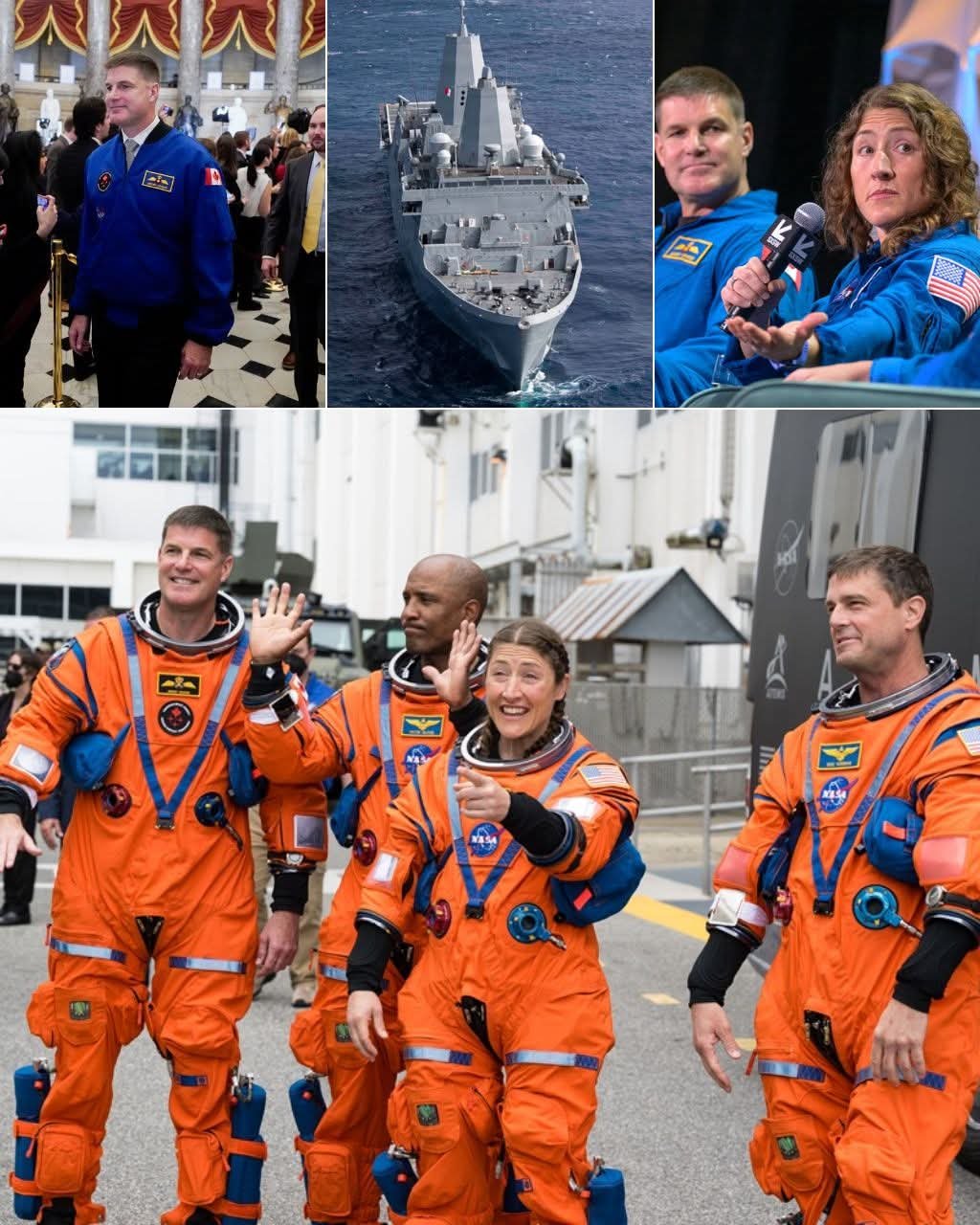
There are moments in human history that don’t arrive with applause. They arrive quietly, almost weightlessly—like a spacecraft drifting in the vast dark between worlds. When the crew of Artemis II returned home, they didn’t just bring data, success, or headlines. They brought something far more difficult to explain—something that can only be felt.
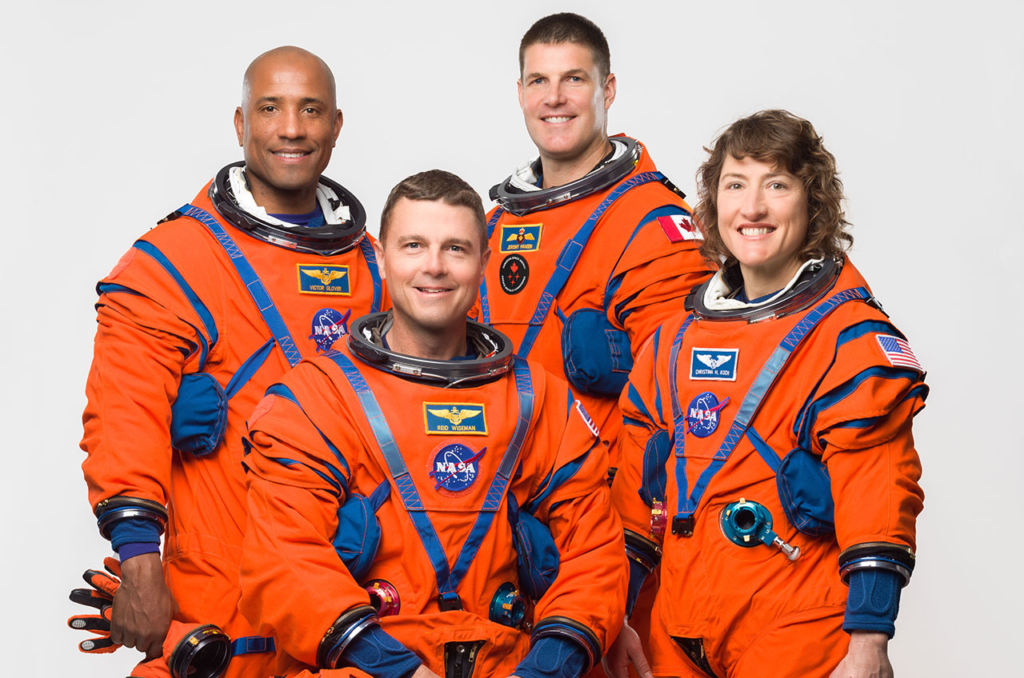
It began long before the splashdown.
Before the cheers, before the cameras, before the world even realized what had changed, four humans left Earth inside the Orion spacecraft. Among them was Reid Wiseman, who would later try to translate the untranslatable. But how do you explain something no one else has lived?
“We are bonded forever,” he said. And in that sentence, there was something deeper than friendship—something forged not in comfort, but in distance. Because space doesn’t just test your training. It tests your understanding of what it means to belong anywhere at all.
Out there, beyond the orbit of Earth, beyond the reach of routine, something shifts.
The mission lasted ten days. Ten days that stretched across nearly 2.3 million miles. Ten days of silence, precision, and an overwhelming awareness of how small everything truly is. When the capsule finally returned, slicing through the atmosphere at unimaginable speed before splashing into the Pacific Ocean, the world celebrated survival.
But the crew wasn’t celebrating survival.
They were processing transformation.
For the first time in human history, they had seen the far side of the Moon—not through cameras, not through data, but with their own eyes. A place that has always existed, always faced away, finally witnessed by human presence. It wasn’t just exploration. It was revelation.
And then came the moment that would linger far longer than the mission itself.
Christina Koch tried to explain it—not as a scientist, not as an astronaut, but as a human being who had seen something impossible to forget. She spoke of Earth not as a planet, not as a home, but as a “lifeboat.”
Hanging.
Quietly.
In an ocean of blackness that does not care if we exist.
That image alone reshapes everything.
Because from that distance, Earth doesn’t look divided. It doesn’t look political. It doesn’t look complicated. It looks fragile. Temporary. Shared. Every argument, every border, every difference suddenly feels… small.
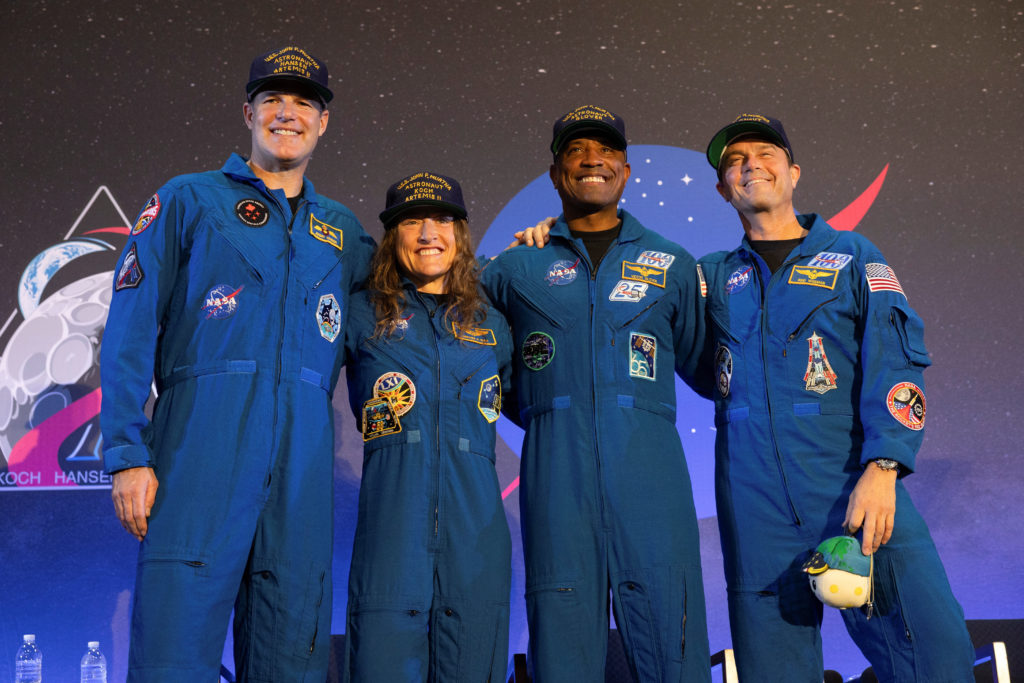
And yet, somehow, more important than ever.
Because if Earth is a lifeboat, then everyone on it matters.
Koch paused when she spoke, not because she didn’t have words, but because she realized words weren’t enough. “Planet Earth,” she said slowly, deliberately, “You. Are. A. Crew.”
It wasn’t a poetic line. It was a realization.
A realization that space doesn’t make you feel powerful—it makes you feel responsible.
Reid Wiseman echoed that truth in his own way. Before launch, he said, it feels like the greatest dream imaginable. The kind of dream people spend their entire lives chasing. But once you’re out there, surrounded by silence, by distance, by the absence of everything familiar—you don’t dream about going further.
You dream about coming home.
That’s the part people don’t expect.
We think exploration is about leaving. But the deeper truth is—it teaches you why you belong.
There’s something profoundly human about that shift. To travel farther than most ever will, only to realize that what matters most isn’t out there—it’s here. Family. Friends. Connection. The fragile blue world we often take for granted.
And maybe that’s the real success of Artemis II.
Not the technology.
Not the distance.
Not even the history.
But the perspective it returned with.
Because while the mission proved we can go back to the Moon, it also reminded us why we should care about Earth. Why we should protect it. Why we should see each other not as strangers sharing space—but as a crew sharing survival.
The spacecraft came back.
The astronauts came back.
But the way they see the world never will.
And now, neither will ours.
Because somewhere beyond the Moon, in the quiet stretch of infinite darkness, four humans looked back at everything we’ve ever known—and realized something simple, something undeniable, something we’ve always overlooked.
We were never meant to drift alone.
We were always meant to hold this lifeboat together.