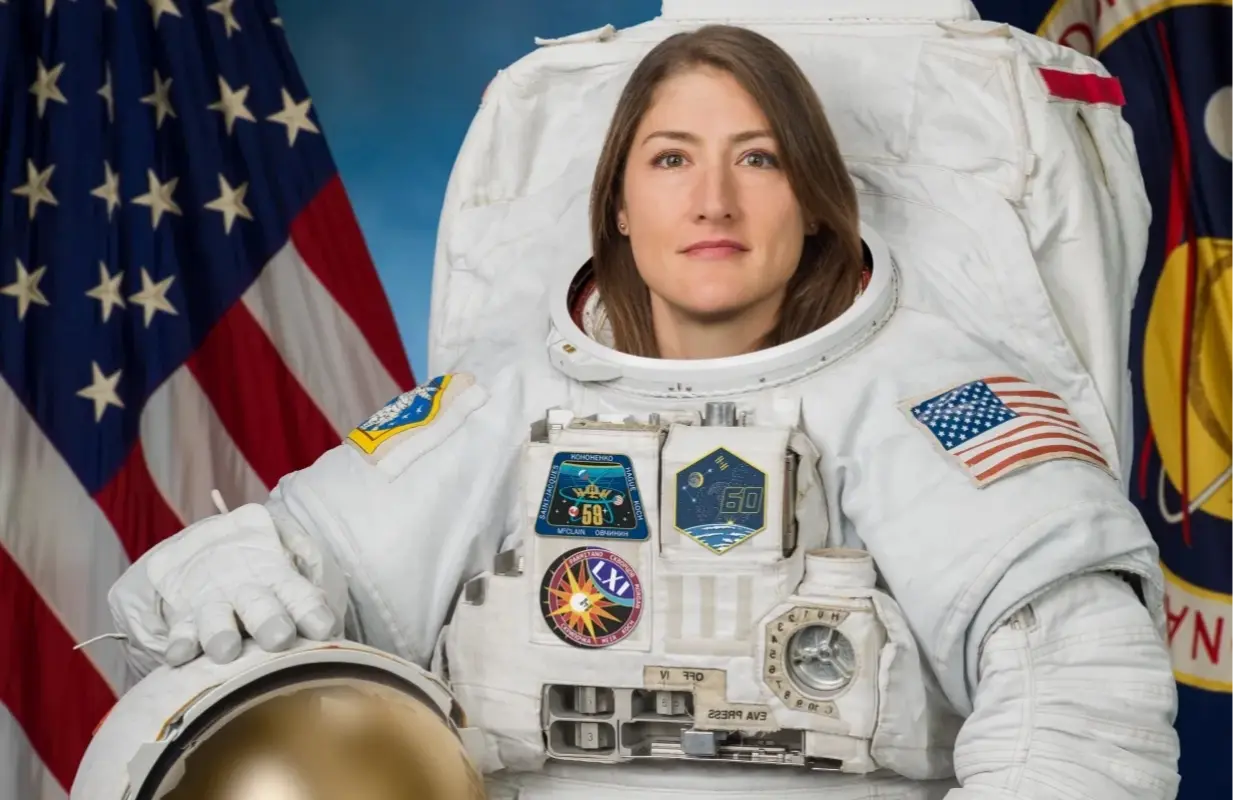
History doesn’t always arrive with noise. Sometimes, it unfolds quietly, carried by courage, precision, and a single human heartbeat echoing across the vast silence of space. In April 2026, Christina Koch stepped into that silence—and changed it forever.
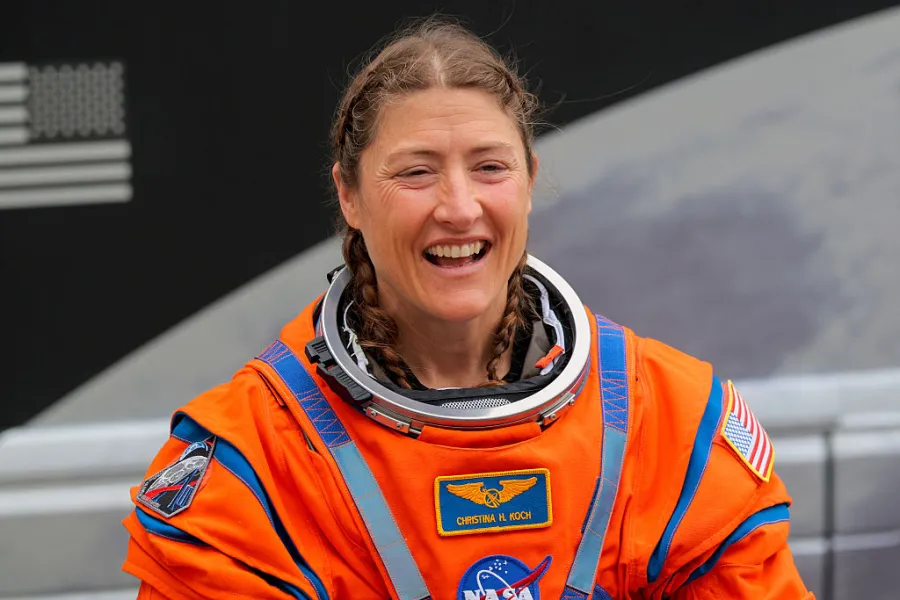
She didn’t just board a spacecraft. She carried with her decades of ambition, the weight of dreams once considered unreachable, and the quiet persistence of those who refused to accept limits. As the engines of the Orion spacecraft roared to life, the moment felt bigger than a mission. It felt like a turning point.
For the first time in over fifty years since the era of Apollo missions, humanity reached beyond low Earth orbit again. But this time, the story was different. This time, it included a woman orbiting the Moon—not as a symbol placed there, but as a pioneer who earned her place through grit, intellect, and relentless endurance.
The journey itself was not about landing. There were no footsteps pressed into lunar dust, no flags planted on the surface. Instead, this mission—Artemis II—focused on something far more foundational. It tested trust. Trust in engineering. Trust in preparation. Trust in the fragile but powerful idea that humans are ready to go farther.
Inside the Orion capsule, every system mattered. Every calculation carried consequence. From navigation to life support, every detail was a rehearsal for humanity’s next giant leap. And as Koch traveled around the Moon, she became part of something few humans have ever experienced—a perspective so vast it reshapes how you understand Earth itself.
Imagine looking out into darkness and seeing our planet as a distant, glowing memory. No borders. No divisions. Just a fragile sphere suspended in an endless void. That view has changed astronauts before—but this time, it carried a deeper message. Not just about where we are, but about where we’re going.
Koch’s journey wasn’t sudden. It was built on years of discipline, including her record-setting long-duration stay aboard the International Space Station. She had already proven she could endure isolation, pressure, and the relentless rhythm of space. But this mission demanded something more—it demanded stepping into the unknown beyond the comfort of Earth’s orbit.
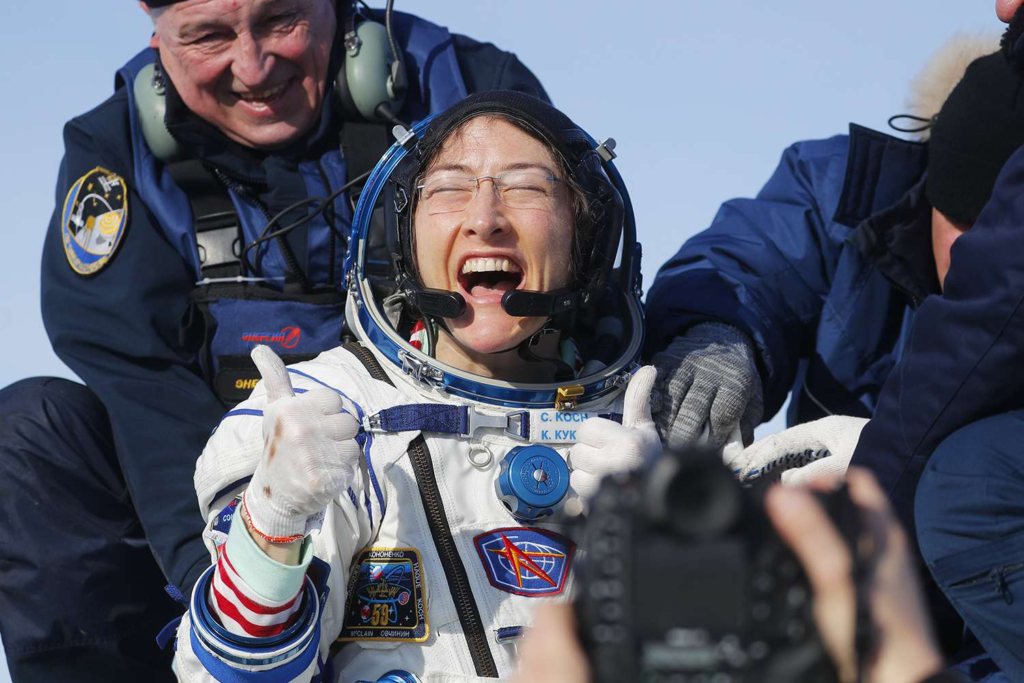
And that’s what makes this moment extraordinary. It wasn’t just about breaking a barrier. It was about redefining what barriers even exist. For generations, space exploration carried a narrow image of who gets to lead, who gets to explore, and who gets remembered. Koch didn’t just expand that image—she reshaped it entirely.
Yet, perhaps the most powerful part of her journey wasn’t the distance she traveled, but the meaning it carried back home. Because when the Orion spacecraft reentered Earth’s atmosphere—enduring searing heat, violent speeds, and the unforgiving physics of return—it brought more than a crew safely back. It brought proof.
Proof that humanity is ready to move forward again.
Proof that the next chapter of exploration isn’t theoretical—it’s already unfolding.
And proof that the stories we tell about who belongs in space are finally evolving.
There’s something poetic about orbiting the Moon without landing. It’s like pausing just before the next step—not out of hesitation, but out of intention. Artemis II was never meant to be the final act. It was the breath before the leap.
And that leap is coming.
Future missions will aim for the surface. They will build, stay, and eventually reach even farther—toward Mars and beyond. But when those missions happen, when boots finally press into lunar soil again, they will carry the invisible foundation built by this flight.
They will carry Christina Koch’s orbit with them.
Because every giant leap begins with a quiet revolution—and in April 2026, that revolution didn’t shout.
It simply circled the Moon… and changed everything.