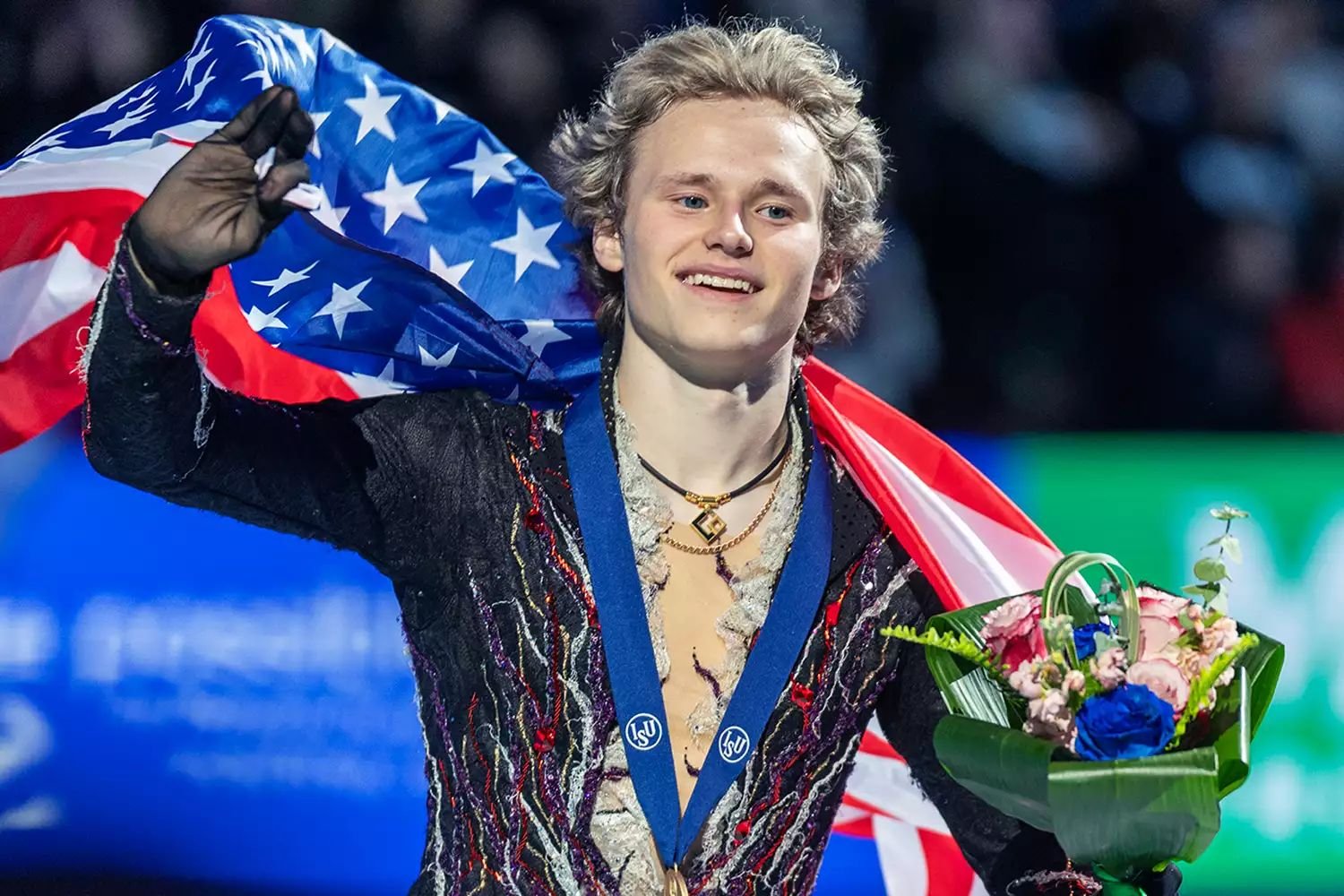
Figure skating has always sold itself as harmony. Music meets motion, discipline meets grace, steel meets ice. To the audience, it appears seamless — a world where beauty and precision glide together without conflict. But beneath the polished costumes and carefully chosen soundtracks, another story has long been unfolding. It is a private war, quiet but relentless: emotion versus execution.
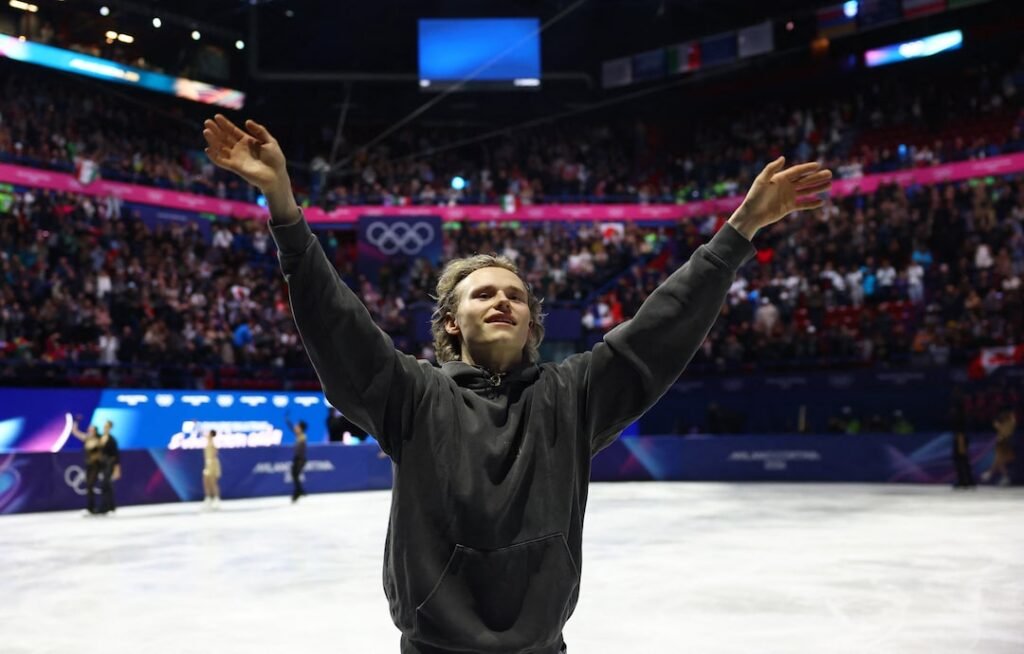
Every generation of skating inherits this battle. Judges score rotations, edges, levels, and landings with clinical attention. Yet crowds remember tears, goosebumps, stillness, and the strange ache a great performance leaves behind. The scoreboard values certainty. The heart values feeling. And in modern figure skating, those two currencies do not always exchange equally.
There was a time when a skater could survive technical imperfection if they moved an arena. A stumble could be forgiven if the performance carried soul. Spectators came not only to witness athletic achievement, but to feel transformed by it. They wanted programs that lingered in memory like songs attached to old seasons of life. Skating was not merely watched; it was felt.
Then the sport evolved, as all sports do. Training became sharper. Technique became more scientific. Rotations multiplied. Margins narrowed. Data crept into the corners of artistry. Suddenly, what once seemed extraordinary became required. Difficulty was no longer an accent — it was the language itself. A clean skate with brutal content could silence mistakes in emotional connection. Execution had found its era.
This transformation created a fascinating tension. Modern skaters are now expected to perform miracles while appearing untouched by effort. They must rotate at impossible speed, land with precision, maintain edge quality, hit choreography, interpret music, project emotion, and do it all under pressure measured in fractions. It is not enough to be an artist. It is not enough to be an athlete. They must be both, simultaneously, while the clock watches coldly.
And yet, emotion refuses to disappear. No judging system has ever fully conquered it. A technically perfect program can leave a crowd strangely empty. The jumps were landed, the spins centered, the transitions packed tightly — and still something essential went missing. Because humans do not fall in love with checklists. They fall in love with vulnerability, risk, timing, and truth revealed through movement.
That is why some skaters become legends beyond medals. They may not own every record, but they own moments. A look toward the rafters after a hard landing. A spiral that seems to suspend time. A step sequence performed as if the skater is arguing with fate. These are not quantifiable elements, yet they outlive scores that once seemed monumental. Execution can win the night. Emotion can win the decade.
Modern audiences themselves are divided. One side admires progression and technical ceilings being shattered. They see difficulty as proof of greatness and innovation as the lifeblood of relevance. The other side worries that something intimate is being traded away — that programs risk becoming laboratories where music is background noise and choreography serves recovery between jumps. Neither side is entirely wrong, which is why the argument never dies.
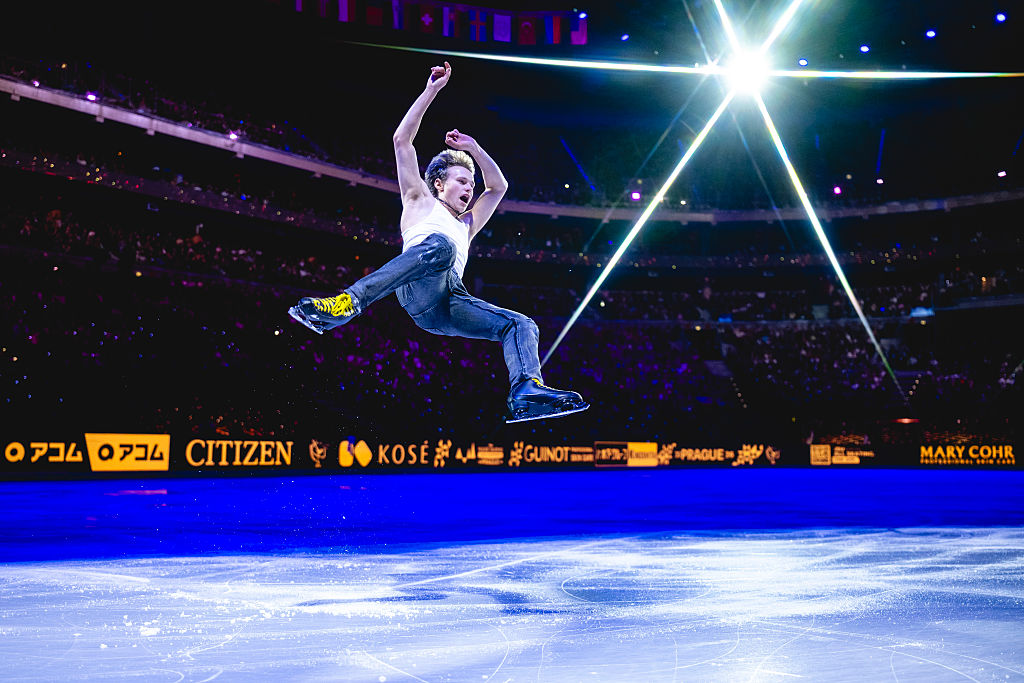
The skaters feel this conflict more deeply than anyone. Imagine training for years to perfect elements the public barely notices, only to be told you lack soul. Imagine pouring heartbreak into a routine, only to lose because a rotation was undercalled or a landing tilted. They are judged by two worlds at once: the measurable and the immeasurable. To satisfy one can cost the other.
Some of the greatest modern performances happen when the war briefly ends. A skater lands everything and still seems emotionally exposed. The jumps amplify the story instead of interrupting it. The choreography breathes instead of surviving. The music is not decoration but pulse. In those rare minutes, figure skating becomes what it has always promised to be: sport elevated into art without apology.
Perhaps the real mistake is treating emotion and execution as enemies. Execution without emotion is architecture with no inhabitants. Emotion without execution can become intention without arrival. Each needs the other. Precision gives feeling a frame. Feeling gives precision a reason. When separated, both become lesser versions of themselves.
The future of figure skating may depend on remembering this balance. As athletes continue to push technical frontiers, the sport must protect the human mystery that made people care in the first place. Records are thrilling, but records age. Difficulty rises, then becomes normal. What remains are performances that made strangers hold their breath together.
So the war inside modern figure skating is real, but it may also be misunderstood. It is not a battle over which side should win. It is a struggle to keep excellence whole. Because when emotion and execution finally meet at full strength, the ice stops being a surface. It becomes a stage, a battlefield, and a cathedral all at once.