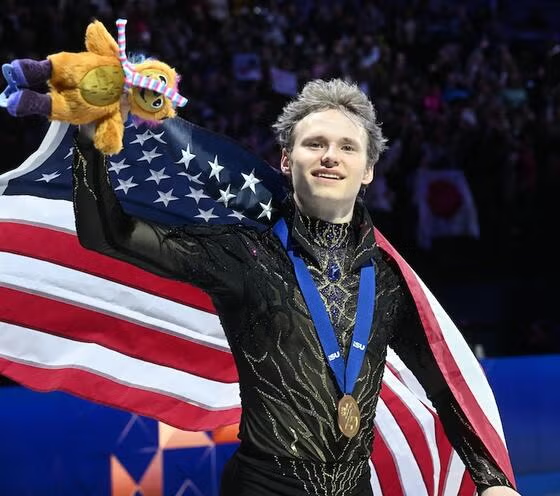
There are athletes who win, athletes who dominate, and then there are athletes who rearrange the language of their sport. Ilia Malinin belongs to the third category. Every era of figure skating has produced champions with medals, records, and unforgettable moments. But once in a while, someone arrives who forces audiences to ask a deeper question: What exactly are we watching? Is it sport? Is it theater? Is it rebellion wrapped in choreography? Malinin has become the kind of skater who makes those questions impossible to ignore.
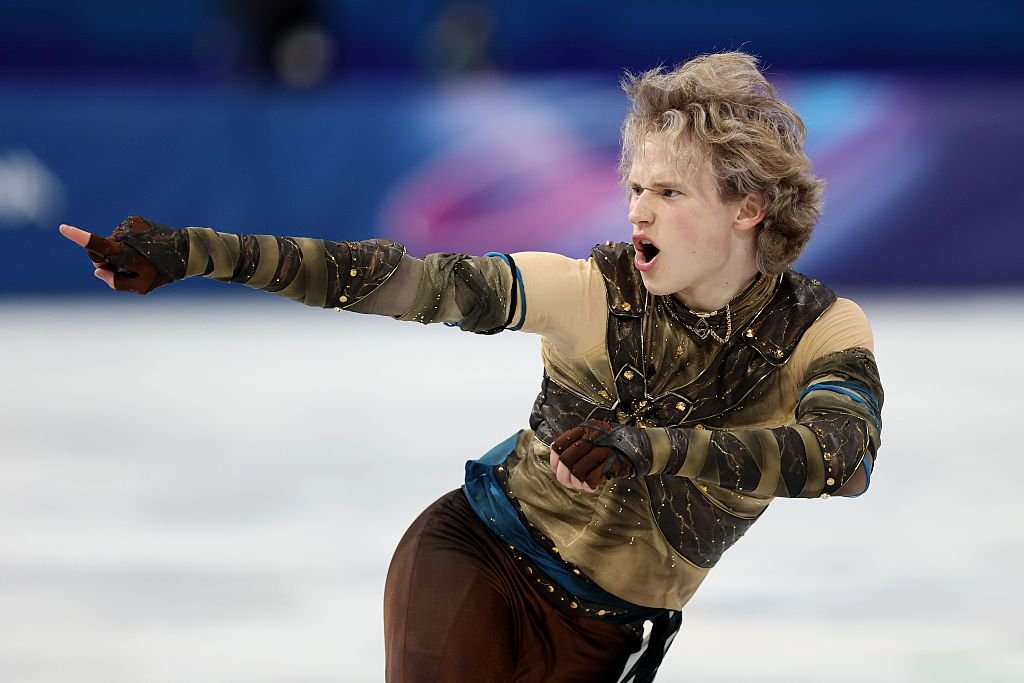
For years, figure skating has lived inside a familiar argument. One side values technical mastery: the rotations, landings, edges, combinations, and mathematical precision that separate the elite from the ordinary. The other side values artistry: the softness of the line, the emotional timing, the illusion that gravity has agreed to step aside for a few minutes. Usually, skaters are asked to choose their emphasis, or at least to be judged by which side they serve better. Malinin refuses that old division simply by existing.
When people first began talking about him, they talked about jumps. They had to. His explosive ability, especially the kind of rotations most skaters spend careers chasing, made headlines because it felt unreal. He wasn’t just executing difficult elements; he was normalizing them. What looked impossible one season became expected the next. Yet reducing him to jumps is like describing a symphony as organized noise. The numbers tell only the smallest part of the story.
What makes Malinin fascinating is that his power has changed how beauty is perceived on the ice. Traditionally, beauty in skating was associated with softness, elegance, and seamless glide. It was featherlight. It was delicate. It asked for grace that appeared effortless. Malinin introduces another kind of beauty — one built from velocity, nerve, commitment, and unapologetic force. He shows that beauty can thunder as much as it can whisper.
There is something uniquely modern about that. Audiences today are not moved only by polish; they are moved by risk. They understand the courage it takes to attempt what failure publicly threatens. When Malinin launches into a jump, the arena doesn’t merely watch technique. It watches bravery in real time. The suspense becomes emotional architecture. The landing becomes release. That sensation is beautiful too, even if it does not arrive dressed in traditional elegance.
Critics sometimes speak as if athleticism and artistry are enemies forced to share the same rink. But Malinin’s skating suggests the opposite. His athleticism creates drama, and drama is the raw material of art. Every explosive takeoff sharpens the audience’s heartbeat. Every clean landing shifts the energy in the building. Every transition into the next phrase tells a story about control regained after chaos challenged it. That is choreography with pulse, not just choreography with posture.
There is also a generational truth in the way he is received. Younger viewers often see fewer boundaries between categories. They do not separate music from movement, performance from sport, or strength from expression as rigidly as previous eras did. They can admire a pristine spiral and a violent, physics-defying jump in the same breath. Malinin feels like a skater made for that mindset — someone whose presence matches the way culture itself now blends forms once kept apart.
And yet, the most compelling thing about him may be psychological. Great performers do not merely execute; they expand what others believe is possible. Once one athlete crosses a line, the line disappears for everyone watching. Coaches rethink training. Rivals rethink ceilings. Fans rethink standards. Young skaters in quiet rinks around the world suddenly imagine futures they would never have dared before. That is influence deeper than medals. That is how eras begin.
Beauty in sport has always evolved. There was a time when speed alone amazed people. Then artistry did. Then consistency did. Then innovation did. Each generation mistakes its preferred version of beauty for the permanent one. Malinin reminds us that beauty is alive, not archived. It changes when someone bold enough arrives to challenge it. It widens when talent refuses inherited limits.
So no, Ilia Malinin is not simply breaking programs. Programs are sheets of paper, boxes to tick, systems to satisfy. What he is breaking is smaller and larger at once: smaller than rules, larger than scorecards. He is breaking the assumption that grace must look gentle, that elegance must move softly, that artistry must arrive separate from power. In doing so, he gives figure skating something rarer than another champion. He gives it a new imagination.
And when a sport receives a new imagination, everyone who watches becomes different too.