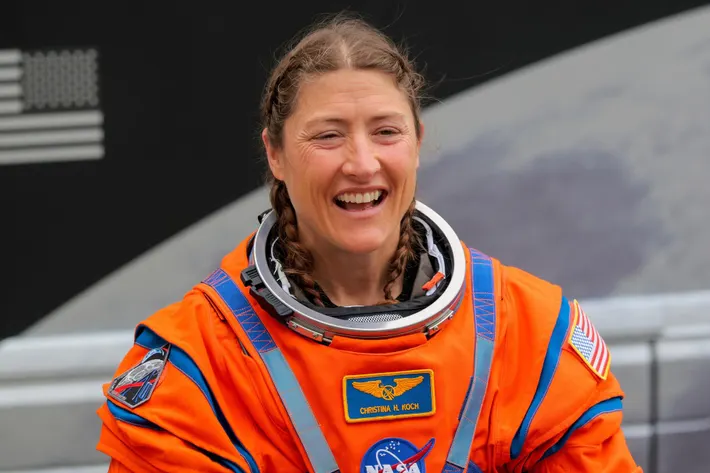
There are milestones that look sudden from the outside—historic, headline-ready, almost cinematic. But the truth is, no one arrives at the Moon overnight. For Christina Koch, the journey to the Artemis II mission did not begin with rockets or countdowns. It began in silence—far from cameras, far from applause, in places where endurance mattered more than recognition.
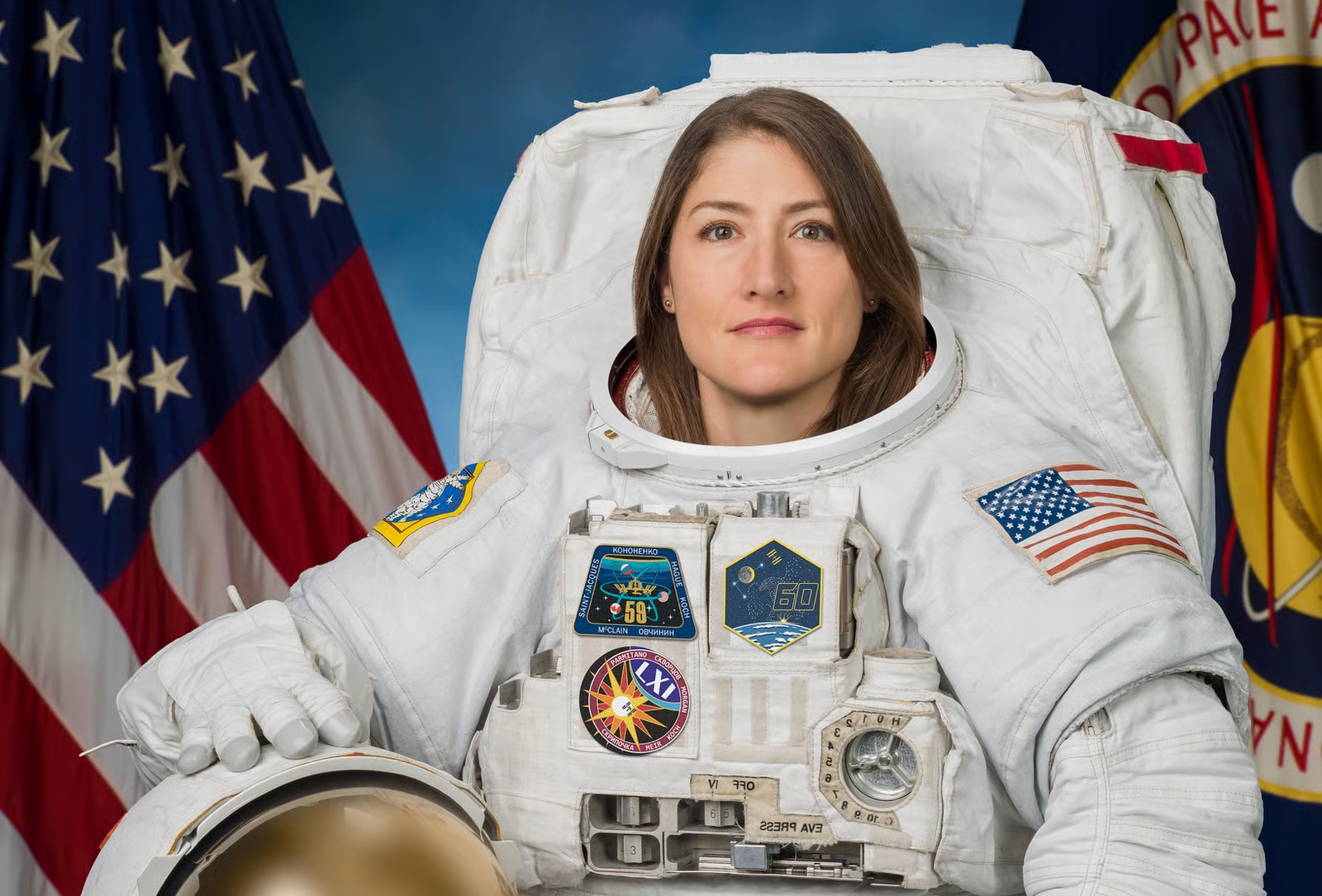
Long before she ever saw Earth from orbit, Koch learned how to exist where most people would struggle to remain for even a day. Antarctica was not just a location—it was a test. A landscape stripped of comfort, where isolation becomes a companion and resilience becomes a necessity. There, in the cold vastness, she refined something deeper than skill: she built the ability to stay steady when everything around her was unforgiving.
Greenland followed, offering a different kind of challenge—less about survival, more about precision. Research stations demand a level of focus that doesn’t tolerate distraction. Every task matters. Every system must work. In those environments, Koch wasn’t preparing for space in the traditional sense. She was learning how to think under pressure, how to operate when conditions refuse to cooperate.
This is what makes her story so quietly powerful.
Because when people speak about astronauts, they often imagine brilliance in isolation—as if intelligence alone carries someone into space. But Koch’s path reminds us that expertise is layered. Her background as an electrical engineer did not just give her knowledge; it gave her control. The ability to understand systems, to anticipate failure, to solve problems before they escalate.
And then came the International Space Station.
Three hundred twenty-eight days is not just a number—it is a transformation. Living in microgravity for nearly a year reshapes the body, but more importantly, it reshapes perception. Time behaves differently. Distance feels abstract. The ordinary disappears, replaced by routines that demand constant awareness. Koch didn’t just endure that experience—she adapted to it, mastered it, and carried its lessons forward.
By the time she was selected for Artemis II, there was no question about capability.
But capability alone does not define historic moments.
What defines them is readiness.
And readiness is built in the unseen.
When Koch stepped into the Orion capsule in 2026, the world saw a first—a milestone that would be written into history books. The first woman to travel to the lunar vicinity. A moment that symbolized progress, representation, and possibility. But what the world did not see were the years that made that moment inevitable.
The quiet nights in extreme climates.
The technical challenges solved without recognition.
The discipline repeated, over and over, without immediate reward.
This is the part of success that rarely gets told.
Because it does not fit into headlines.
Yet it is the only reason the headlines exist.
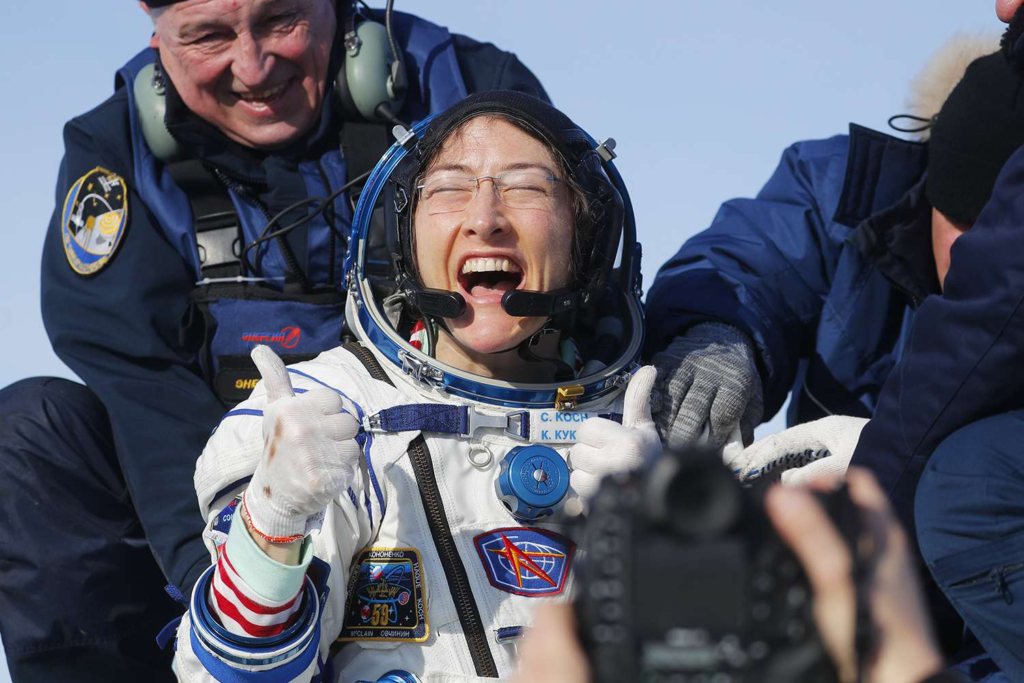
Koch’s journey is not just about reaching the Moon—it is about redefining what preparation looks like. It challenges the idea that greatness must be visible to be real. It reminds us that the most important work often happens long before anyone is watching.
There is also something deeply human about her achievement.
Not because it is extraordinary—but because it is built on something familiar.
Persistence.
The kind that does not announce itself.
The kind that continues even when progress feels invisible.
The kind that trusts the process long before the outcome arrives.
In many ways, Koch’s story mirrors the very nature of space exploration itself. We look up at the stars and see distance, mystery, and ambition. But what brings us closer to them is not a single leap—it is a series of deliberate, disciplined steps taken over time.
That is what she represents.
Not just a milestone, but a method.
Not just a first, but a foundation.
And perhaps that is why her journey resonates beyond the world of space. Because it speaks to something universal—the idea that the most significant destinations in life are not reached by chance, but by quiet, consistent effort.
So when we remember Christina Koch and her role in Artemis II, we should not only remember where she went.
We should remember how she got there.
Because somewhere, far from the spotlight, long before the Moon knew her name—she had already earned her place among it.