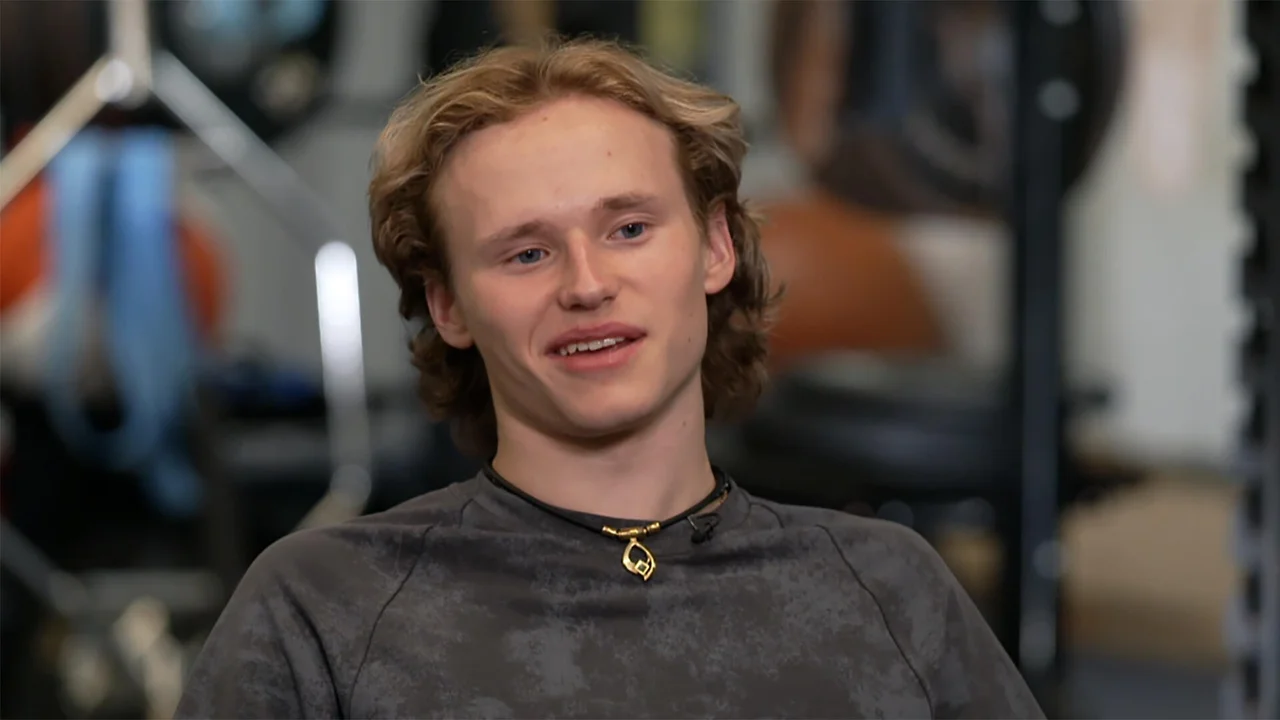
There are victories that shine under bright lights—and then there are victories that quietly reshape what winning actually means. At the 2026 Winter Olympics, Ilia Malinin experienced both. One came with gold. The other came without a medal at all.
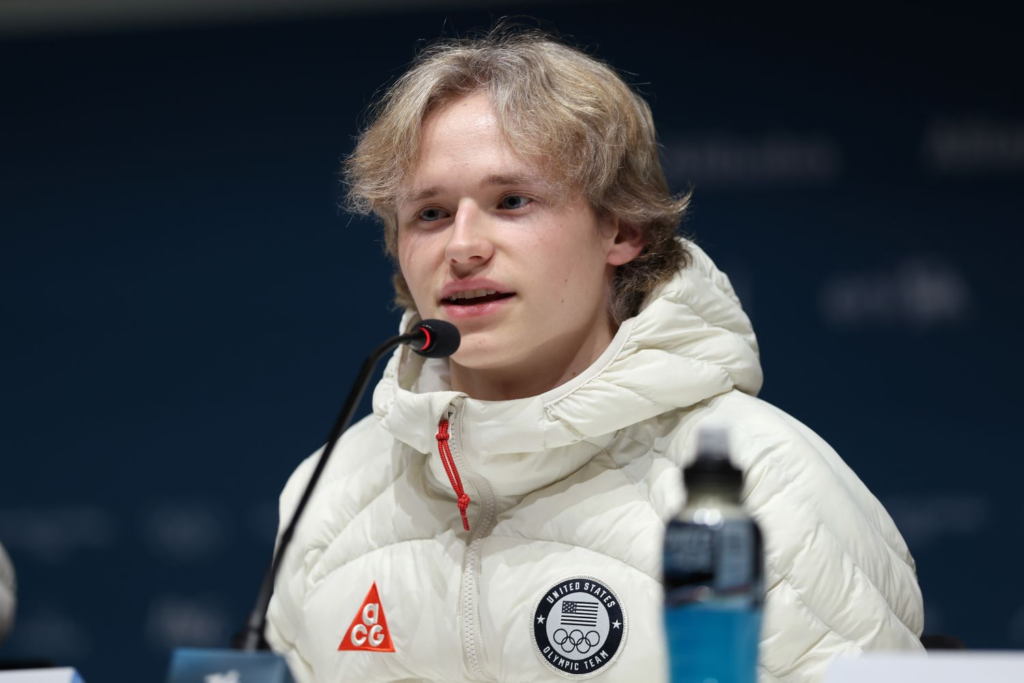
For two weeks, the world watched him as a favorite. Not just a contender, but a certainty. His technical mastery had already rewritten expectations in figure skating, turning difficulty into something that looked almost routine. The pressure wasn’t just to perform—it was to confirm what everyone believed was inevitable.
But sport, at its core, resists certainty.
When the men’s free skate unfolded, something shifted. Not dramatically, not catastrophically—but enough. Enough to move him from the podium to eighth place. Enough to silence the predictions. Enough to introduce a rare and uncomfortable truth: even the most prepared athlete can meet a moment that doesn’t go as planned.
And in that moment, something far more revealing than a perfect routine emerged.
While cameras followed the celebration of Mikhail Shaidorov, who rose to claim gold, there was another scene unfolding—quieter, almost peripheral. Malinin, still carrying the weight of his own result, stepped forward not to explain, not to withdraw, but to congratulate.
It was not performative. It was not delayed. It was immediate.
And that is what made it powerful.
Because what he chose in that instant was not instinctive to competition. Athletes are trained to process loss internally, to protect their space, to recover privately. But Malinin did the opposite. He stepped into someone else’s victory, fully aware of his own disappointment, and chose connection over comparison.
Later, when he spoke about it, the explanation was almost disarmingly simple.
It wasn’t about the result.
It was about the journey.
That statement might sound familiar in sport—but rarely does it feel this honest. Because in elite competition, results define narratives. They shape legacies. They determine how moments are remembered. Yet Malinin’s perspective cut through that framework entirely.
He wasn’t speaking as someone who had lost.
He was speaking as someone who had understood.
That understanding did not go unnoticed.
Weeks later, as the Olympic spotlight softened and athletes returned to their lives beyond the ice, a different kind of recognition began to take shape. Not for a jump landed, or a program executed, but for something less measurable—and far more enduring.
Malinin was named the recipient of the Fair Play Award.
An honor rooted not in performance, but in principle.
The award carries the legacy of Eugenio Monti, a name synonymous with sportsmanship—a reminder that the Olympic spirit is not just about competition, but about character. And in being chosen, Malinin stepped into that legacy in a way that few athletes his age ever do.
What makes this recognition even more compelling is how it was decided.
By the fans.
In a world where audiences often amplify drama, controversy, and extremes, this choice reflected something different. A collective acknowledgment that moments of grace still matter. That respect still resonates. That the quiet decisions athletes make—especially in difficult moments—are not invisible.
They are felt.
Even Kirsty Coventry, speaking on behalf of the Olympic Movement, emphasized this point. Her words did not center on scores or standings, but on something more foundational—the idea that excellence is not confined to podiums. That it exists in how athletes treat one another when the stakes are highest.
For Malinin, the award was not something he pursued.
It was something he revealed.
And perhaps that is what makes this story linger longer than the results themselves. Because long after scores fade and rankings are forgotten, certain moments remain. Not because they were louder—but because they were truer.
Back in the United States, away from arenas and cameras, he returned to something simple—his home, his routine, even the cats he had mentioned so casually during the Games. A quiet contrast to the magnitude of what had just happened.
But the truth is, something had shifted.
Not in his ability.
Not in his ambition.
But in how the world sees him.
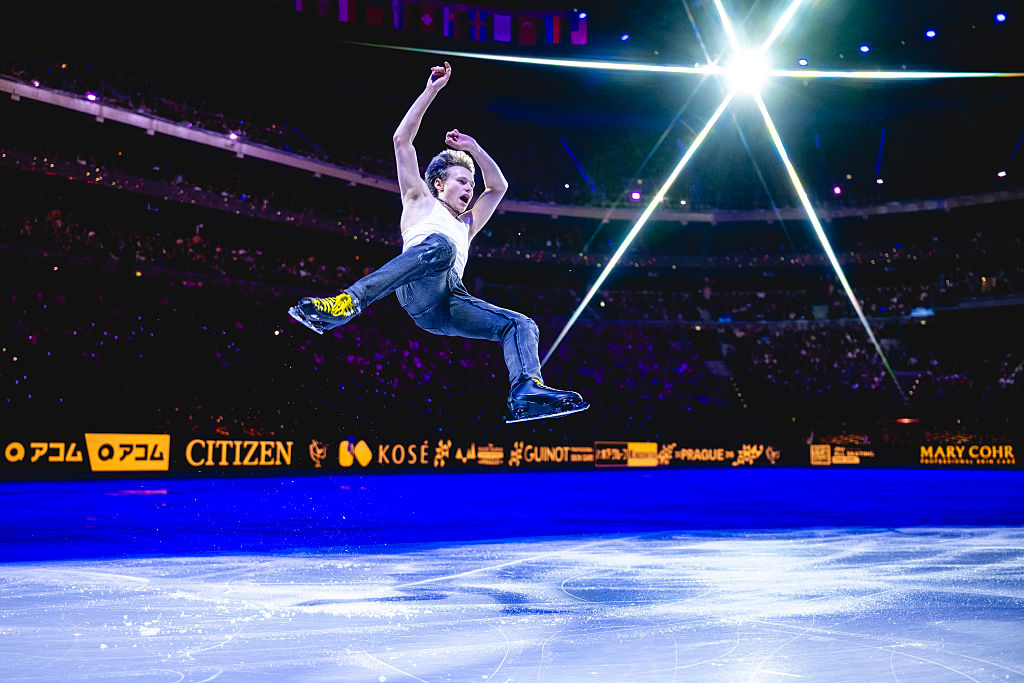
He is still the skater who can challenge the limits of the sport. Still the athlete capable of rewriting what is technically possible. But now, he carries something else alongside that brilliance—a moment that proved he understands something deeper than winning.
And that understanding cannot be scored.
Because sometimes, the most defining achievement of an Olympic journey is not standing on the podium.
It is standing in a moment of loss—and choosing to rise anyway.