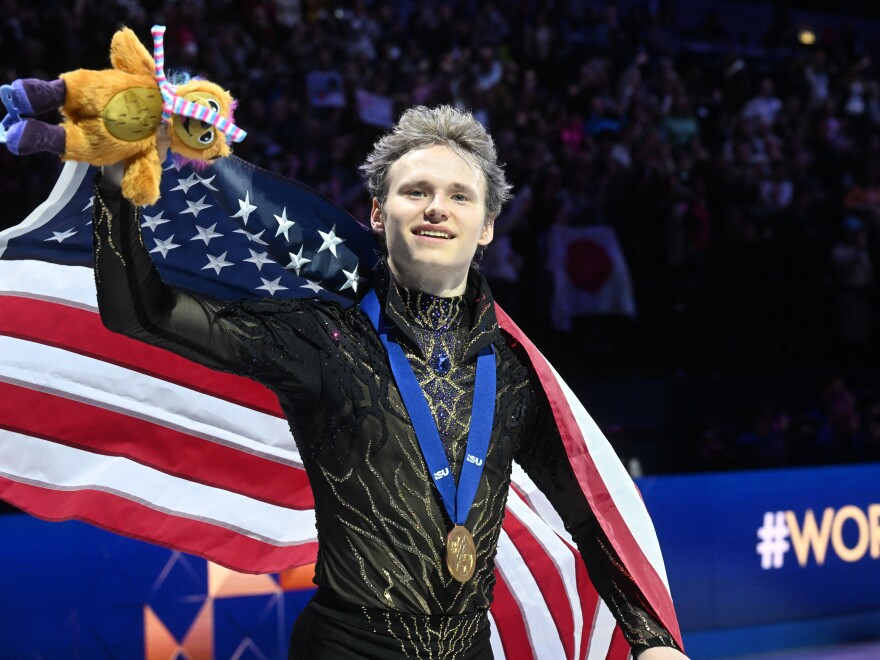
There is something unsettling about dominance when it refuses to feel complete. For Ilia Malinin, victory has become familiar—almost routine. Titles arrive, records fall, and yet the narrative around him doesn’t settle. It lingers, as if waiting for something that hasn’t happened yet.
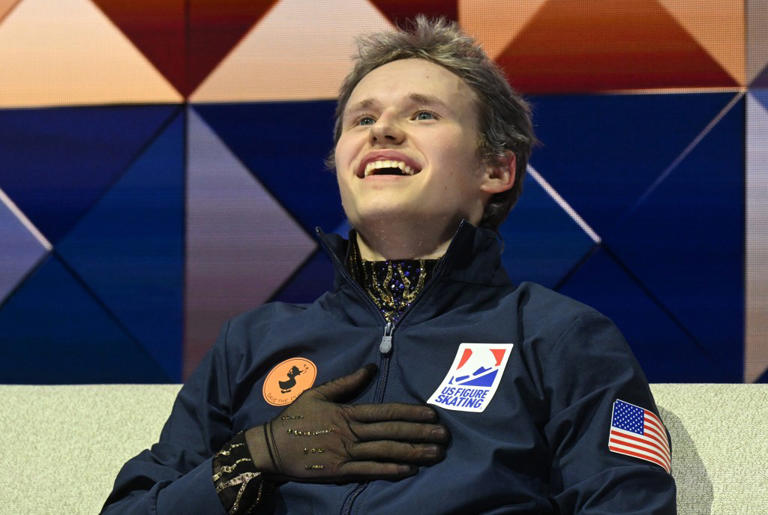
Because dominance, in its usual form, comes with closure. A sense of arrival. A moment where the athlete and the audience silently agree: this is the peak. But with him, that agreement never quite forms. Every triumph feels like a continuation rather than a conclusion.
You can see it in the way he skates. There’s precision, yes—but beneath it, something more restless. His movements don’t carry the calm assurance of someone who has already proven everything. Instead, there’s a constant push, an urgency that suggests he’s still searching for something just out of reach.
And that’s what makes his story feel unfinished.
It’s not about what he hasn’t achieved—because, by any measure, he has achieved more than enough. It’s about what his performances imply. They hint at possibilities beyond what we’ve seen, beyond what the sport has comfortably accepted. And once that door is opened, it becomes impossible to ignore.
The audience feels it, even if they can’t always explain it. There’s admiration, of course—but also anticipation. A quiet sense that what you’re watching isn’t the final version of him. That there’s still another layer, another level waiting to emerge.
That anticipation changes everything.
Because instead of celebrating what he’s done, people begin to focus on what he might do next. Each performance becomes less about validation and more about expectation. Not in a burdensome way—but in a way that keeps the story moving forward, refusing to let it rest.
There’s also a deeper reason why closure feels out of place here.
Closure requires limits. It needs a boundary—a point where growth slows, where possibilities narrow, where the narrative can comfortably conclude. But he doesn’t seem interested in those boundaries. In fact, he appears to challenge them with every skate.
And when limits are constantly shifting, endings become impossible.
This creates a unique tension. On one hand, you’re witnessing an athlete at the height of his power. On the other, you’re watching someone who behaves as if that height is only temporary—a stepping stone rather than a destination.
It’s a contradiction that keeps the story alive.
Even his cleanest performances carry this feeling. They don’t feel like answers; they feel like evidence. Proof that he’s capable of something—but not necessarily everything he’s aiming for. And that distinction matters more than any score ever could.
Because it means the story isn’t being written in past tense.
It’s unfolding, actively, in front of us. Each program adds to it, but never completes it. Each victory strengthens it, but never defines it. There’s always another question, another possibility, another edge he hasn’t fully explored yet.
And perhaps that’s what makes his dominance so compelling.
It doesn’t close the story—it expands it.
In a sport that has always valued resolution, he introduces something different. A sense that the most important moment hasn’t happened yet. That the true peak might still be ahead, even after everything he’s already accomplished.
And until that moment arrives—if it ever does—his story will continue to feel unfinished.