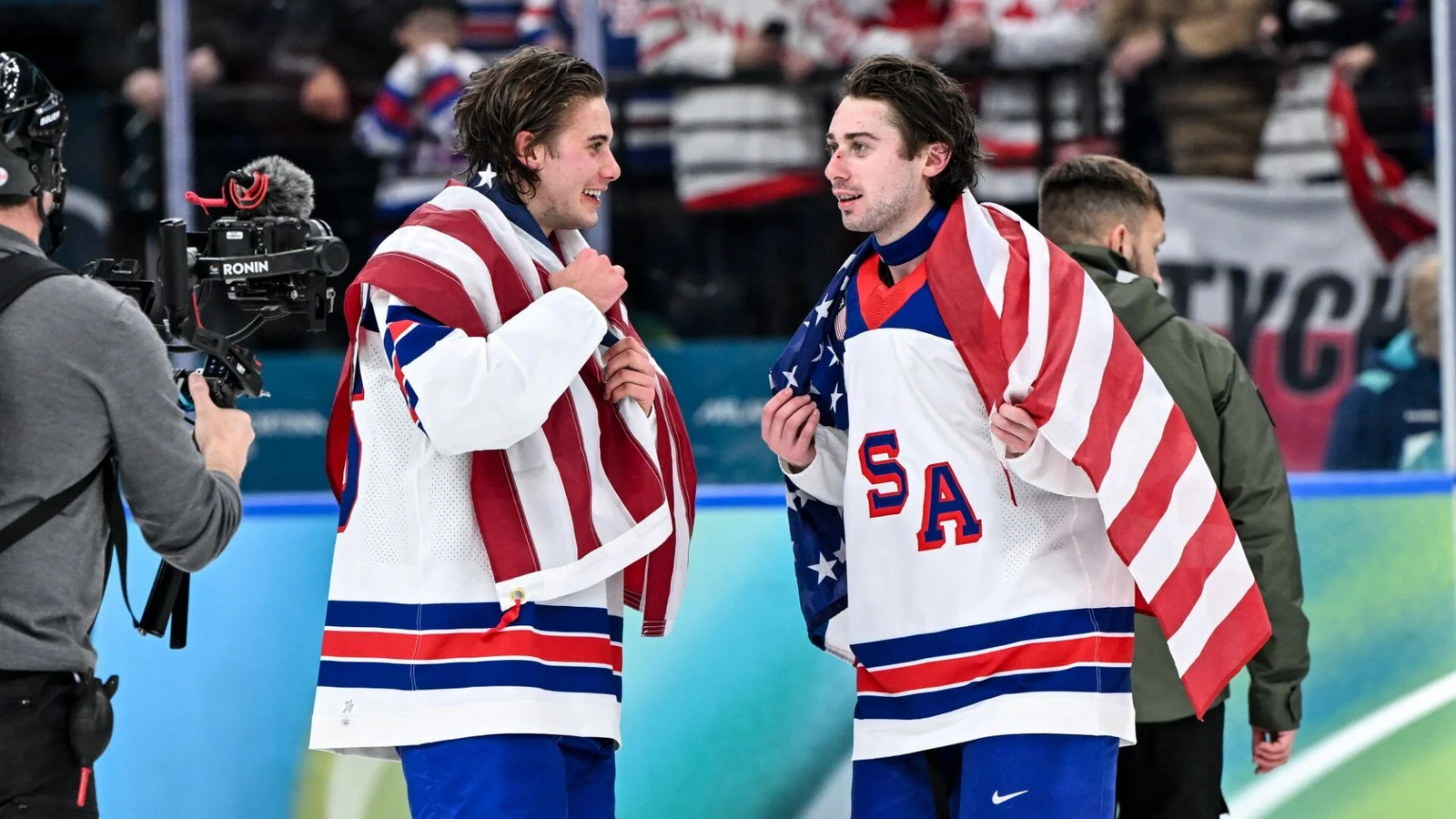
There are victories, and then there are victories that become family folklore. Winning an Olympic gold medal is already the highest peak many athletes ever dare to imagine. But standing on that podium beside your brother, hearing the anthem rise while the world watches, is something even fiction writers might hesitate to script. It sounds too perfect, too emotional, too cinematic. Yet for hockey fans dreaming ahead, the possibility of seeing the Hughes Brothers or the Tkachuk Brothers accomplish exactly that feels wonderfully real.
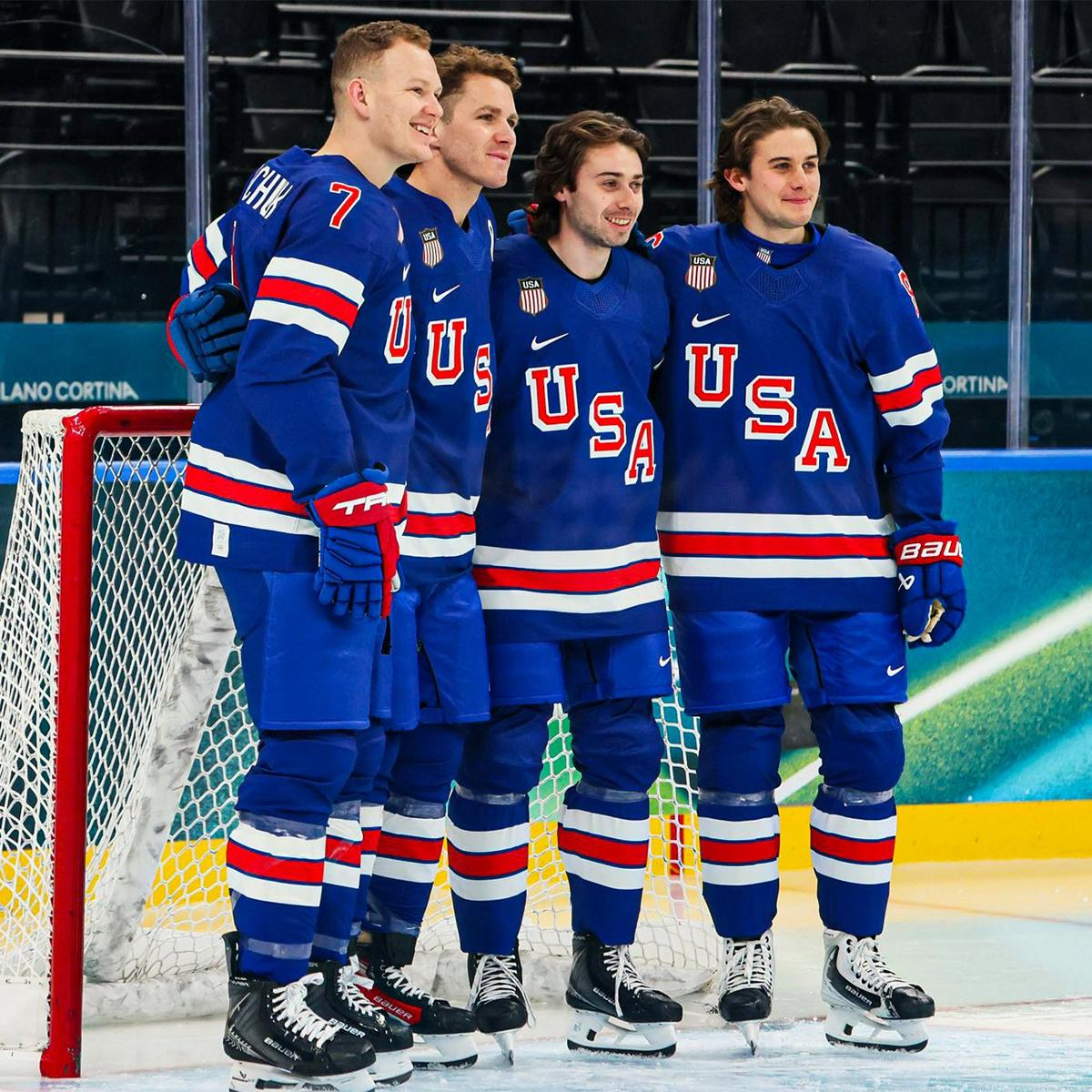
Sports has always loved family stories. Fathers and sons, sisters and sisters, cousins, twins—these narratives pull people in because they carry something beyond competition. They remind us that greatness is often built in backyards, on frozen driveways, in early morning practices where one sibling pushes another harder than any coach ever could. Before the cameras arrive, before the contracts and headlines, there is usually a family teaching sacrifice, discipline, and belief.
That is what makes the Hughes story so magnetic. Jack Hughes, Quinn Hughes, and Luke Hughes represent a rare kind of modern sports phenomenon: multiple brothers, all elite, all capable of influencing games at the highest level. One dazzles with speed and skill, another commands from the blue line with elegance, and the youngest continues to grow into his own star power. Together, they feel less like separate players and more like chapters of the same story.
Then there is the thunderous force of the Tkachuks. Matthew Tkachuk and Brady Tkachuk play with the kind of fire that changes the temperature of an arena. They bring grit, swagger, emotion, and a refusal to back down. Their style is not just effective—it is unforgettable. Every team needs talent, but championship teams also need heartbeat players, the ones who drag everyone into battle with them. That is where the Tkachuk name carries enormous weight.
Now imagine the Olympic stage. The pressure is different there. In professional leagues, stars chase trophies for cities and franchises. At the Olympics, they carry a nation. Every shift matters more. Every mistake feels heavier. Every goal echoes louder. And in that environment, looking across the bench to see your brother can become a source of calm no statistic can measure.
Think about the invisible advantage of shared instinct. Brothers who have spent years competing together often understand each other without words. They anticipate movement. They recognize moods. They know when confidence is high and when encouragement is needed. Coaches spend entire seasons trying to create chemistry that siblings may have built before they were teenagers. In a short tournament where timing is everything, that connection could become priceless.
But beyond tactics, it is the emotion that would move the world. Imagine the final buzzer sounding after a gold-medal game. Gloves fly into the air. Players race onto the ice. In the chaos of celebration, two brothers find each other first. No speech could match that moment. No camera angle could fully capture what years of sacrifice, travel, bruises, setbacks, and belief would mean in a single embrace.
Their parents’ story matters too. Behind every athletic family are people who carried bags, paid fees, drove long distances, and kept dreams alive when results were uncertain. To watch multiple sons reach the Olympic summit together would be the reward no medal can symbolize completely. It would be a victory for the household that built them long before the public knew their names.
This is why fans crave these moments. We are not only watching speed, strength, or skill. We are watching love expressed through discipline. We are seeing rivalry transformed into partnership. Siblings who once fought over space in the driveway or whose turn it was to practice now fighting side by side for gold. That contrast is powerful because it feels human.
And if it were the Hughes brothers, the story would glow with artistry and modern brilliance. If it were the Tkachuks, it would thunder with passion and relentless will. Either way, the narrative writes itself: family becomes legacy, and legacy becomes history.
Maybe that is why the idea feels like a movie script. Not because it is unrealistic, but because the best sports stories often look scripted after they happen. They contain tension, sacrifice, character, and triumph. They give us endings that feel too beautiful to be true.
So if one day Olympic gold hangs around the necks of brothers named Hughes or Tkachuk, the world will celebrate more than hockey excellence. It will celebrate something timeless—the rare miracle of reaching the top, and finding family waiting there beside you.