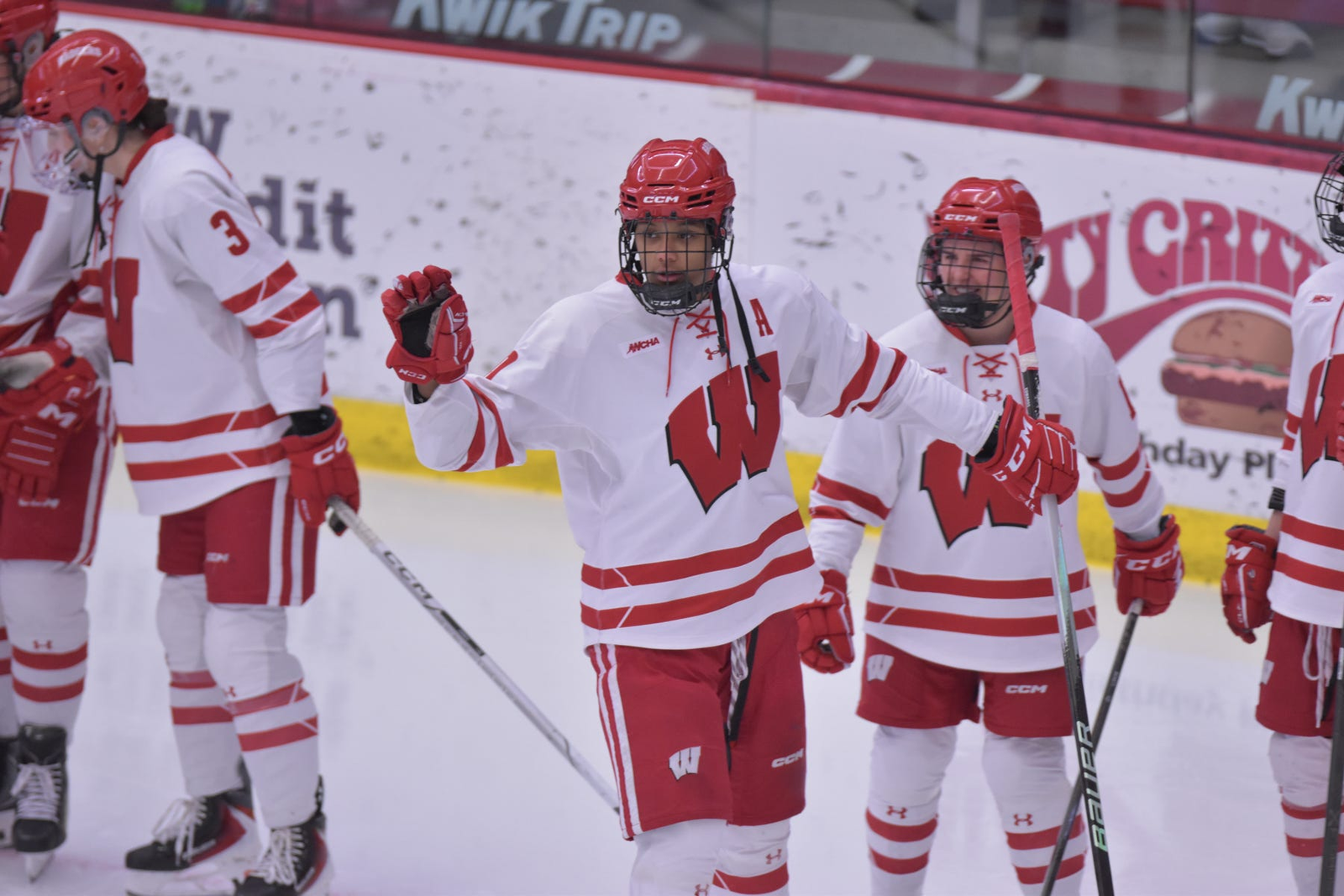
There are powerhouse programs, and then there are programs that redefine what dominance looks like. University of Wisconsin–Madison women’s hockey has long been respected, feared, and admired—but the newly released 2026 Professional Women’s Hockey League draft rankings prove something even bigger. Wisconsin is no longer just a great college team. It is becoming the blueprint for the future of women’s hockey.
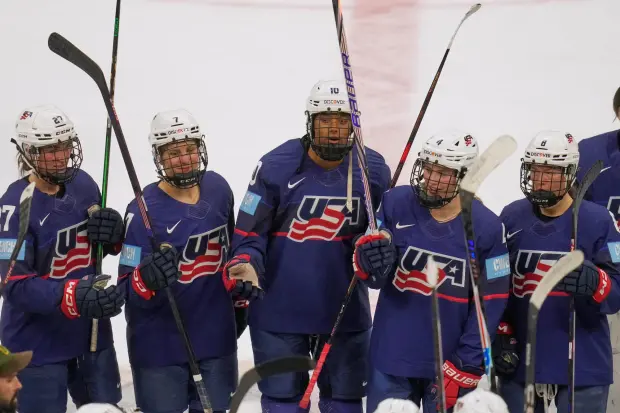
When four players from one program land in the top 10, and five in the top 20, it is not coincidence. It is culture. It is development. It is a standard built over years of pressure, expectation, and excellence. Programs everywhere recruit talent. Very few transform it at this scale. Wisconsin has become the place where elite players sharpen into professionals.
Leading the charge is Caroline Harvey at number one. Rankings often spark debate, but sometimes there is a player so complete that the conversation quiets quickly. Harvey is described as mobile, physical, and capable of controlling the pace of play every time she touches the ice. Those are not ordinary compliments. Those are franchise-player descriptions.
What makes Harvey special is not just talent—it is command. Great defenders react. Elite defenders dictate. She appears to do both. She can erase rushes, launch offense, and turn pressure into possession within seconds. To be called one of the best defenders in the world at this stage says everything about her ceiling. Teams do not simply draft players like Harvey. They build around them.
Then comes Laila Edwards at number three, and few prospects carry a presence like hers. At 6-foot-1, Edwards offers something every coach covets: impact in multiple forms. Size, shot power, versatility, and underrated playmaking. Whether lining up at forward or defense, she changes how opponents must think.
But Edwards’ value stretches beyond the rink. The mention of what she brings “as a person” matters deeply in modern professional sports. Teams want community stars, locker-room strength, and players fans rally around. Edwards projects as exactly that—a difference-maker whose personality may become as valuable as her scoring touch. That combination is rare, and organizations know it.
At number six sits Kirsten Simms, a player built for the moments others avoid. Every draft has skilled prospects, but not every draft has players known for nerves of steel. Simms’ deceptive style and possession game make defenders hesitate, and hesitation at the professional level can be fatal. She sounds like the type of player who turns one second of uncertainty into a game-winning chance.
There is also something magnetic about players labeled “big game performers.” Statistics matter, but pressure reveals identity. Some athletes shrink under spotlight. Others seem to grow brighter. Simms appears to belong to the second category, and that alone makes her dangerous. Coaches trust players who stay calm when seasons are on the line.
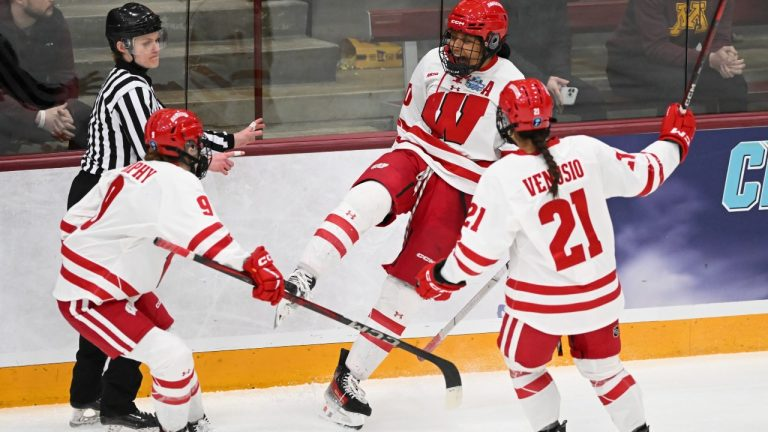
Then there is Lacey Eden at seven, perhaps the most intriguing storyline of them all. Her ranking reflects a player whose value may exceed the number beside her name. Eden brings relentless speed, forechecking intensity, defensive disruption, and offensive instincts shaped by diverse experience. Those players often become favorites fast because they influence every shift.
Being left off an Olympic roster could have discouraged many athletes. Instead, it may have sharpened her edge. Sometimes disappointment becomes fuel, and fuel in the hands of a driven player can become a nightmare for opponents. If scouts believe she is even better suited for the professional game, then someone may land a steal hidden in plain sight.
And the story does not end there. Five Badgers in the top 20 means Wisconsin’s depth is just as impressive as its star power. One elite player can elevate a season. Multiple elite players can build a dynasty. Multiple elite players entering the professional ranks at once can reshape an entire league’s future.
This is the true legacy of Wisconsin hockey: not merely winning games in college, but exporting excellence. The program has become a bridge between NCAA greatness and professional stardom. Every practice, every title chase, every demanding standard now echoes into the next level.
For fans, these rankings are exciting. For rival programs, they are a warning. For PWHL franchises, they are an opportunity. And for Wisconsin, they are confirmation that the machine is running exactly as designed.
Because when one school keeps producing top-tier talent like this, it stops being a hot streak. It becomes a dynasty pipeline. And if these rankings are any indication, Madison may soon have its fingerprints all over the next era of women’s hockey.